
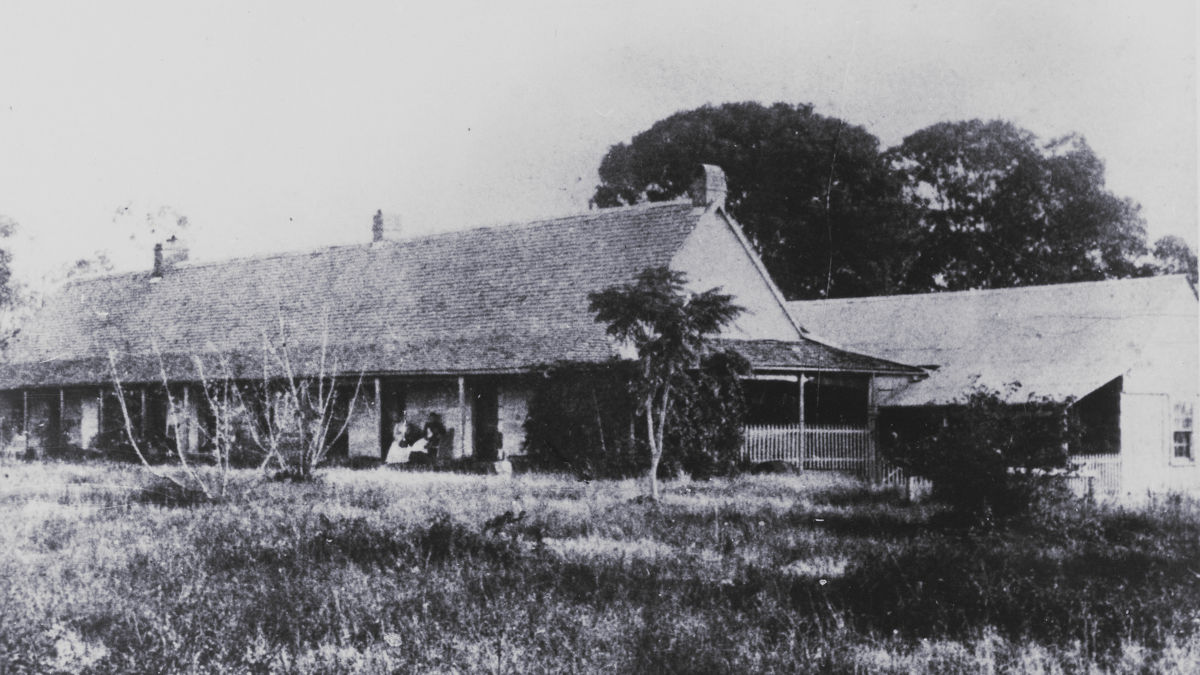
Above: Wolston House, circa 1890s. (State Library of Qld)
Is it ethical for a heritage organisation to sell an expensive product that does not work as advertised? Especially when that product undermines the public understanding of history, heritage and science?
I ask this because the National Trust of Queensland are allowing their heritage properties to be used for ‘ghost hunts’, in which customers pay to use gadgets that they are told will ‘detect ghosts’. Except, of course, these gadgets will do no such thing.
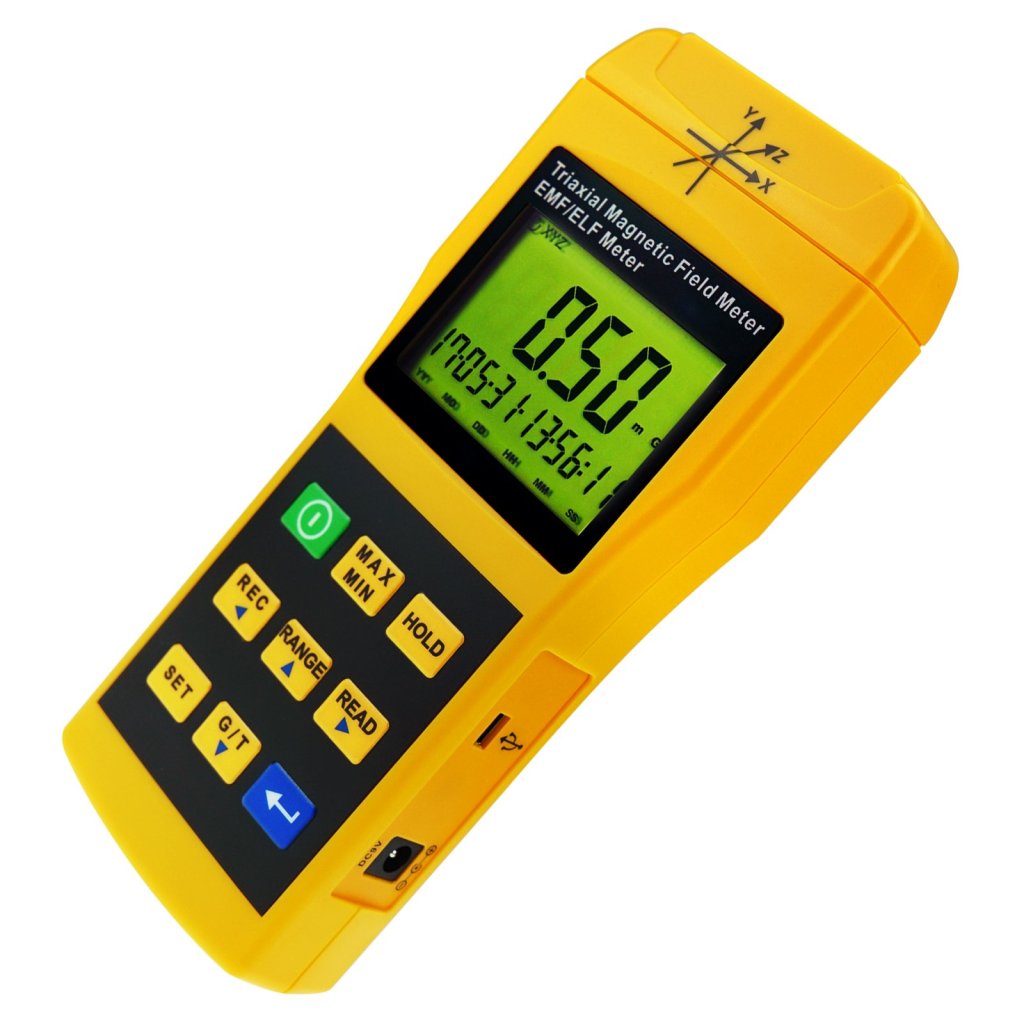
The gadgets in question include electromagnetic field meters (shown above), commonly known as EMF meters (also detectors or readers). These are tools for the home or workplace, used to locate potentially harmful EMF radiation from power lines or, more usually, household appliances. Inconsistencies in the electromagnetic field may show signs of electrical issues or improper wiring.
What is an electromagnetic field? It is one of the four fundamental forces of nature (along with gravitation, weak interaction and strong interaction). As the physicists over at Wikipedia say;
“An electromagnetic field… is a classical field produced by moving electric charges… The electromagnetic field propagates at the speed of light (in fact, this field can be identified as light) and interacts with charges and currents… The field can be viewed as the combination of an electric field and a magnetic field. The electric field is produced by stationary charges, and the magnetic field by moving charges (electric currents) …” (Wikipedia, ‘Electromagnetic field‘)
If you struggle to fully grasp all that, so do I. Physics was never my strong point. And almost everyone using an EMF meter to ‘find ghosts’ doesn’t get it, either.
The problem is, these devices are very popular with some ghost hunters. This is probably because lower-end EMF meters are erratic and can be set off by virtually any kind of electronic device that occasionally gives off electromagnetic waves, such as a mobile phone, a camera battery pack, even a computer mouse. They can give off false positives, be easily manipulated, and so the LED display can usually be relied on to light up during a ‘ghost hunt’. Beeping sounds or flashing lights = ghost.
The use of EMF meters in ‘paranormal investigations’ was initiated by academics who understood that the presence of EMFs can have a range have detrimental effects on the brain, including inducing a sense of ‘panic, disorientation, and deep fear’. This meant that EMFs could be a factor in people reporting what they perceived to be a supernatural experience. Even more tellingly, EMFs were linked to hallucinatory episodes:
“Electromagnetic fields, or electric shocks, have induced specific hallucinations in people. Those who are exposed to them, even in laboratory settings, have caused people to complain about a feeling of people following them, talking to them, or watching them. This is not always an uncomfortable sensation. Some people interpret this presence as a malevolent presence, especially if it’s coupled with a feeling of unease, but others say they felt an inspiring or comforting presence.” (‘10 Things an Electromagnetic Field Can Do to Your Brain‘)
So the meters were originally used to check for a plausible scientific explanation for allegedly supernatural experiences. However, somewhere along the line (probably since they were used a lot on the dodgy ‘Ghost Hunters’ TV show) it became standard for some ghost hunters to twist this logic around and say the recorded presence of EMFs in situations where people think they are having a supernatural experience must mean that the EMF indicates the presence of a ghost.
Science: EMF = Plausible scientific explanation for supernatural experience.
Ghost hunter: EMF = Ghost.
Of course, people who say that ‘EMFs = ghosts’ have absolutely no science to back their theory up. It’s just a throwaway assertion about something they don’t understand. This is not serious ‘paranormal investigating’, this is adults role-playing Ghostbusters. For a broader look at the history of dodgy science and ghost detecting, see the excellent article ‘The Broken Technology of Ghost Hunting‘ in The Atlantic.
This might all seem quite harmless, apart from the damage to scientific discourse, but serious ethical questions arise when they start charging customers a lot of money to use devices such as EMF meters as ‘ghostometers’.
If the people taking the money believe that these devices actually do detect ‘ghosts’, then they are not serious investigators. But if they know the devices don’t work as advertised and they take the money anyway, then they’re frauds.
There is no good way out of this. You either don’t know what you’re doing, or you’re a fraud.
And yet, the National Trust of Queensland are now letting their historical properties be used for ‘ghost hunting’, with customers being slugged $55 to use gadgets like these. And the customers are hunting for the imagined ghosts of the real people who once inhabited these properties. People whose lives were of more meaning and value to history than being reduced to characters in a ghost hunt cash-grab.
(That’s all bad enough without me going into the fact that the people – ‘Pariah Paranormal’ – running these ghost hunts at Wolston House present fake history and actually needed to be told that using alcohol as ‘bait’ to lure out the alleged spirit of a First Nations man was wrong – although the ghost-hunters are still promoting the whole ‘drunk Aboriginal ghost’ thing. For more on that embarrassing episode, see ‘Fake History and Wolston House‘.)
So, my question to the National Trust of Queensland would be – Do you believe that these gadgets ‘detect ghosts’, or do you know that they don’t?
Either way, you are in the wrong.
The only thing these meters can detect when used for ghost hunting is greed and gullibility, and the National Trust of Queensland should put an end to their involvement in these unethical events.
The science is bad. The history is bad. And ‘heritage managers’ are allowing properties with important historical significance to be seen as little more than haunted houses. There are more intelligent and more ethical ways than ‘ghost hunting’ to blend heritage, history and folklore for a public audience.
 Christopher Dawson