
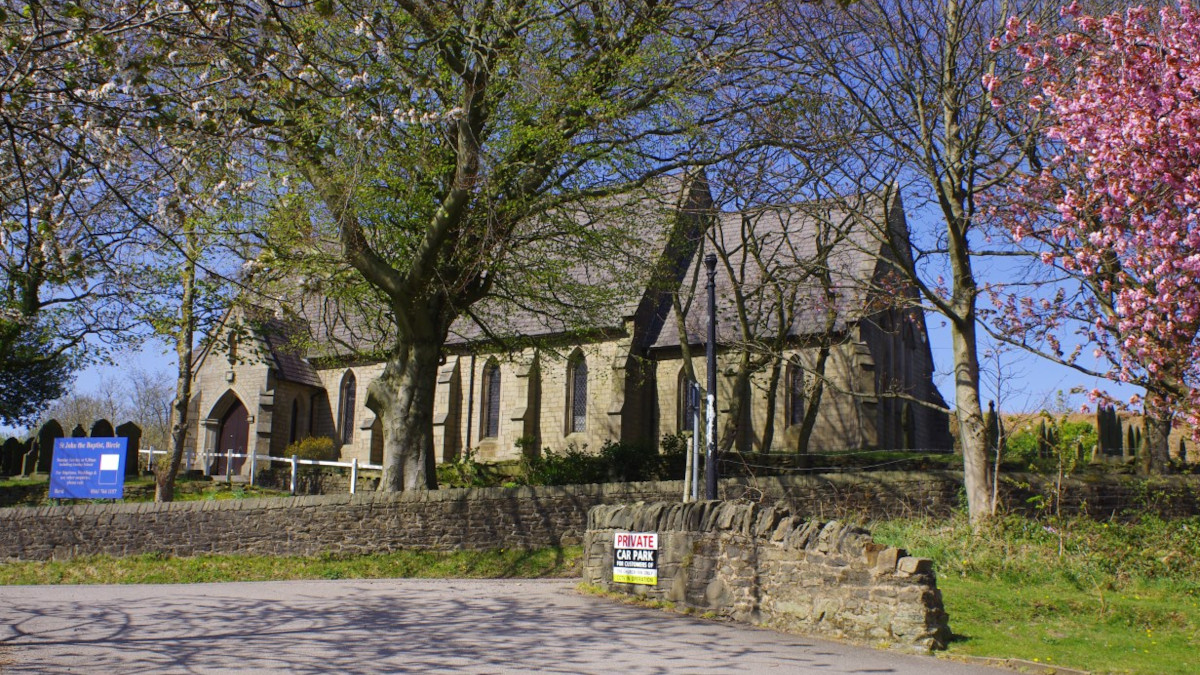
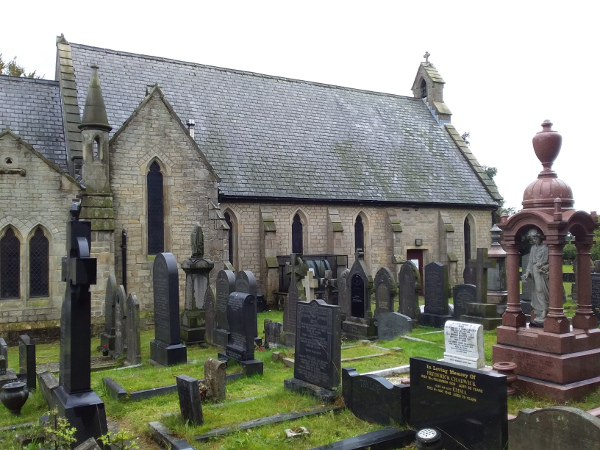
Above: Church of St John the Baptist, Bircle. (http://stjohnbircle.btck.co.uk)
During a rare visit to my old hometown of Heywood, Lancashire, a few years back I was lucky enough to arrive, quite by chance, during Heritage Week, when a number of local institutions opened their doors to the public with onsite tours and displays. One of these places was the Church of St John the Baptist, just over the border in Castle Hill Road, Bircle, Bury, and so I paid it a visit one drizzly September morning.
This small countryside church was consecrated in 1854*, and like many churches of the time it had an attached graveyard. This was a couple of years before the general cemetery opened in Heywood, and 15 years before the current Bury Cemetery was established. While these large municipal cemeteries led to a decline in the use of small church graveyards, especially the urban ones, the rural setting of St John’s meant it was still used on a regular basis and both the church and graveyard are still operational today.
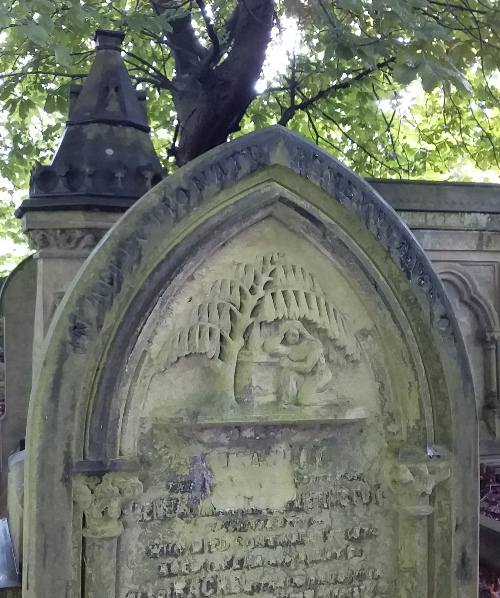
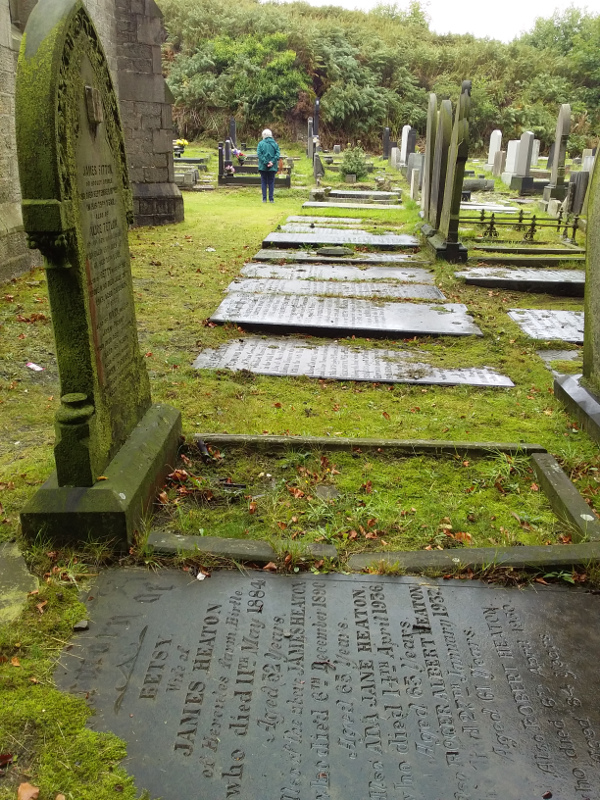
This is a Church of England institution, built in stone in the Early English style, with slate roofs with coped gables. It is a beautiful little building set in pretty countryside, but my main attention (as always with these places) was with the graveyard that surrounded it. This was a crowded burial ground full of solid-looking gothic-style headstones and horizontal ledgers. I (roughly) estimate it holds maybe 300-400 graves, some old and some more recent. If you know something of the history of this place, a few prominent local surnames – such as Holt, Ashworth and Chadwick – stand out. Birtle (or Bircle) itself has a recorded history dating back to the 13th century, so the church is relatively modern in the scheme of things.
What really struck me was how green the place looked. The countryside was particularly verdant in the last wet days of summer/first days of autumn, and many of the stones here were covered in a thick moss. The 19th-century stones looked really solid (I’m guessing granite, and in some cases slate), with the inscriptions in them generally still really sharp and crisp. Many were horizontal slabs, the kind that end up serving as footpaths around churches, and these were usually filled top-to-bottom with names, dates and places. As always, a churchyard is an immediate guide to local history.
Regrettably, at this time I hadn’t yet learned to always take note of the names of the stonemasons responsible for these creations, which is a shame because similar carving styles were very evident in other nearby cemeteries. One of the things about seeing a historical cemetery for the first time is sheer volume of new information to take in, and anyway I was here as a tourist and not a methodical researcher.
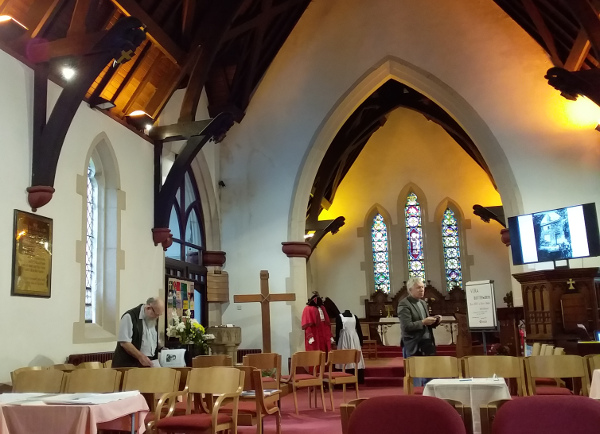
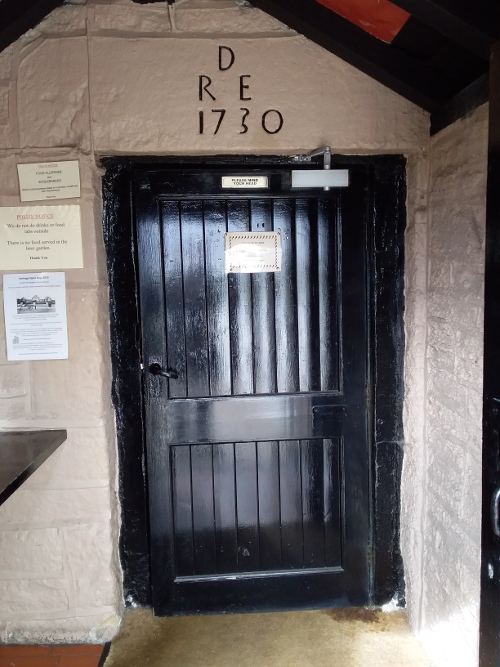
I enjoyed time inside the church itself, checking out multimedia presentations, old registers, artefact displays, and of course staring at the stained-glass windows (another favourite pastime of mine). Afterwards, I popped into the 18th-century ‘Church Inn’ right next door for a very splendid real ale and lunch.
This church is featured on my interactive map of old churches and graveyards around Heywood.
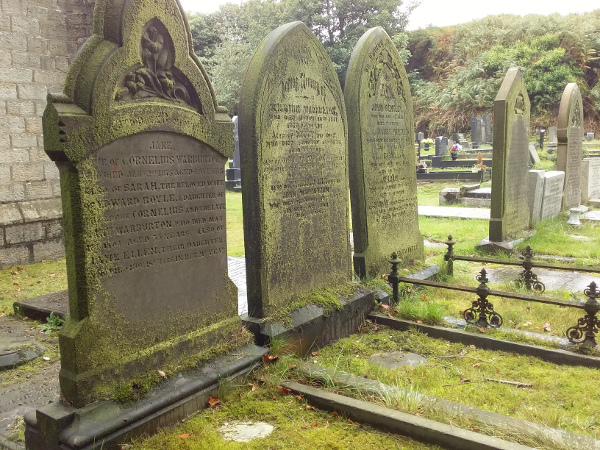
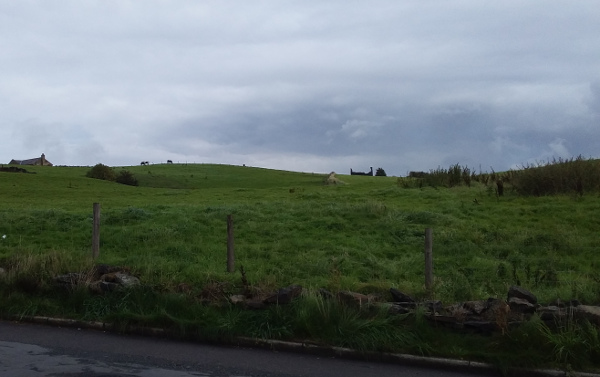
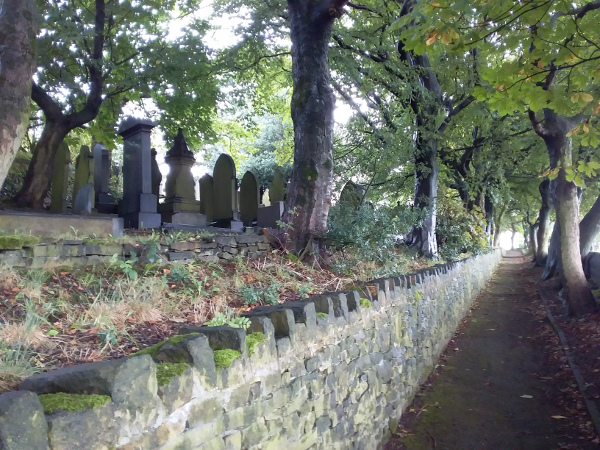

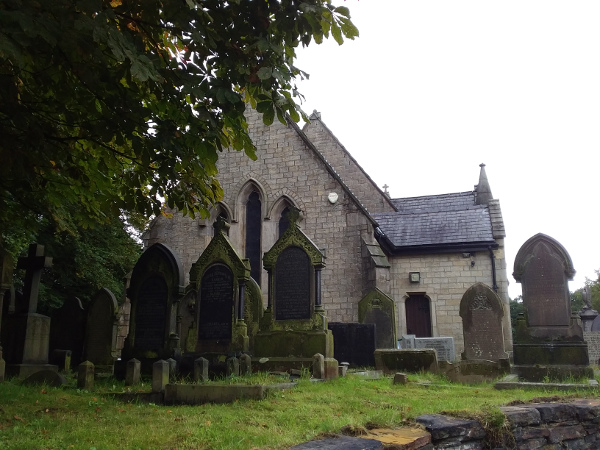
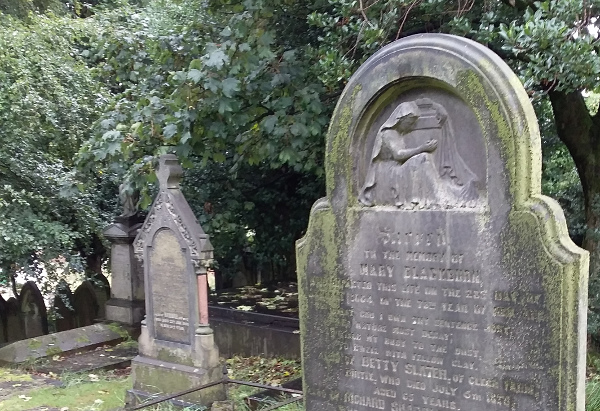
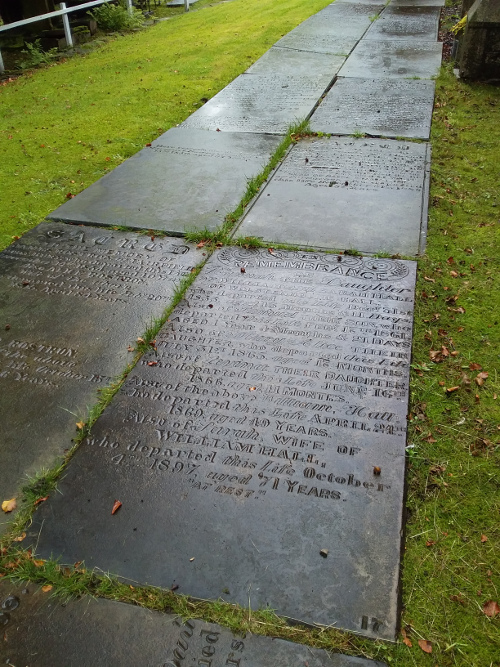

* A publication I picked up inside the church itself states that the church was ‘first dedicated in 1846’.
My apologies for the poor definition on some of these photos – I was using a phone camera that was so bad that I went out and bought a new camera a couple of days after this.
 Christopher Dawson