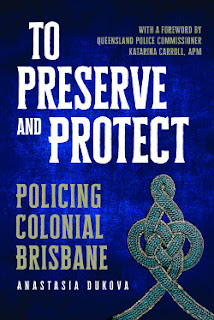
Anastasia Dukova’s To Preserve and Protect: Policing Colonial Brisbane is a very readable look at law and order in 19th-century Queensland.
This is no straightforward ‘history of the police’ reference book because the story is told from several different perspectives, an approach which gives the reader a much broader view of colonial life.
Outside the Indigenous presence, colonial Queensland was a migrant society, and Dukova’s background (she holds a PhD in crime and policing history from the University of Dublin, Trinity College) means she is tuned into the direct personal and cultural connections between the streets of Dublin, London, and early Brisbane.
This opening chapter is about Peter ‘Duff’ Murphy, an Irish ex-convict who in 1846 became the first district policeman for Kangaroo Point, and in the 1860s presided over the local police court in Ipswich. The story neatly covers convict life and the struggles of early policing, and the frequent overlap between the two. It is also a tidy example of one of those personal colonial journeys from criminality to social respectability.
Then we get to see policing develop further in the township with Englishman Samuel Sneyd, who had a much more orthodox career in the ranks of the military, police, and prison service. The Sneyd family ended up having a long association with the prison service and I’m pretty familiar with that side of their lives, so I particularly appreciated seeing their earlier story fleshed out more here.
There are chapters on the life of Queensland’s first detective (Samuel Lloyd), and the career of an ordinary beat policeman (Thomas Tyrell) during the 1860s-‘80s, highlighting the different paths to be taken within the police service itself.
19th-century female criminality (a subject I have researched and written about in the past) is viewed through the life of Susan McGowan, an all-too-typical tale of a life filled with petty crime and alcohol that was the lot of the vast majority of female prisoners of the late 19th century. The we jump to the birth of the Criminal Investigation Branch in the 1890s is with the story of detective and police prosecutor James Nethercote.
Finally there is the story of Charles Durant, an habitual criminal who spent a big part of his life in places such as the St Helena Island penal establishment and the prisons at Petrie Terrace and Boggo Road.
These perspectives work well together, allowing the author to humanise the people involved while also touching on the subjects of police and political corruption and mismanagement, and issues of gender, class, and – to a lesser extent – race. To Preserve and Protect was released during the height of the Black Lives Matter protests, when the public mind was more attuned to such history, which left me thinking that a full chapter on colonial police interactions with First Nations people would perhaps have been welcome. But that’s hindsight.
This mix of very different ‘characters’ paints a vivid panorama of law and order in 19th-century Queensland. The shifting perspectives keeps the book readable and interesting, and the thorough academic research and deep dives into primary documents gives the information an important sense of reliability.
One of the (very few) older bits of ghost folklore attached to the South Brisbane Cemetery relates to a ‘Lady in Black’. Tracey Olivieri, cemetery historian and author of ‘The Ghosts of South Brisbane Cemetery‘, grew up in the local area during the 1970s and recalls children back then trying to scare each with ‘lady in black’ tales, telling each other of a dark figure that was on occasion seen moving silently through the cemetery. In recent years, however, this particular Lady in Black has been suffering something of an identity crisis.
According to Tracey, the common theory was that it was the ghost of a heartbroken young 19th-century widow who used to visit the grave of her dead husband every day. She died unexpectedly but had not realised this and so she still tended the grave, wearing her mourning clothes. “If anyone approaches her she just lowers her head and simply disappears amongst the graves. She is not menacing and is not a ghost to be scared of.” She was only ever seen within ‘the Teardrop’ section of cemetery, on the hill near the main entrance (so named because the cemetery roadway circles around it to form the shape of a teardrop).
However, this backstory changed dramatically when ghost tours started in the cemetery. Tour marketing from 2001 claimed that:
“A woman in a black Victorian dress often walks down the road through the cemetery towards the prison… Many old-timers claim she’s the tormented spirit of the only woman who was ever executed in Queensland!”
The woman that the ‘old-timers’ refer to here is Ellen Thomson, who was executed at Boggo Road in 1887 and is a rather stereotypical candidate for a ghost story. She was the only woman hanged, a mother of six, a convicted murderer, and an Irish Catholic who died clutching a crucifix and proclaiming her innocence.
The original tour story, as it was relayed to me by a witness, went something like this: Because she was a woman, Ellen was given special dispensation to be buried outside section 6B (where executed prisoners were interred), and now her ghost could be seen wandering near section 10C, wearing the black dress she was buried in and clutching a string of rosary beads to her chest…
What I find most interesting about this tale is the fact that after a few years it suddenly vanished without trace from the tour itinerary, and was replaced with an all-new version of the ‘lady in black’ in a different part of the cemetery. So why was the story of Ellen’s ghost dropped so abruptly, never to be spoken of again?
It turned out the ghost tour had been taking people to the wrong grave. The executed Ellen Thomson actually had been buried in section 6B after all, back in 1887. The ghost tour had been stopping at the grave of a different Ellen Thompson (with a ‘p’), who died in 1903 and was buried in section 10C.
Unfortunately, this glaring mistake had left the alleged ghost of the executed Ellen Thomson haunting the wrong part of the cemetery, so it seems the story was quietly disappeared while a new one appeared in its place. The Catholic element was retained as the new Lady in Black was now a nun who haunted the Teardrop (the location of the older story told by Tracey). In a bizarre contrivance, the nun had a skull for a face.
An important question in this whole episode is what happened to the older ghost in 10C? Even if it had been misidentified as the wrong person, surely the same ghost would still be around there anyway? It would be no less incredible, even if it was somebody else. Apparently not. When the mistake was realised, the tour spot vanished and so did the alleged ghost.
The only logical conclusion to be drawn from this sudden disappearance is that the first ghost was never there in the first place, and that the misidentified grave site (and accompanying backstory of murder and execution) was a convenient spot for a dramatic stop on the tour. It is also notable that it was conveniently replaced with a never-before-mentioned skull-faced nun.
Sometimes, we can learn more about the nature of these tours not from what is left in, but what was left out.
The story of the Lady in Black persists, despite a lack of recent sightings, and provides us with a good example of the fickle nature of folklore and commercial influences.
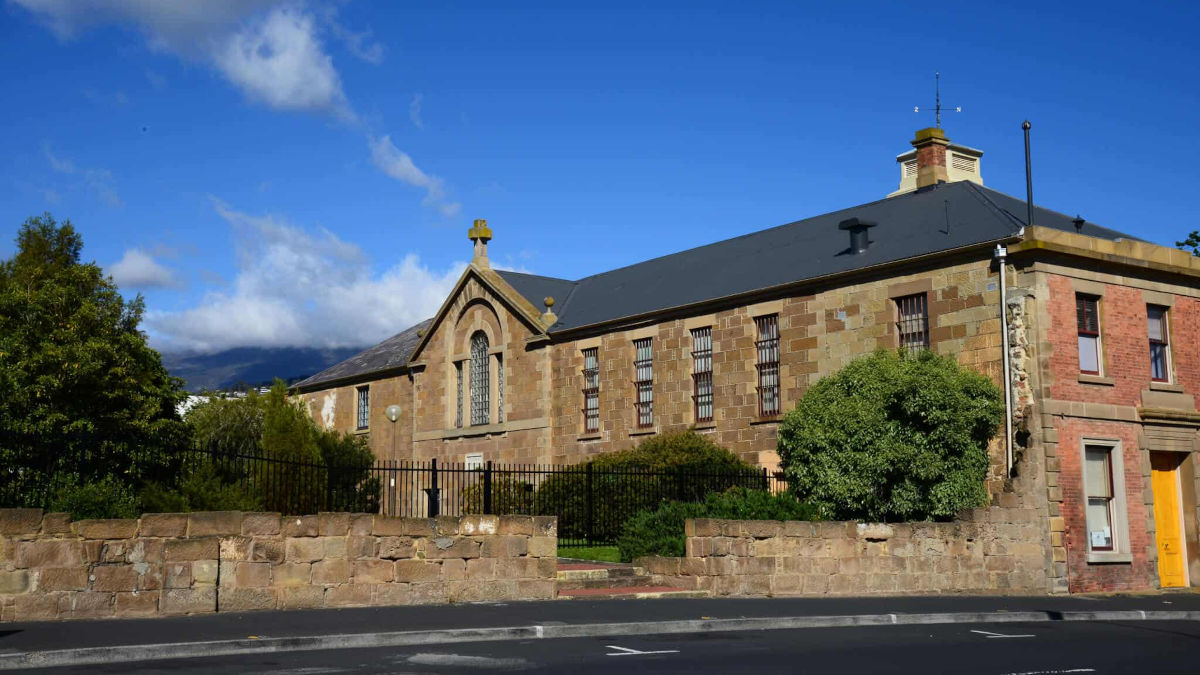
Above: The Hobart Convict Penitentiary. (tasmania.com)
The following is a lesson in not believing everything you read online, especially on ‘paranormal industry’ social media.
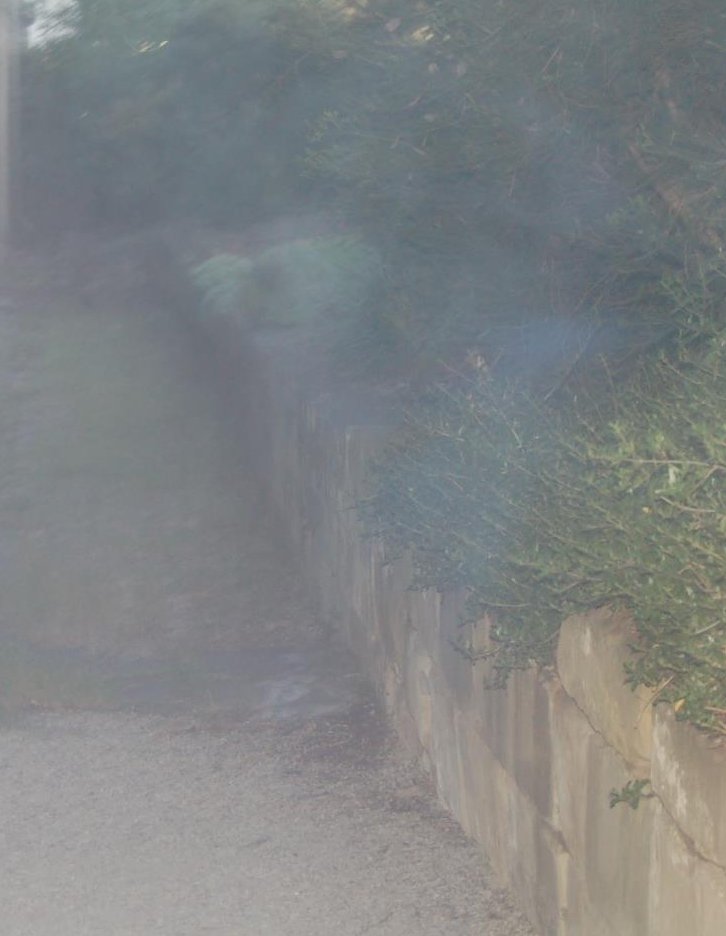
Back in 2011, the photo below – described as showing an ‘eerie face in the mist’ – turned up on the ‘Brisbane ‘Ghosts Tours” Facebook page.
The cropped image purported to be taken at South Brisbane Cemetery at night.
It was accompanied with the claim that it was taken during a tour at the South Brisbane Cemetery on the previous Saturday night. There were a couple of immediate issues with this claim. Firstly, it did not look like any part of that cemetery. Secondly, it appeared to have been taken during daylight.
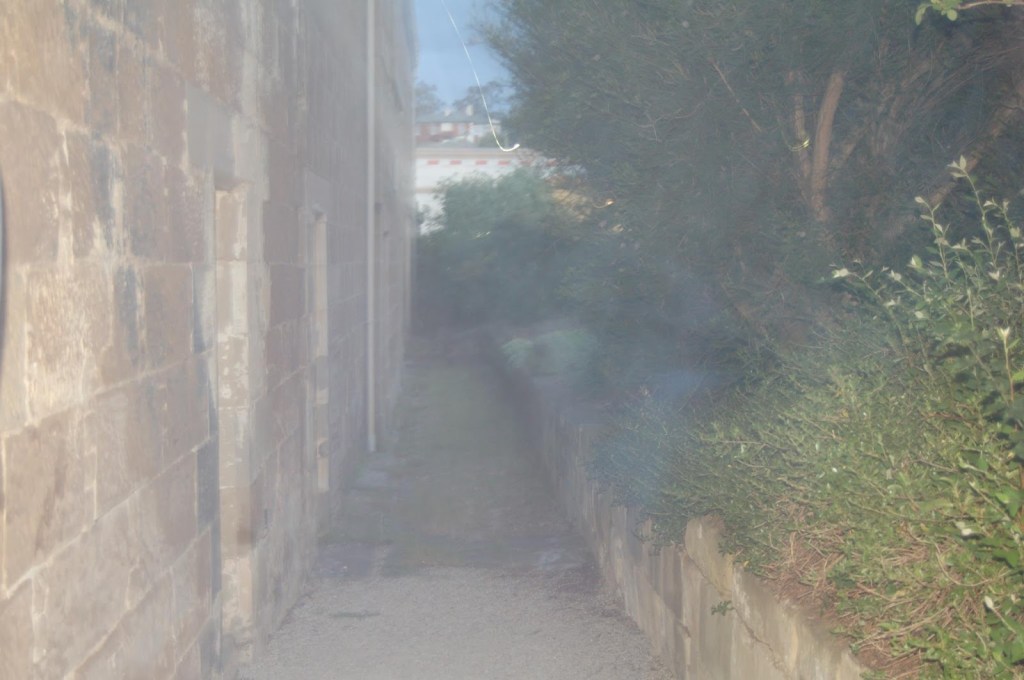
The truth was revealed soon afterwards when the photo was posted on another social media page, this time with one crucial difference – it was uncropped. On that page it was correctly identified as having been taken at the Hobart Penitentiary and Chapel, Tasmania, under a glorious blue sky. What is more, it was from 2006. So very clearly not ‘last Saturday night at the South Brisbane Cemetery’.
The uncropped image.
When multiple commenters pointed out this fact, ‘Ghost Tours’ admin initially insisted that it was from their cemetery tour, a claim they only backed away from when the original photographer himself intervened to point out that it was indeed from Hobart in 2006. He said that he had sent the photo to Ghost Tours in an email which made it clear where and when the photo had been taken, and that Ghost Tours had reproduced that email online but edited out the identifying details. It would be fair to say that he was not impressed with their actions.
Ghost Tours admin then claimed to have ‘misread’ the email. After I discussed this story online, I received an email containing legal threats from Ghost Tours (‘we are asking you now to cease and desist or we will have to take action against you’) with further claims that it was a ‘simple mistake’ of ‘mislabelling’. This excuse was contradicted by their very selective editing of the photo and text. In fact, even after the discrepancy was first pointed out, Ghost Tours had still insisted that it was from a night tour at the cemetery.
The legal threat was, of course, ignored.
The most straightforward conclusion would be that this whole episode was a deliberate act of deception, designed to falsely promote the cemetery as a ‘haunted’ place. As it is, incidents like this only serve to undermine any genuine conversations about the folklore of the supernatural.
This ‘ghost’ might not haunt the South Brisbane Cemetery, but the photo should haunt Ghost Tours.
Above: Patrick and James Kenniff at their arraignment. (‘The Truth’, 20 July 1902)
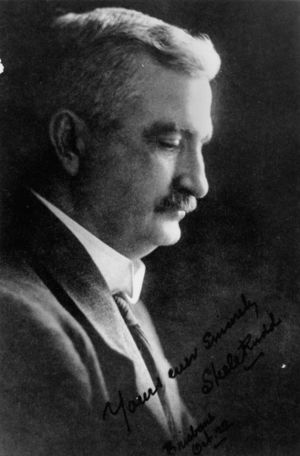
The famous Australian author Steele Rudd (real name Arthur Hoey Davis) had a very unpleasant experience at Boggo Road prison on New Year’s Eve, 1902. In his capacity as the Under Sheriff of Queensland, he was required to deliver some devastating news to two brothers who had been sentenced to death for murder but were awaiting news of an appeal against that penalty. One was to have his life spared, while the other was to be hanged…
Steele Rudd. (State Library of Qld).
He wrote the following account of this event in later years, as part of his reminiscences about life in the public service:
(Brisbane Courier, 18 October 1924) “The Sheriffs Office. The Kenniff Case. By STEELE RUDD.
ANOTHER criminal sittings came round. They came round as regularly as a circus. And with them came the sensational trial of the Kenniffs for the murder of Doyle and Dahlke in the solitude of the Carnarvon Ranges. Ah! that was a trial to sit and watch and listen to. The accused men were brothers and bushmen and horsemen and they were ‘marked’ men. One of the murdered men (Doyle) was a constable of police; Dahlke a station manager. Accompanied by a black tracker leading a packhorse, they went into the ranges to arrest the Kenniffs on a charge of cattle stealing. On the evidence of the tracker, James Kenniff was arrested at the camp and was in handcuffs when the abo. left the scene. He left the scene because he heard some shots fired and left in such a hurry, and because be heard bullets whizzing after him that he saw little else other than his way through the brigalow timber as he flogged and spurred his mount for home – and his home was Morven, the Lord knows how far away! And all that was ever seen afterwards, or recognised, of the unfortunate victims was then burnt ashes and some clothes buttons! When found they were being hawked about the ranges in saddle-bags thrown across the back of a horse that had got out of hand. It was put forward, however that others besides the men on trial were on the scene when the abo. fled. And the great question was: Who did the shooting and the burning of the bodies? An unenviable position, truly, for a jury; a trying one for a judge and one of appalling interest to the public.
Sitting there, a silent official from day to day following the train, and threads, and broken threads of circumstantial evidence, pregnant with materials, for another ‘Robbery Under Arms,’ the Under Sheriff was in his element.
Genius of the Judge.
The obvious lack of bush knowledge, the false conception and surprising idea of the habits and instincts of the bush horseman and how he would act in an emergency that were displayed by some of the legal minds was to him amazing. On the other hand, the keen and remarkable insight to a life he could have known but little about at first hand displayed by the judge in laying bare by adroit examination damning weaknesses in the defence, amounted to legal genius. To the Under Sheriff those weaknesses were as obvious as the numerous absurdities put forward by the prosecution.
James Kenniff. (Qld State Archives)
Local Lore.
He too, had known the bush: as a youth he had associated himself with horsemen and cattlemen; had followed hard and breathlessly on the flying heels of then favourite mounts, knocking sparks from the flint-strewn ranges; knocking the bark from the forest saplings and ‘barking’ themselves from then shoulders to their shins as they crashed in pursuit of affrighted mobs. Had followed ‘men who knew the way’ into the Horse Gully – followed them down mountain spurs and gorges, turning and sliding and wheeling this way and that till an ancient suspicious-looking track hacked through the still, silent scrub was reached – a track that led into grazing country inaccessible by any other track – grazing country that was the planting ground for stolen station mares and stallions! Had lain ‘oft in stilly nights’ listening to old hands and middling old hands relating stones of how this mob and that mob were ‘litted’ and how the thieves got through with the haul by the skin of their teeth – listening to them recounting night rides by moonlight and by starlight – of quarrels over horses and women and plunder – of the capture of Thunderbolt and of the Wild Scotchman – of the murder of So and So, and the mysterious disappearance of someone else!
And so, knowing the craft and resources of the bush horsemen as he knew them, it seemed strange to the new Under Sheriff that sane persons could believe that a packhorse carrying the bags containing the ashes of the murdered men ever escaped from the hands of either accused or, having escaped, that either could have failed to secure it again! Ah no! that packhorse got out of the hands of someone not very clever amongst horses! But the writer is not dealing with the trial, nor with the finding of the jury. All he knows is that the jury was composed of twelve sober, conscientious men and that the judge was a great judge.
The Course of Law.
Both accused were found guilty and sentenced to death. Then followed days and nights of excitement in Brisbane. The Sheriff and the Under Sheriff were not as lighthearted as they usually were, and the public executioner changed his address several times and was difficult to find. That James Kenniff, at least, was not guilty there was in the minds of some a grave doubt. From a lorry in Albert-square the pungent, picturesque oratory of Joe Lesina, the stormy petrel of Parliament, never slackened in fiery appeals to public opinion in favour of a reprieve.
An appeal to the High Court brought from Justice Real in a thunderous voice: ‘Were I to concur in the sentence passed on James Kenniff I would regard myself guilty of judicial murder!’ [Writer is trusting to memory.]
Later the sentence of death passed upon James Kenniff was committed to years of hard labour in St Helena; and the day and hour when Patrick Kenniff would be executed fixed. And it fell to the official lot of the Under Sheriff to convey the Executive Council’s decision to the prisoners. Curiously enough, the letter conveying the decision was signed by the tender-hearted Brunton Stephens, who professed a horror for trials, gaols and executions!
Patrick Kenniff. (Qld State Archives)
Breaking the Decision.
The Under Sheriff was closing his office for the day when the document was delivered, and, hopping into the nearest cab, was in a quarter of an hour knocking on the door of Boggo-road Gaol. And never, were he to live to be a thousand, would he forget that mission to Boggo-road! He hadn’t long to wait at the door before he was accompanied by the genial, kindly Chief Warder MacDonald -himself since passed to his last resting place – to the condemned cells. Suspecting the purport of the visit, he whispered hoarsely as they entered the cold shivery, almost lightless corridor: ‘What is the decision?’
‘And not Patrick too?’ he questioned when he heard it. No other warder was present. And perhaps no one knew the facts of that dreadful tragedy better than the kindly chief warder.
‘Prisoners Patrick and James Kenniff’, he announced in calm official formula, as he opened the cell door. ‘The Under Sheriff to see you – stand forward., Two pale, worn-looking men stood forward. Their eyes gleamed with anxiety and hope. There was a twitching in the muscles of their faces – their hands clenched and opened, clenched and opened. They stood silent and erect, side by side. Patrick was a bigger man, and his features of more distinctive Irish mould than the other. And thus they waited for the Executive’s decision. In a voice broken with the tremor of emotion the Under Sheriff read it to them. When he had finished, James turned to Patrick, who remained motionless and solemn as Eternity itself and said: ‘Paddy I will go with you!’
Then Patrick Kenniff’s lips parted – ‘No Jimmy,’ he said, ‘you shall not! One of us is enough!’
In a delirium of despair, Jimmy Kenniff dropped on the floor of the cell at his brother’s feet, and lay there until the chief warder coaxed him to rise and control himself. Then for the last lime on this side the Great Divide, the Kenniffs pressed each other’s hand; and the last the Under Sheriff remembers of Jimmy Kenniff was his voice calling in sobs as he was being escorted to another yard: ‘So-long, Paddy – so-long!’”
The following account of the same scene appeared in the Evening Telegraph on 5 January 1903:
“Breaking the News. James Kenniff Bursts into Tears. Brisbane, January 5.
It is understood that when the Kenniffs wore informed of the decision of the Executive, James, who was in a separate cell from Patrick, was over-joyed to learn that his life had been spared, but when he inquired as to his brother’s fate he burst into tears upon being given to understand that Patrick was condemned to die.
The official then proceeded to Patrick’s cell and informed him that his doom was sealed. He turned ashly pale, and upon hearing James weeping he remarked he was sorry Jim took the matter so badly, he being under the impression that James was also to be hanged. Patrick expressed himself pleased on learning that James’ life was spared. The two brothers were allowed a few minutes conversation, in the course of which James informed Patrick he would rather die with him. James also asserted that they were about to hang an innocent man.”
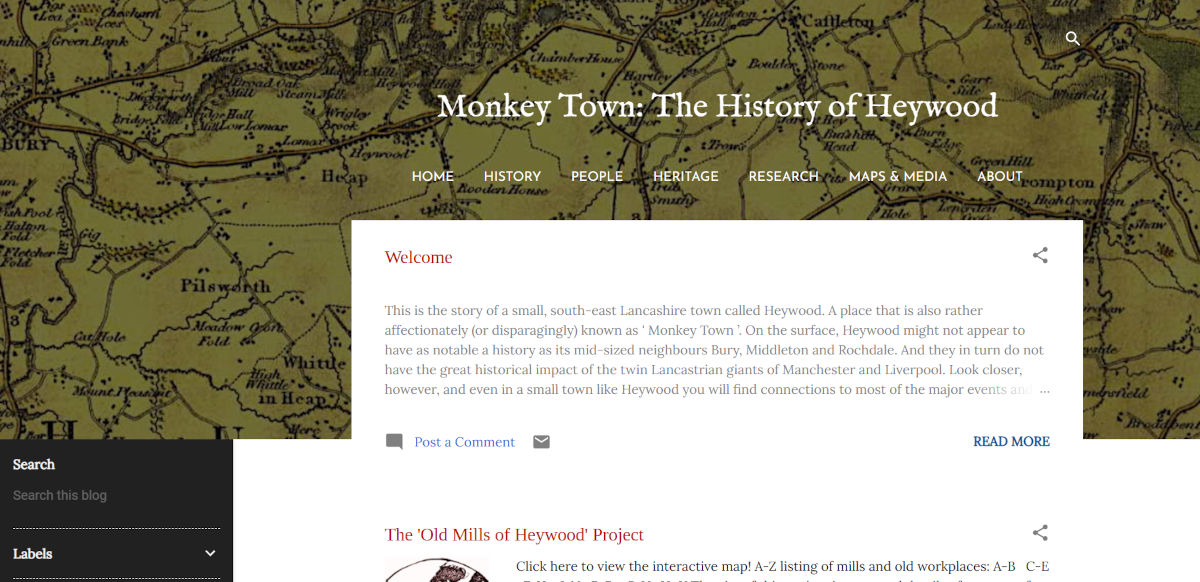
My Heywood in Historywebsite has just passed a very unexpected milestone – one million pageviews!
Heywood in History started life back in April 2012 as 10,000 Years in Monkey Town*, a small sideline from my other history work, and a way to think about my hometown (which I left in 1988) when I felt a bit homesick.
In the beginning, I would have been pleasantly surprised just to see the total number of views get into five figures. It is after all a niche website about an obscure town. Heywood is only a small place with just less than 30,000 residents and is historically less notable than all its mid-sized neighbours.
For those who don’t know, Heywood was an insignificant rural part of Bury in the county of Lancashire for several centuries before it boomed as a cotton town during the Industrial Revolution and became its own municipality in 1881. After the decline of local industry, it was absorbed into Rochdale in 1974 (although locals still determinedly hold onto their identity as Heywoodites).
So, truth be told, the history of Heywood is relatively undistinguished and of little interest to those who have never lived there or have no family history connections to the town. Hence the surprise about one million views.
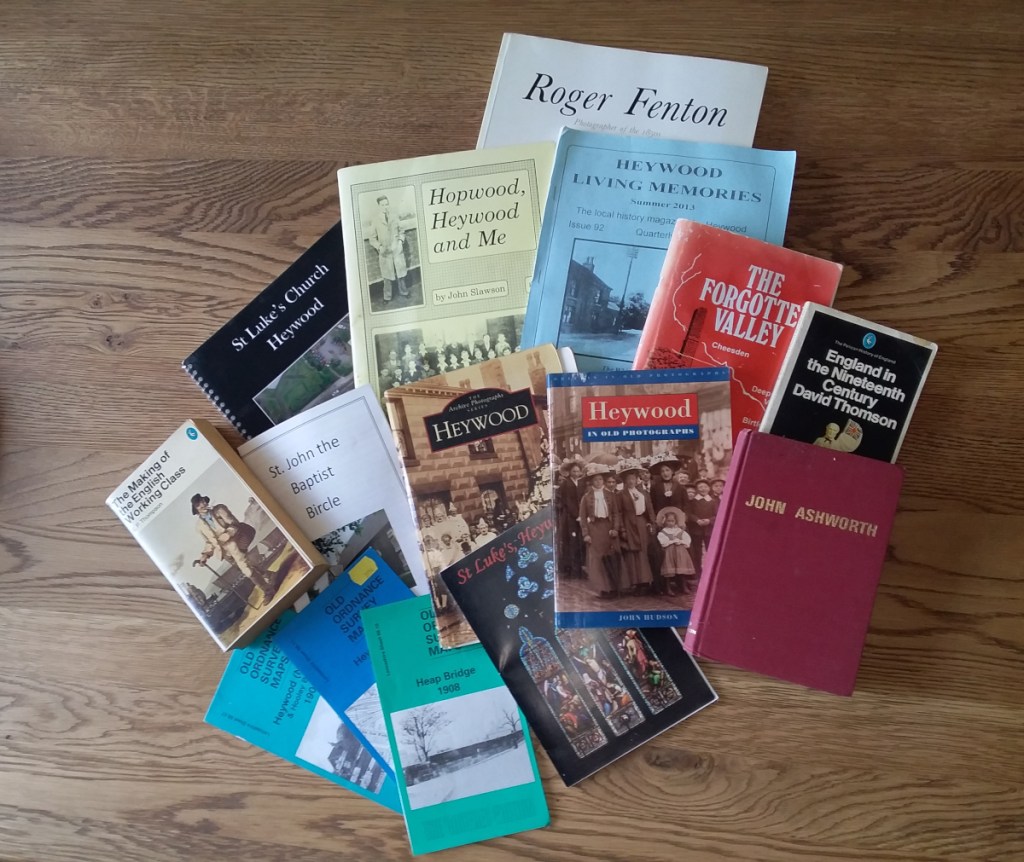
The biggest challenge with this project has always been writing about somewhere while living thousands of miles away from it. This means not being able to pop out and explore and photograph the places I’m writing about, or view the primary records from local libraries and archives. I’ve had to collect books and journals, trawl the internet for any reminiscences or snippets of records, and piece things together from afar. I think the result of this research is a decent overview of Heywood’s history, although in some cases missing some of the details that could be dug up from archives.
Some of my hard-copy material related to Heywood’s history.
What I’ve always tried to do is place local events in a wider context, so we get a bit of history on the Bronze Age, Ice Age, Vikings, Romans, the earliest years of Heywood, the Elizabethans, the Civil War, Industrial Revolution, folklore, education and religion, the World Wars, and 20th-century decline. This reminds a general readership that local history is always intertwined with the bigger stories. There’s almost always a connection somewhere.
Beginning with one article (about the Bronze Age) and then gradually building up from there, there are almost 150 pages on the site now, with numerous draft articles still in the pipeline. I’ve also created several interactive maps, including one for the ‘Old Mills of Heywood‘ project. The end result will hopefully be a useful history resource that will be around for a long time to come.
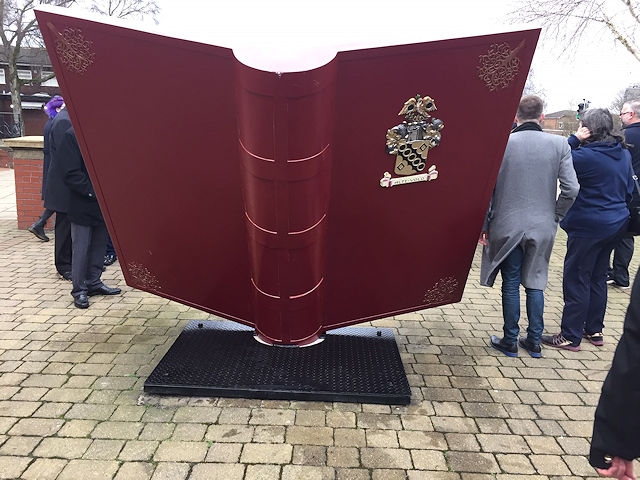
Another result of my work was the recognition of the 750th anniversary of Heywood. The exact timing was uncertain, but sometime during 1260-71 A.D. a charter was signed in which Adam de Bury granted land to Peter de Heywood. This event, however, was largely forgotten to history. I contacted the Rochdale council hoping to get some commemorative activities in place for 2020, but after some initial progress, things went awry amid political defections and infighting in the council, and then of course along came Covid-19. The council did, however, did place a public history installation outside Heywood Library in February 2020 to mark the 750th.
Above: Unveiling of the ‘History of Heywood book’, February 2020. (Rochdale Online)
Seeing the stats approach one million views came as a very big surprise, as I’ve not added too much to the website over the last couple of years. And as I said, it’s a bit of niche subject. There again, there’s not too much else around online on this history, so maybe it’s a bit of a ‘big fish in a small pond’ thing.
Anyway, I’m really happy that this little corner of Public History has done so well, and I’d like to thank everyone who has read the website and left some of the many lovely comments on there over the years. I have spread myself a bit thin with my different history interests recently, but hitting the million-views mark has motivated me to add more content to Heywood in History over the next year.
The whale-watching tourism industry springs into life off the coast of Queensland each year as Humpbacks migrate north to breeding and birthing grounds. The sight of breaching Humpbacks can be truly spectacular, but getting too close has its obvious dangers.
This was a lesson tragically learned back in 1928 by three men in a boat off Yeppoon, near the central coast city of Rockhampton. The following report appeared in the newspapers that week:
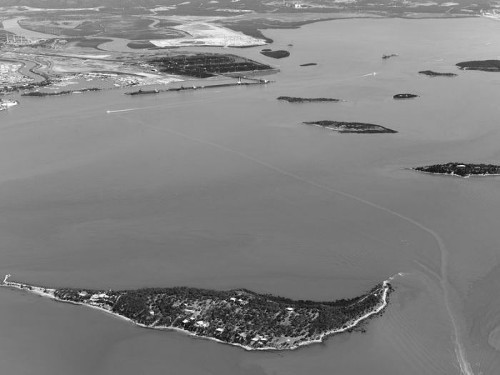
Quoin Island today.
‘After having been wrecked by a whale, a party comprising N. Barton, owner of the pleasure launch Nellie, Frank Glazebrook, one of the staff of the Commonwealth Bank at Rockhampton, and Jack Horton, an employee of the Railway Department, was landed at Yeppoon early this morning.
The men left Yeppoon in the Nellie about 9.30 o’clock on Monday night for a pleasure cruise. That night they anchored at Stockyard Point and the next day continued leisurely under sail until about 1.30 o’clock in the afternoon, when a sensational incident occurred. At the time Barton and Glazebrook were in the front of the boat and Horton was about amidships. They were about a mile from Quoin Island, which is 33 miles from Rockhampton.
A whale, 40 to 50 feet long, rose 30 feet out of the water and crashed across the launch. The craft was smashed to pieces and sank immediately, but a dinghy which was lashed aboard broke away and floated with one oar in it.
Horton received severe injuries to a foot and Barton had a frightful gash on a shin, cut by a barnacle on the tail of the whale. Glazebrook escaped injury and he kept Horton afloat, while Barton swam for the dinghy. The sea was infested with sharks.
Retrieving the dinghy, Barton, under great difficulties, brought it to Glazebrook and Horton, who were in the water for hours. It was with the greatest difficulty that Horton was got into the small boat, which then had to be bailed from outside to keep it afloat. Eventually the other two got aboard. The dinghy, however, was swamped, and it was only by Barton’s seamanship that it was righted again.
Barton then made a rollock with his belt and started on the five miles journey for Port Clinton. Horton was lying in the bottom of the dinghy, in terrible pain and half-covered with water. While Barton rowed with the one oar, Glazebrook balled out the water.
Within half a mile of Port Clinton the men caught sight of the launch Viking, with Messrs. Joseph Carpentier and Bert Cambridge aboard, making north. Glazebrook signalled by waving his shirt and Carpentier and Cambridge at once made for the dinghy. The three men were taken aboard the Viking, which made for Yeppoon.
Horton was admitted to the Yeppoon Hospital, suffering from a compound fracture of the foot, and other injuries. Barton is confined to his bed.
MAN DIES FROM INJURIES Tho Commissioner of Police (Mr. W.H. Ryan) has been advised by the Rockhampton police that Jack Horton (a railway employee), who received a compound fracture of the foot and other injuries when a whale fell across and wrecked a motor launch on Tuesday, died in the Yeppoon Hospital on August 2. There were three men in the boat at the time of the sensational incident, and two of them were injured.’ (Week, 10 August 1928)
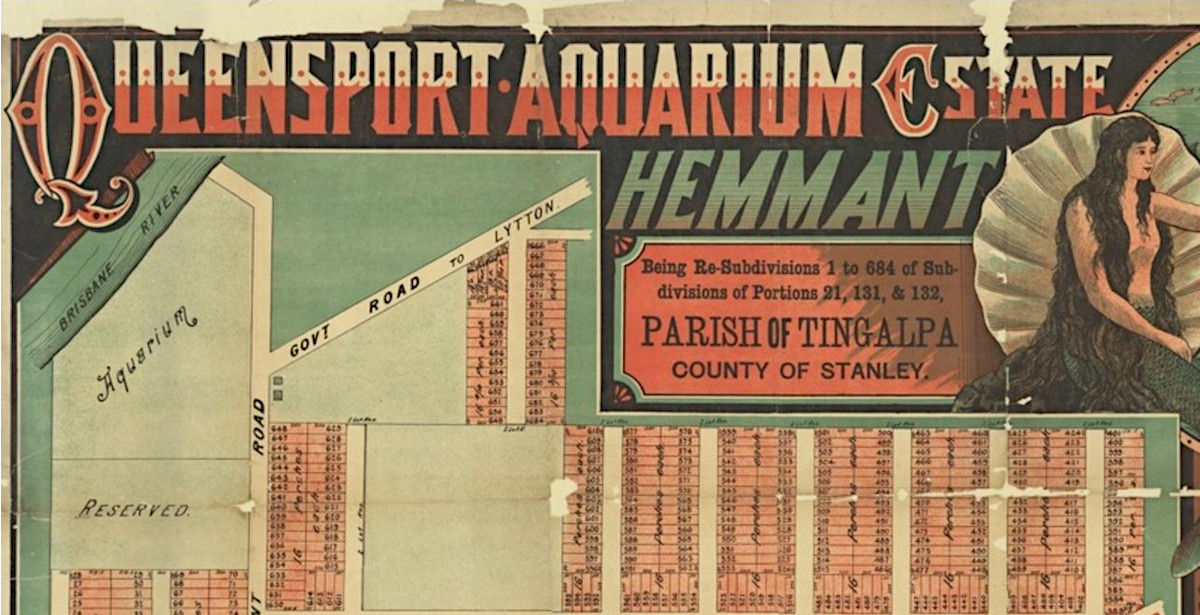
Above: Real Estate ad showing the neighbouring Aquarium Estate in 1889. (John Oxley Library)
Victorian-era Brisbane had a resort that was Dreamworld, Seaworld and Movie World all rolled into one quaint 19th-century package.
It was the 1890s, a decade before the advent of cinema, and the citizens of Brisbane loved to get out and about for their family entertainment, heading to parks, theatres, forests, museums, the coast, and anywhere the public transport of the day could get them. If they took the steam ferry from Petrie’s Bight, near Customs House, they could visit the Queensport Aquarium and Zoological Garden.
The Queensport Aquarium, located in the Brisbane riverside suburb of Hemmant, opened to much fanfare on 7 August 1889. Public aquariums had been hugely popular in England since the 1850s (following the abolition of a tax on glass!), allowing the British public to see fish other than kippers for the first time. Most seaside resorts had (and still have) an aquarium building, and the craze also took off here in Australia.
Queensport was more than just a simple aquarium, however… it was a whole resort in itself. Set in eleven acres of landscaped grounds, the centrepiece was a two-storey aquarium with six fish tanks, each one measuring 13 feet long, 4 feet wide and 5 feet deep. Other attractions included a seal pond, a small zoo, fairground rides, a fernery, fountains, and a 1,400-seat concert hall and stage, complete with plush curtains and electric organ, that was the venue for concerts, theatre and opera. There was also a sports field that was mostly used for cricket and picnics, and the grounds were illuminated by new-fangled electric lights.
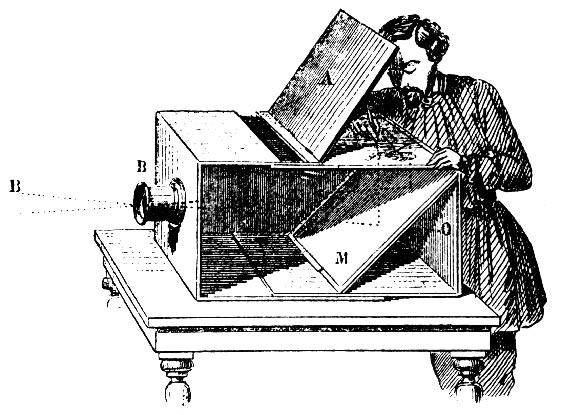
Where modern theme parks sometimes had 3D movie screenings, the aquarium had its 19th-century equivalent in the ‘camera obscura’, a primitive optical device in a darkened space that projects a picture of the surrounds onto a screen (see how it works here). At the time, this was considered to be special effects entertainment.
Camera Obscura.
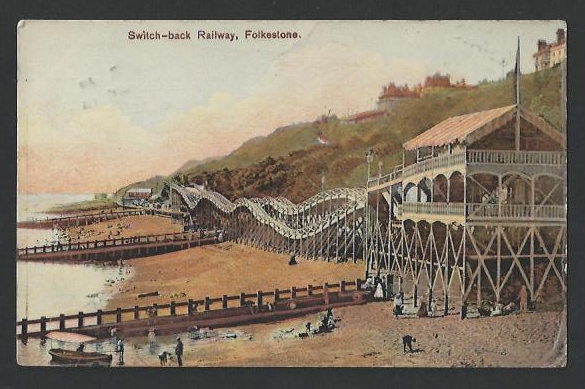
The fairground rides included ‘flying machines’ (flying foxes), swing boats, donkey rides, a merry-go-round, and an early form of roller coaster known as a ‘switchback railway’.
Switchback railway, Folkestone, England, circa 1900. Some brilliant 1904 footage of this contraption in operation can be seen here.
Apart from the fish and seals, other animal attractions were monkeys, apes, snakes, emus, panthers, cheetahs, and tigers named Jimmy, Sammy, Sir Roger and Dina. This menagerie had belonged to Charles Higgins, who had previously kept them at Toombul and also in a flimsy enclosure on the corner of George and Turbot Street in the city in 1888. Needless to say, this all ended badly when one of the tigers escaped and savagely mauled a man, exposing his brain. A newspaper account printed the understatement of the year when it described passers-by being ‘startled’ by the sight of an enormous man-eating Bengal tiger actually trying to eat a man in George Street, and unsurprisingly everybody ‘hurriedly left the vicinity’. The eventual move to safer cages at Queensport was no doubt heartily welcomed by everyone in Brisbane.*
The Queensport venture was initially a huge success, with the public flocking to the aquarium in their thousands. On the biggest days, such as Easter Monday and Boxing Day, steamers full of happy day-trippers would leave the company’s wharf at Petrie’s Bight every half-hour. The owners worked hard to get the public in, providing an array of other novelties in including the ‘Electric Orchestrion’ machine, rifle-shooting and archery exhibitions, Punch and Judy shows, minstrel shows, pedestal dancing, and moonlight trips on the steamers Woolwich and Natone.
One notable visitor was ‘Professor’ Christopher Fernandez, a travelling aeronaut whose specialty was ascending half a mile in a hot air balloon, setting off fireworks, and then parachuting back down to the ground. However, not all went according to plan during his appearance at the aquarium in May 1891, when his balloon failed to reach sufficient height and came down on nearby Gibson Island, where the good professor found himself bogged knee-deep in mud. A promised relaunch never happened due to bad weather, although Fernandez did successfully pull off the stunt at other venues around Australia.
Like most 19th-century riverside structures, the aquarium was subject to occasional damage by the Brisbane River. The big floods of 1890 and 1893 caused considerable damage, as did a gale in March 1892 that blew the switchback railway and several empty tiger cages into the river. Events like these would have added to what must have been considerable costs in maintaining the place, and although the owners soldiered on, the aquarium seems to have become much less popular by the mid-1890s. This demise is not well documented, but in late 1897 most of the content and structures were advertised for sale, including all the remaining animals and their housing. The pavilion and sports grounds stayed in place, however, and still attracted large picnic groups for a few more years. In 1900 the land was actually considered as the site for what later became the Princess Alexandra Hospital, and the pavilion was sold in 1901 prior to the land being subdivided.
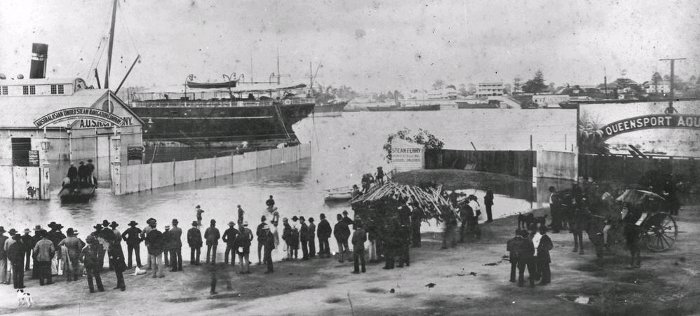
The Queensport Aquarium wharf can be seen to the right in this picture of people surveying flood damage in 1887. (John Oxley Library)
The suburbs of Brisbane would never really see anything like the Queensport Aquarium and Zoological Garden again.
* The tiger’s victim was an Austrian man named Peter Bertram, who survived the attack. A couple of years later he was charged with murder, and so would have spent time in Boggo Road prison on remand.
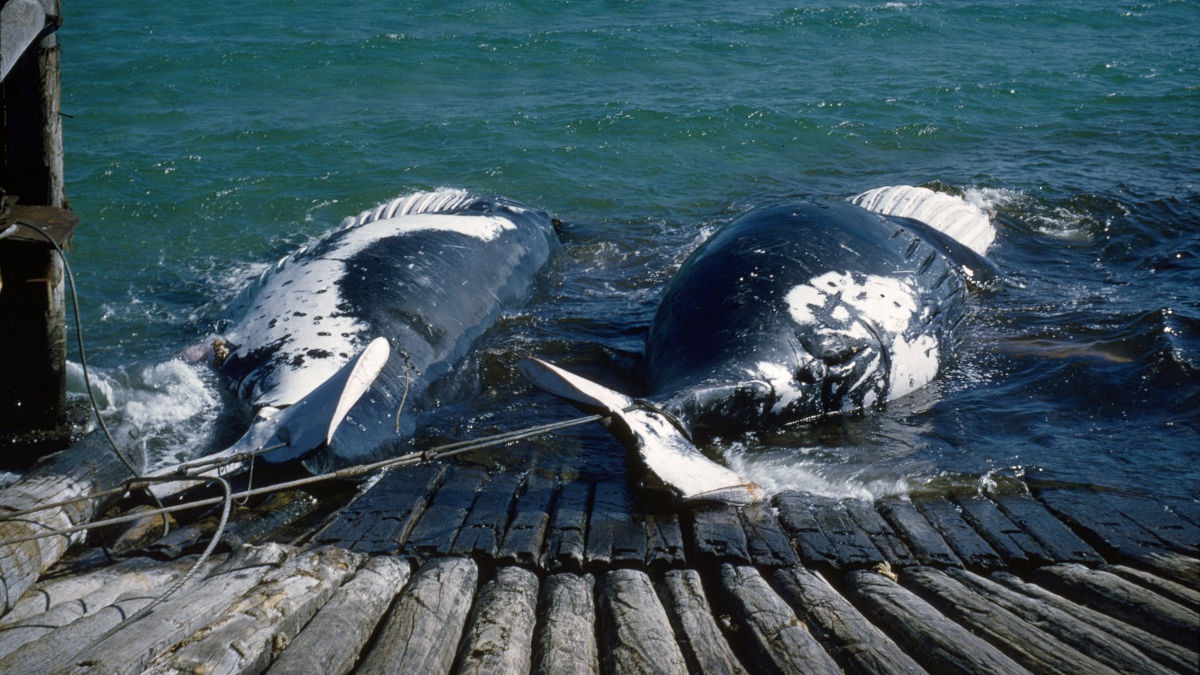
Above: Two whale carcasses being dragged ashore at Tangalooma Whaling Station, ca. 1957. (State Library of Qld)
Every southern winter, thousands of Humpback Whales migrate from the Antarctic and up the east coast of Australia to their breeding and birthing grounds in warmer tropical waters. Thousands of people head to the coast to witness these magnificent creatures, and whale-watching generates millions for the local tourism industry, and around $70 million per annum Australia-wide.
Tangalooma, 1957. (State Library of Qld)
However, there was a time, well within living memory, when the Humpback migration generated big profits for a completely different industry. Instead of being admired and protected, the whales were slaughtered in their thousands and then stripped, hacked and boiled down for the marketplace. During 1952-62 a whaling station on Moreton Island was so successful in this task that it helped to bring the eastern Australian Humpback population to the threshold of extinction. In doing so, it sowed the seeds of its own demise, and so like any industry that depletes the very resource it relies on, the Queensland whaling business died.
Australian whaling had originally been based in the southern states, with Sperm Whales, Blue Whales and then Southern Right Whales killed for their oil, baleen and meat. The Australian Whaling commission was established in 1949 to develop the whaling industry’s capacity to meet the rising demand for whale oil after the Second World War. The introduction of more efficient methods of killing whales saw an increase in the harvest rate, and there was a new focus on the east-coast Humpback migration routes.
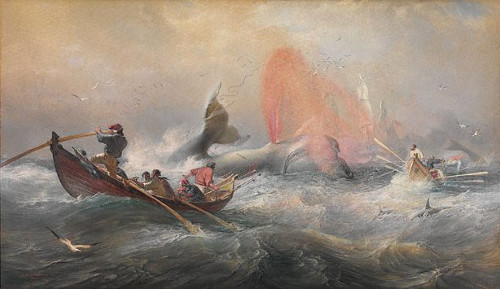
Oswald Brierly, ‘Whalers off Twofold Bay, New South Wales’, 1867. (Art Gallery of New South Wales).
The Australian Company Whale Products Pty Ltd was formed in Sydney in 1950 for the purpose of carrying out east coast whaling, and during the following year they began construction of the largest land-based whaling station in the southern hemisphere at a 12-hectare site just north of Tangalooma Point on Moreton Island. This location had several advantages, being close to the whales’ migratory route; not far from the city and ports of Brisbane; the island was undeveloped; it was relatively protected from the south-easterly winds; and a cheap lease was available from the Queensland State Government.
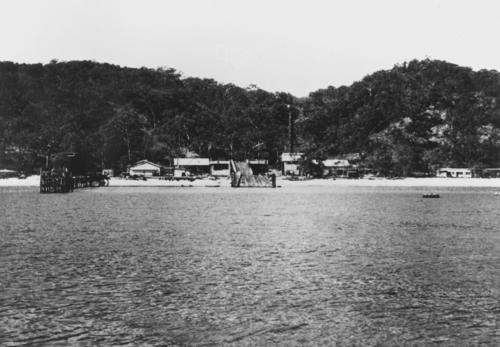
Looking towards the new whaling station at Tangalooma from the water, 1952. (State Library of Qld)
The company employed an experienced Norwegian whaler, Captain Alf Melsom, to manage the construction of Tangalooma Whaling Station. They also brought three whale chaser ships from Norway, and employed several Norwegians as senior crew and gunners. With payments of £250 per kill, gunning was a lucrative job.
The company’s original five-year licence allowed the killing (their preferred term was ‘harvesting’) of 500 whales each year, with whaling seasons running for six months from May to October, depending on the migratory movements of the whales. The first season commenced at Tangalooma on 6 June 1952, with the first two Humpbacks being harpooned near Cape Moreton during that month. The annual quota had been killed and processed by October after a season of just 124 days. The harvests were so abundant that two years later the quota was increased to 700 whales.
All this meant big money, as just about every part of the whale could be turned into a saleable product. In 1954 the average whale cost about £625 to kill and process, and sold for £900. Each whale could yield more than 8 tons of oil, a valuable resource that was used to make – among other things – margarine, glycerine, cosmetics and pharmaceuticals.
The meat was used for pet food or human consumption overseas. The offal and low-grade meat were sent to the mainland and mixed with other proteins to produce A-grade meal for livestock or fertiliser, which sold at about £80 per ton. The bones were processed to make a lower grade of stock meal. An average whale would produce about 2.75 tons of meal.
Baleen (bristle-like strands in the whale’s mouth used to strain food, was shipped to France and made into corsetry, street brooms, combs and buttons.
At the station There were a few restrictions placed on the whalers. They were not allowed to kill a whale under 11.5 metres, or one that had a calf. If they did, the gunner and captain would lose their ‘kill bonus’. They also had to radio the whaling station before any kill to make sure the machinery there was all in working order, to avoid any harmful delays in processing.
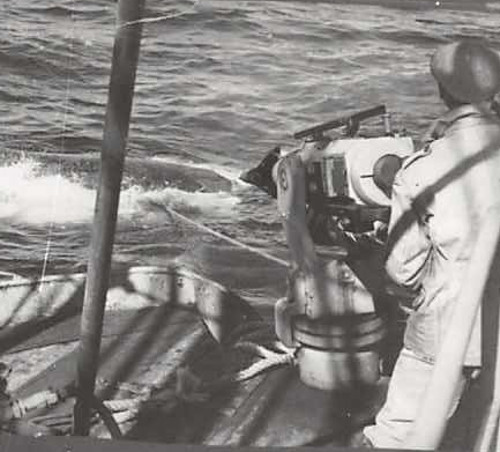
The whales were harpooned from one of the three chaser ships, using harpoons with a 75kg exploding head. An 11kg grenade inside the harpoon would explode four seconds after impact. The intent was to kill the whale quickly, which was usually the case if the harpoon was lodged near the backbone, but sometimes multiple spears were required to finish the job.
The whale carcass was inflated with compressed air to keep it afloat until it was ready to tow. It was then fastened to the side of the chaser by its flukes and towed back for flensing and processing.
A Tangalooma gunner hits the target. (sylviaadam.wordpress.com)
Tangalooma Whaling Station, 1950s. (State Library of Qld)
The carcasses would be slowly winched onto the flensing deck with steel cables placed around the tail.
‘The winch started up again and the whale toppled over on to its side, exposing its black, white and pale pink corrugated belly. The humpback’s characteristic bumps and ridges were visible along its spine and head. Its enormous tongue of perished black rubber had sprawled out of its mouth from behind the screen of fibrous baleen plates, or whale “bones, which act as a sieve to catch food. The only signs of life on the whale’s body were the tentatively waving feelers of the many barnacles which had grown along the belly and jaws.’
There is no smell of decay on the flensing deck unless, as rarely happens, a mechanical failure causes delay in cooking. All that remains after treatment is water, or graks. Yet the smell of the whales is far from pleasant. It is a memorable odour, rather like that of a wet. very dirty dog’s fur.
Despite the great quantities of blood and offal left on the deck before ‘ being consigned to the cookers, there are no flies on the flensing deck. Hygiene squads have all but eliminated flies from Tangalooma.’ (Sydney Morning Herald, 22 June 1954)
A CSIRO officer would inspect each whale upon arrival and record its sex, length, and any other required details. The location of each kill was also pinpointed on a map for future reference.
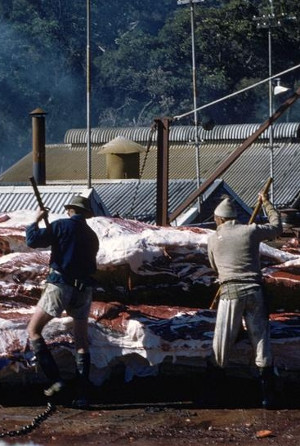
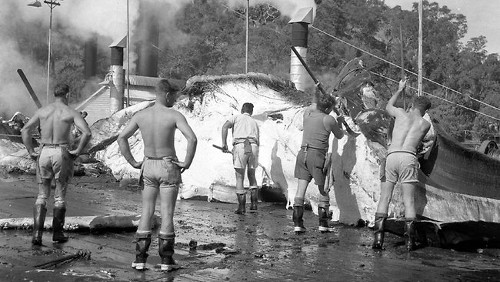
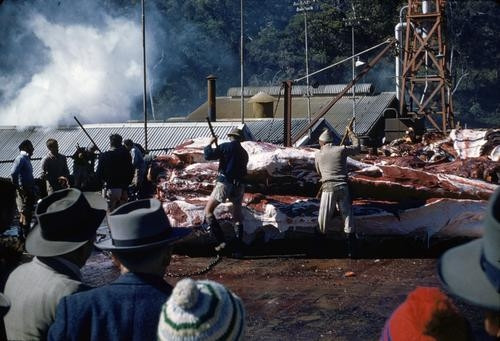
The men on the wooden flensing deck then set to work, wearing 1-inch spikes in the heels of their boots to prevent them from slipping in the resulting mess. Firstly the whale was cut up with large, extremely sharp flensing knives – long-handled cutters shaped like hockey sticks. The cutters were assisted by chain men, who winched away the cut strips of blubber. Stripping the blubber usually took about one hour, beginning with ventral blubber, then the back, lower, the jaw and baleen. The carcass would then be turned over and the remaining blubber removed, the ribs separated, and the backbone removed.
The blubber was then dropped through holes in the deck and into huge (Norwegian) Kvaerner cookers beneath the deck, where it was cooked for four hours. The oil was extracted and cleaned of impurities before being placed into a separator. The end product had a honey-like colour. This whale oil was shipped in bulk to the mainland, pumped into tanks at Hemmant, and eventually pumped into ships bound for Europe.
Anything left over after the extraction of oil was fed into a Huse plant and processed into high-protein stock meal. The backbone of the whale was broken up with a large steam-driven saw, and put into huge pressure cookers through a hole in the deck along with other parts to make more stock meal.
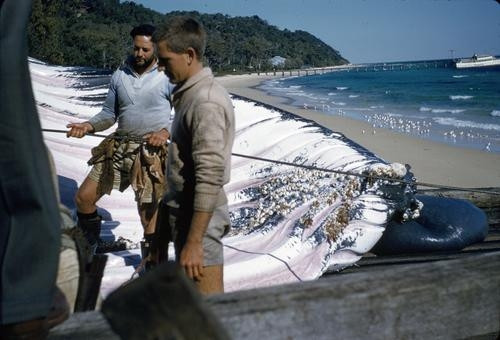
Whale carcass after being pulled ashore, Tangalooma Whaling Station, ca. 1957. (State Library of Qld)
Workers at Queensland’s Tangalooma whaling station. (Dave Schmidt, The Australian)
Workers at the whaling station, Tangalooma, ca. 1957. (State Library of Qld)
Workers with part of a whale carcass at Tangalooma Whaling Station, ca. 1957. (State Library of Qld)
At the height of production, the station provided employment for about 120 men, with a maintenance staff of about 20 employed during the off-season.
After such a successful start, the industry was heading for trouble by the late 1950s, when the introduction of vegetable oils triggered a big fall in global whale oil prices. Much more serious than that was the decline in whale numbers. In 1961 the quota was not met for the first time, with ‘only’ 591 being killed that year. In 1961 light planes were being used to spot the increasingly-scarce whales from the air, and on 5 August 1962 the whaling station closed after only 68 whales had been caught that season. In the end, it was a simple matter of economics. The industry had exploited a natural resource at unsustainable levels until the resource and the profits dried up.
Over the course of one decade, the whalers had killed 6,277 Humpbacks (and one blue whale). What had earlier been an estimated local migration population of 25,000 Humpbacks had been reduced to about 500. In 1963 the whaling of Humpbacks in Australian waters was banned, and two years later they were placed on the Protected Species list. It is also thought that illegal Russian whaling in the seas south of Australia and New Zealand during 1961 and 1962 probably took nearly 24,000 Humpbacks.
The Tangalooma Whaling Station was quickly sold to Gold Coast businessmen in June 1963, and the site was converted into a leisure resort, with the the factory and flensing decks being converted into a bar and lounge area. This wasn’t the first time that Tangalooma had visitors, because groups of children from schools or Scout groups used to go there during the whaling years to watch and learn about the process of whale butchering, in the company of a guide from the whaling company.
Today, the only educational whale experience that children might have near Moreton Bay is whale watching, which is booming along with the resurgent population of Humpbacks. In 2015, researchers counted about 25,000 of the whales migrating up the coast, which means they have now returned to pre-hunting population levels.
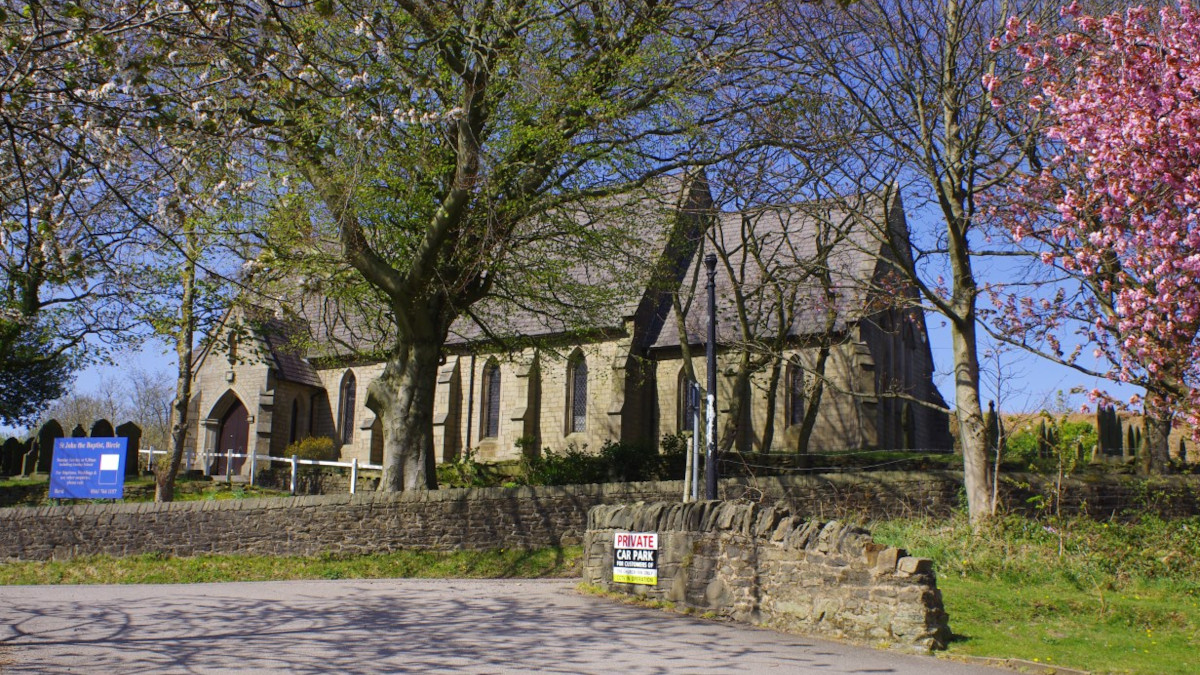
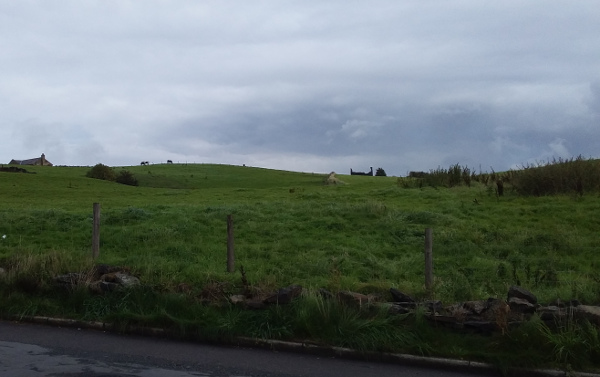
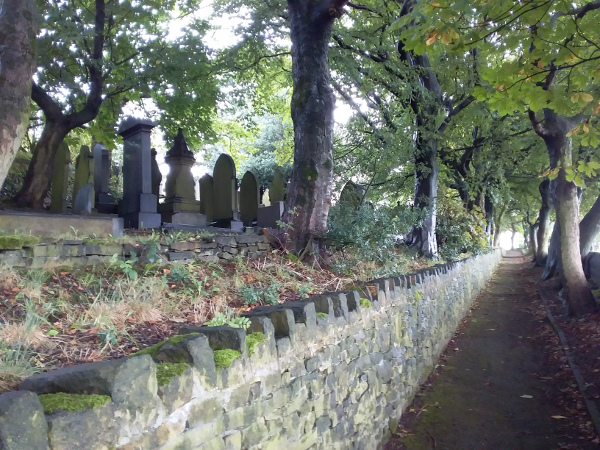
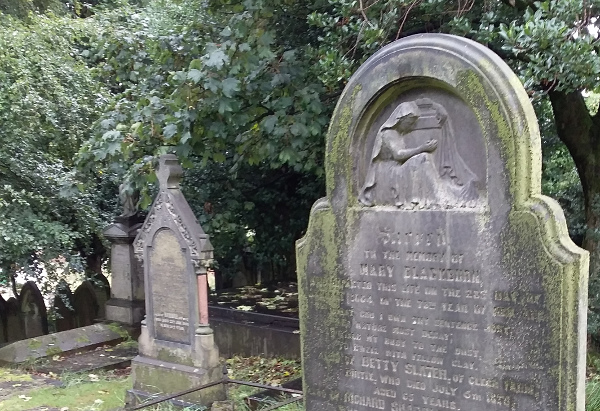
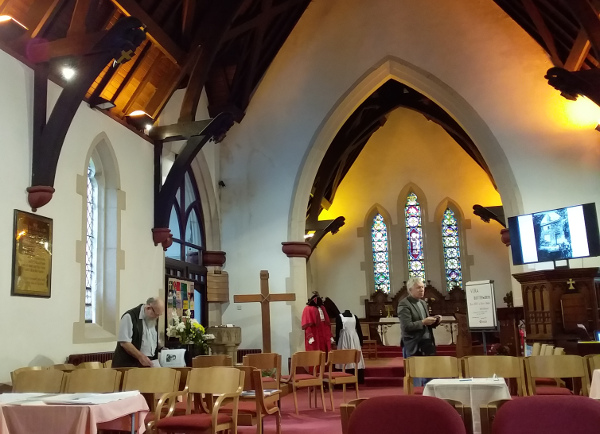
During a rare visit to my old hometown of Heywood, Lancashire, a few years back I was lucky enough to arrive, quite by chance, during Heritage Week, when a number of local institutions opened their doors to the public with onsite tours and displays. One of these places was the Church of St John the Baptist, just over the border in Castle Hill Road, Bircle, Bury, and so I paid it a visit one drizzly September morning.
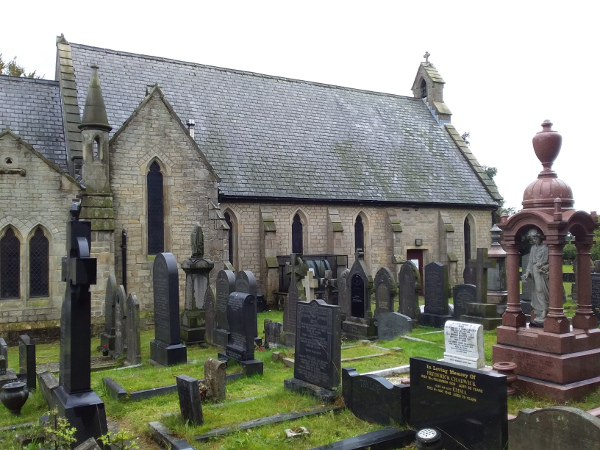
This small countryside church was consecrated in 1854*, and like many churches of the time it had an attached graveyard. This was a couple of years before the general cemetery opened in Heywood, and 15 years before the current Bury Cemetery was established. While these large municipal cemeteries led to a decline in the use of small church graveyards, especially the urban ones, the rural setting of St John’s meant it was still used on a regular basis and both the church and graveyard are still operational today.
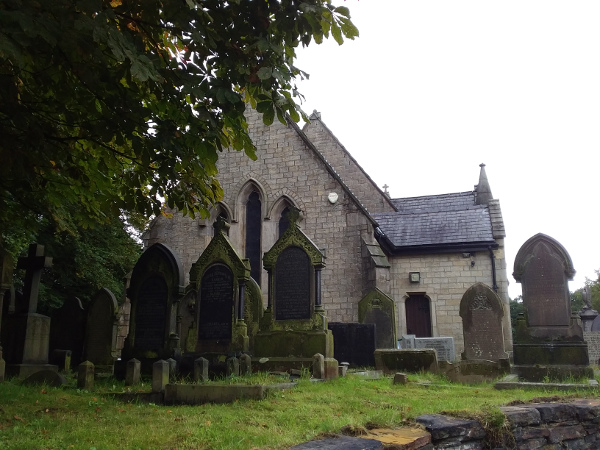
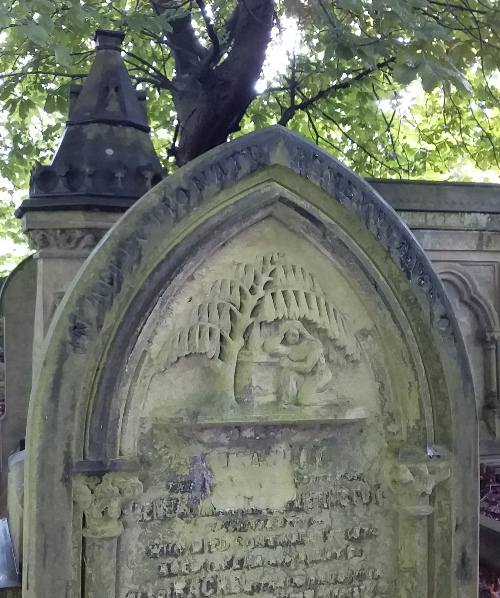
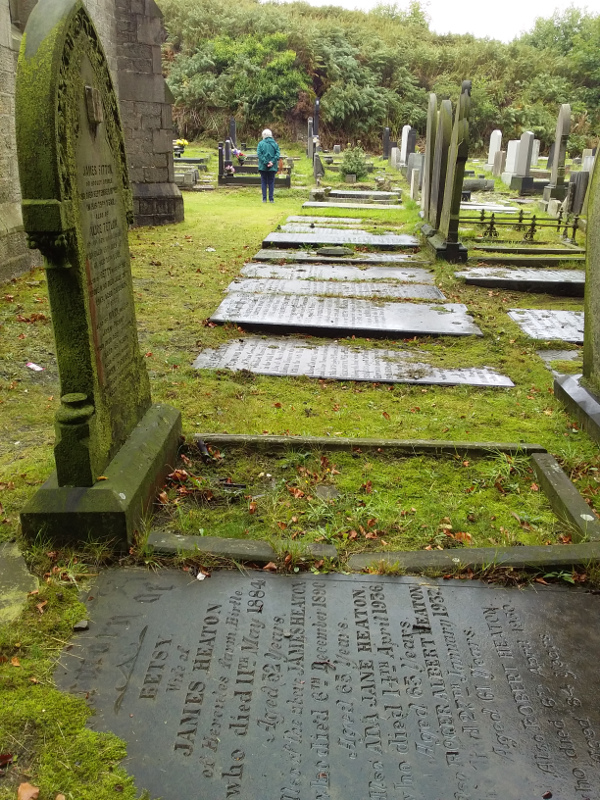
This is a Church of England institution, built in stone in the Early English style, with slate roofs with coped gables. It is a beautiful little building set in pretty countryside, but my main attention (as always with these places) was with the graveyard that surrounded it. This was a crowded burial ground full of solid-looking gothic-style headstones and horizontal ledgers. I (roughly) estimate it holds maybe 300-400 graves, some old and some more recent. If you know something of the history of this place, a few prominent local surnames – such as Holt, Ashworth and Chadwick – stand out. Birtle (or Bircle) itself has a recorded history dating back to the 13th century, so the church is relatively modern in the scheme of things.
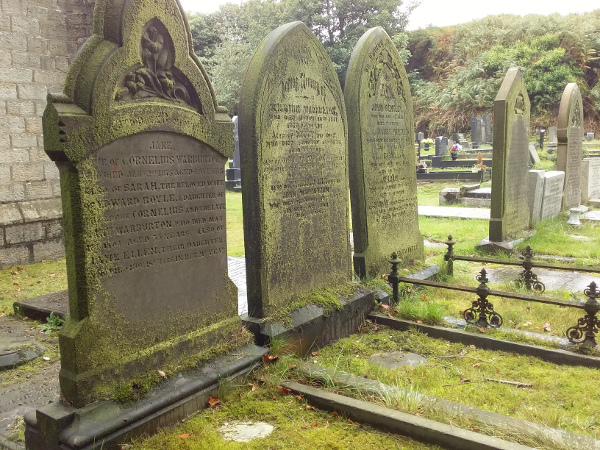
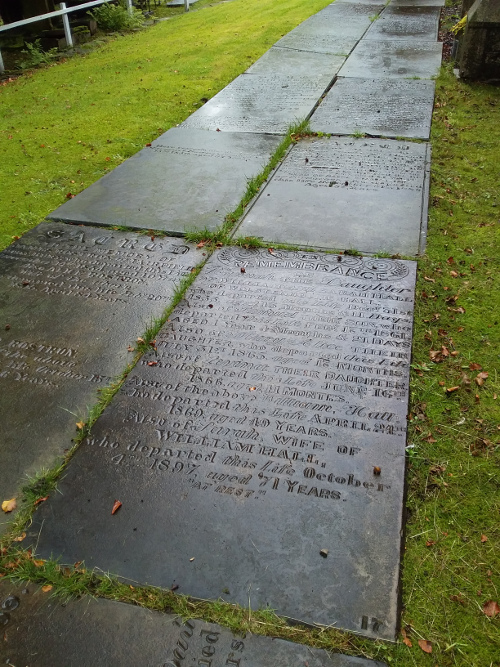
What really struck me was how green the place looked. The countryside was particularly verdant in the last wet days of summer/first days of autumn, and many of the stones here were covered in a thick moss. The 19th-century stones looked really solid (I’m guessing granite, and in some cases slate), with the inscriptions in them generally still really sharp and crisp. Many were horizontal slabs, the kind that end up serving as footpaths around churches, and these were usually filled top-to-bottom with names, dates and places. As always, a churchyard is an immediate guide to local history.
Regrettably, at this time I hadn’t yet learned to always take note of the names of the stonemasons responsible for these creations, which is a shame because similar carving styles were very evident in other nearby cemeteries. One of the things about seeing a historical cemetery for the first time is sheer volume of new information to take in, and anyway I was here as a tourist and not a methodical researcher.
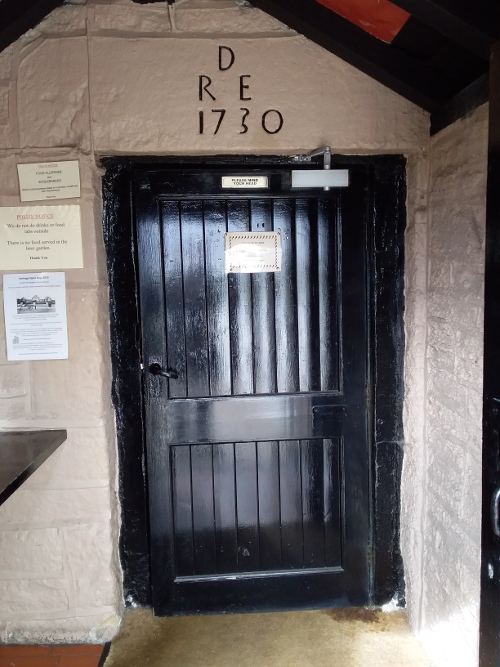
I enjoyed time inside the church itself, checking out multimedia presentations, old registers, artefact displays, and of course staring at the stained-glass windows (another favourite pastime of mine). Afterwards, I popped into the 18th-century ‘Church Inn’ right next door for a very splendid real ale and lunch.
* A publication I picked up inside the church itself states that the church was ‘first dedicated in 1846’.
My apologies for the poor definition on some of these photos – I was using a phone camera that was so bad that I went out and bought a new camera a couple of days after this.
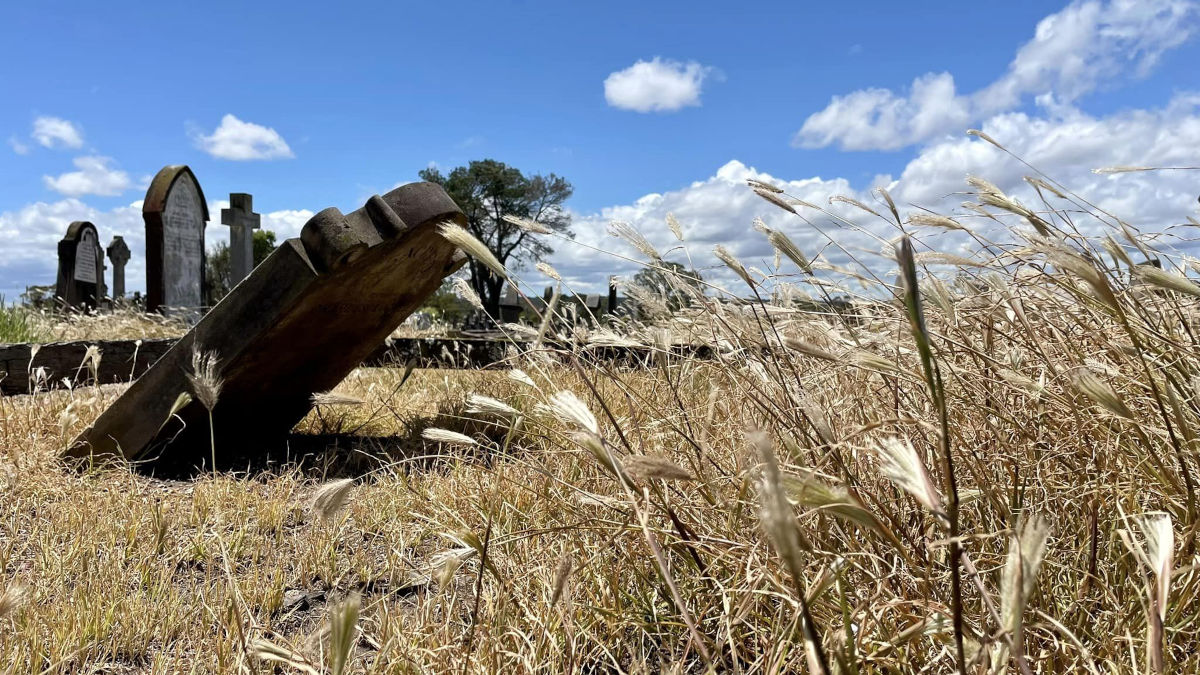
Above: From a trip to Warwick Cemetery, December 2022. (Jenny Parrish)
Despite the specificity of the name, me and my colleagues in the Friends of South Brisbane Cemetery have a long history of engaging with other cemeteries around Queensland. After all, once you know how to ‘read’ old cemeteries and understand the shared framework of their histories, they are all interesting. We can’t even drive past an old cemetery without having to pull over and investigate it, working out the local population demographics, excitedly noting new symbols or original monument designs we haven’t seen before, identifying local stonemasons, etc. Once you’ve got the bug…
Apart from our very extensive work within South Brisbane, our not-for-profit activities in other Queensland cemeteries over the years include:
writing books and conducting day and night tours at Ipswich General Cemetery (our In Heavenly Garb book about that cemetery was a winner of the ‘Viva Cribb Bursary Award’);
having been employed by the Ipswich City Council as researchers on the Ipswich Historical Cemeteries Project;
being engaged by the Brisbane City Council to run twilight tours at the Mount Gravatt Cemetery;
being consulted by BCC for their ‘Brisbane Open House’ tours at Toowong Cemetery;
being consulted by other groups on establishing ‘cemetery Friends’ groups at Moggill and the Gold Coast;
undertaking numerous study trips to cemeteries at places such as Stradbroke Island, Toowoomba, Stanthorpe, Gold Coast, Nundah, Nudgee, Scenic Rim, etc;
supporting other history groups’ tours and activities at places such as Lutwyche, Balmoral and Toowong cemeteries;
writing articles such as the ‘The Dead Outside the Fence’ (Paddington Cemetery) for the scholarly Queensland History Journal;
Liam’s original research and publishing on graves at St Helena Island;
researching and published books on Toowong Cemetery (The Prisoners of Toowong Cemetery; Hong Kong to Toowong)
As you can see, our cross-cemetery credentials are very broad and well established. We have also been a leading advocate of the 2015 Brisbane City Council decision to encourage the public to better ‘engage’ with municipal cemeteries (which are classed as ‘parks’ under council laws), and a lot of the above work has supported that aim. Most cemeteries in Brisbane have no Real History tours (i.e., featuring nothing but factual historical information), and we have filled the void where we can and introduced thousands of people to the quiet joys of their local burial grounds. Being not-for-profit, the tours have also raised valuable funds for a number of upcoming cemetery history projects which will emerge over the next 12 months or so.
I guess the point of all this is to say that – as a professional historian myself – I would encourage other historians and volunteer history groups wherever they may be to utilise these resources to share their research and stories of our city, increase public appreciation of these special places, and generate funds for their own history projects. After all, Brisbane’s municipal cemeteries have a shared history and are funded by and belong to the people all around Brisbane.












 Christopher Dawson