A Grave Scandal in Ipswich and Goodna

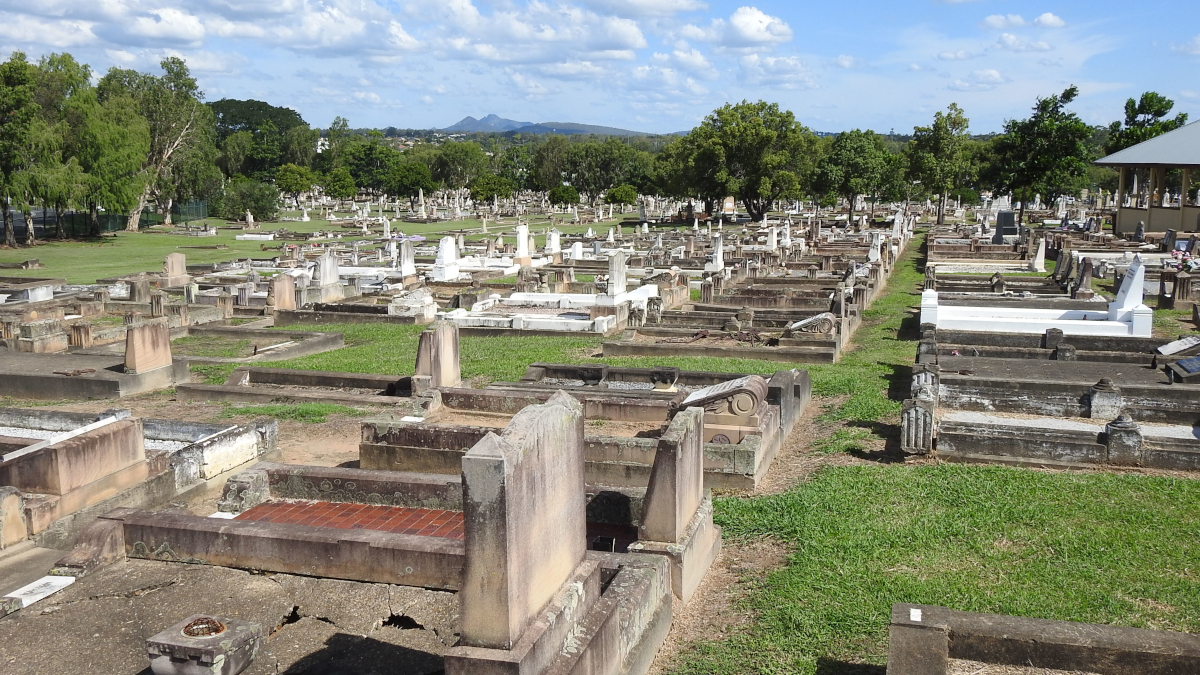
Above: Looking north-west to south-east, Ipswich General Cemetery, 2021. (Wikipedia)

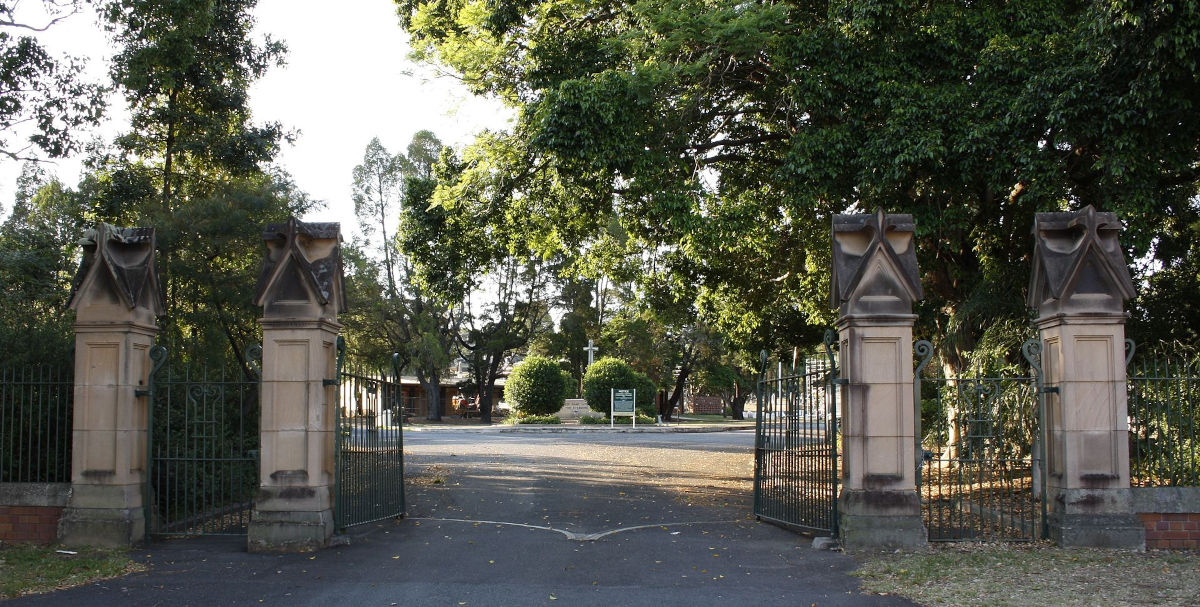
Do you have a loved one interred in the Goodna Cemetery or the Ipswich General Cemetery? Did you know that the Goodna Cemetery Trust and the Ipswich City Council have allowed a small business to charge customers $70 each to play ‘ghost hunting’ on the graves in those cemeteries?

Commercial ghost-hunts are run by people claiming to be ‘professional paranormal investigators’ (although there is no such thing) and charging customers big money to use fake ‘ghostometer’ gadgets to locate ghosts. None of this has anything to do with science or serious research into the paranormal (which is inconveniently difficult). It is purely a money-making exercise, and it could be argued that the practice borders on fraud as there are obvious ethical concerns with charging customers to use devices that do not do what they are advertised to do. This article in The Atlantic provides a good explainer on ‘The Broken Technology of Ghost Hunting’.

It seems inconceivable that cemetery authorities who sell grave plots to bereaved people also allow those same resting places to be exploited in this manner. I have not found a single other authority in the rest of Australia (or even the world) that allows cemeteries under their control to be used in this way. And apart from a couple of local authorities in Queensland, there aren’t even any who allow ‘ghost tours’ in their cemeteries (‘ghost TOURS’ are guided tours featuring ghost stories, while with ‘ghost HUNTS’ the aim is to ‘find’ spirits).

One of the groups involved in this venture is Pariah Paranormal, who market themselves as ‘paranormal investigators’ but their main focus seems to be running commercial ghost hunts in various places around southeast Queensland.* One of those places is the historical Wolston House. According to one of their ghost-hunt customers, they decorated the old house like a cheap horror-movie set, with one of the hosts apparently being dressed as something like the grim reaper as they talked about how much they ‘respected’ the history of the place. It is difficult to understand how the Queensland branch of the National Trust – who manage Wolston House – allow this demeaning and unethical exploitation of an important heritage place. 

The legal structure of Pariah Paranormal is also something of a mystery. As of 2022, there was no ABN in that name (despite their claims to the contrary), and they are not registered as a non-profit group. Their partner in all this is Ghost Tours Pty Ltd, whose record in this field includes being BANNED from doing similar hunts in Brisbane cemeteries and Boggo Road Gaol after the relevant authorities deemed those activities to be too disrespectful.

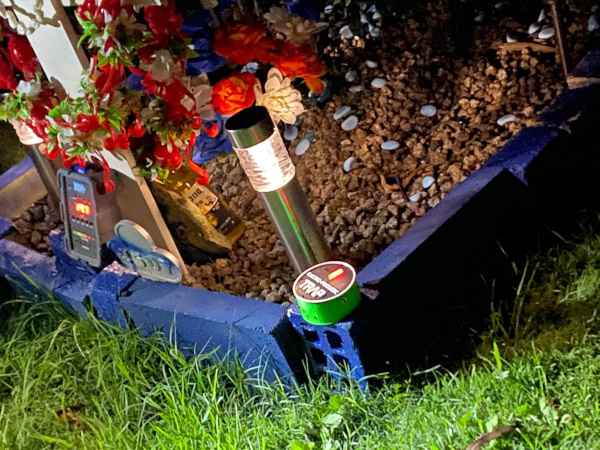
One factor in the decision to ban ghost hunting at Boggo Road was having customers trying to find spirits in cellblocks where First Nations people had committed suicide or died by other means, all within living memory. This lack of cultural respect is also apparent at Goodna Cemetery, where there are numerous graves of recently-deceased First Nations, Pasifika, and Vietnamese people. Social media posts about a recent ghost hunt there showed the group focussing on the grave of a Pasifika person who only died in 2020, with the allegedly ‘psychic’ guide claiming to have had a chat with his spirit. The photo below shows a couple of fake ghost-detecting gadgets placed on his (obviously well-tended) grave.

Note the small green gadget here labelled as a ‘TRAP’. This obviously doesn’t work, but are they suggesting they are actually trying to trap a spirit? **

A home-made device marked 'trap'.
A home-made device marked ‘trap’, Goodna Cemetery, 2022. (Facebook)

Pariah and Ghost Tours try to get up to FIFTY people a time into this space, and if that happens then it is likely that a lot of the other graves in this area would also be used in this way. It raises the question of whose graves they target in the Ipswich General Cemetery.

How did any of this happen? There are questions that need to be answered as to why the Goodna Cemetery Trust and the Ipswich City Council are apparently the only authorities in the world to allow this misuse of cemeteries they are supposed to be custodians of.

  1. Exactly WHO approved these activities in the cemeteries?
  2. Does that person have any relationship with Pariah Paranormal or Ghost Tours Pty Ltd?
  3. Can the public see the correspondence related to the decisions to grant permission?

Unfortunately, the decision-making processes of the Goodna Cemetery Trust and the Ipswich City Council remains a mystery.

Graves have a unique feeling about them as places of remembrance, love and connection. There is a tangible sense that the deceased are ‘there’. I’ve visited graves myself and had a chat with the ‘resident’, and as someone who spends a lot of my time in cemeteries, I’ve seen many other people doing the same. Chatting, crying, playing a guitar, singing, praying, just spending time with their loved ones.

What Pariah Paranormal and Ghost Tours are doing is a tawdry, ghoulish misuse of that special feeling.

Updates
* Pariah Paranormal have since claimed that the money they raise goes to the sites themselves. 
** This device has now been identified as a home-made ‘REM pod’. I am not sure why it is prominently marked as a ‘trap’. These pods are described here – Ghost Hunting Gadgets: The REM Pod | Skeptical Inquirer – as:

“In closing, this device is an overpriced novelty, much like the repackaged cat toy (ball) I mentioned earlier. The REM Pod provides no useable data, and even if it did, the lack of experimental controls during common use would render any data useless. It’s the thrill of the device lighting up/making noise for “no apparent reason” and “just like on TV” that entices ghost hunters to spend their money on products such as this. Money that would be put to much better use purchasing a book on critical thinking, which is what I would recommend.”

Colonial Columns: Pre-1893 Floods in Brisbane and Ipswich

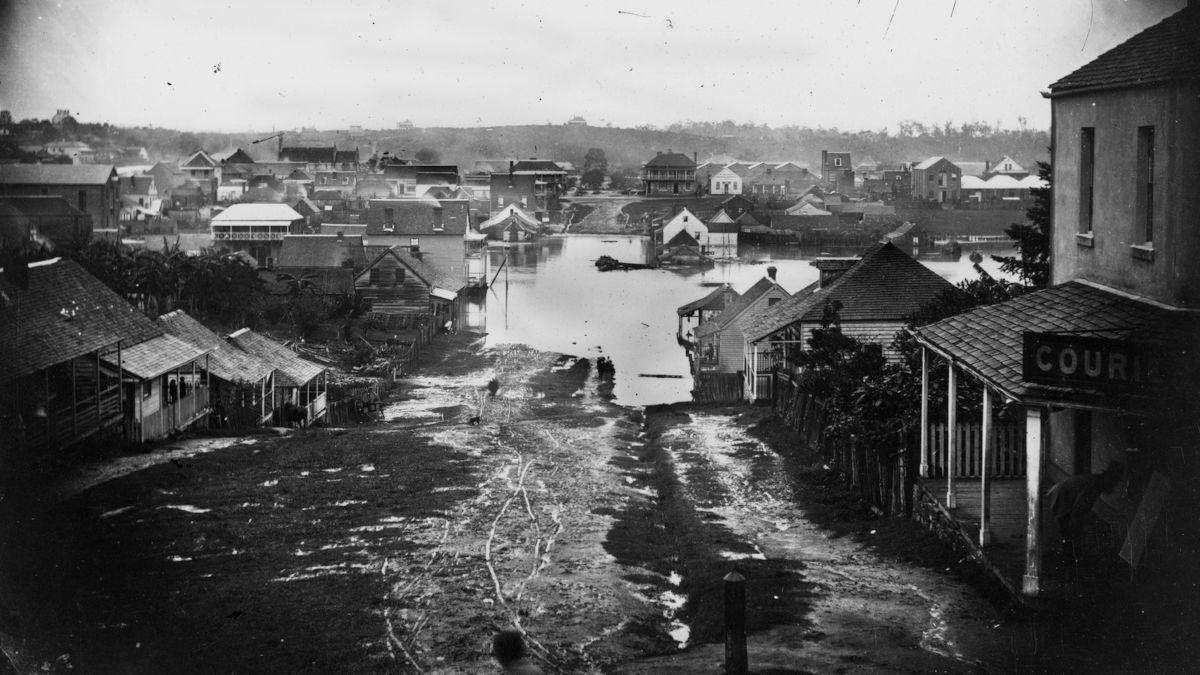
Above: Charlotte Street (from the corner of George Street) during the flood of March 1864. (State Library of Qld)

For Brisbanites, the floods of 1893 have gone down in history as being the most destructive to hit their city. There were, however, many different flood events to hit Brisbane and Ipswich before that time. The following article was written by JJ Knight in the aftermath of the 1893 floods as a reminder of those earlier deluges, all of them still within living memory.

Queenslander, 18 March 1893
‘Some Early Day Floods.
BY J.J. KNIGHT.

The recent floods afforded an excellent opportunity for a controversy as to the extent of former day inundations as compared with the trio which visited Brisbane last month. Thus, while some affirmed that at least one flood of bygone days (1841) equalled in magnitude the latest visitation, by far the majority have declared that the disaster of 1893 occupies the premier position. Of course, what are now high lands were in 1841 depressions subject to the action of ordinary high tides (thanks to the creeks which at that time crossed some of the present principal thoroughfares), while a large volume of water which now finds its way through dredged channels would in days gone by have been almost sufficient to cover parts of what were described by Dr. Lang as “the alluvial flats of Brisbane.” There can, however, be no question as to the fact that the floods of 1893 were the highest in the recollection of the white inhabitant.

It is interesting, too, to note how while one section has systematically abused the Stanley and other tributaries of the Brisbane River another has laid the blame at the doors of those who ignored the just claims of Nature and fixed the site of the city on what has practically been proved to be part of the river bed. As a matter of fact, when the site of Brisbane was selected its liability to flooding did suggest itself to the mind of the discoverer (Oxley), but it was quickly dismissed as improbable. Oxley found the country looking its best, and “there being no appearance of its being flooded, no mark being found higher than 7ft. above the level, which is little more than would be caused by the floodtide at high water forcing back any unusual accumulation of waters in rainy seasons,” the gallant lieutenant may be exonerated from all blame in the matter. Besides, Oxley had been sent out to search for a site not for a city but for a penal settlement, one of the chief recommendations for which would be the presence of fine agricultural country. Oxley never dreamt of a Stanley or a Lockyer (though he had found and named the Bremer), as is shown by his own words:

“I felt justified in entertaining a strong belief that the sources of the river will not be found in a mountainous country but rather that it flows from some lake which will prove to be the receptacle of those interior streams crossed by me during an expedition of discovery in 1818!” 

From the remarks of Oxley just quoted it is apparent that for some years prior to 1823 no flood had occurred in the Brisbane. In 1825, however, the penal settlement was visited by an inundation, and the fortunate circumstance that Major Lockyer was examining the upper reaches of the river at the time served to dispel Oxley’s illusion about an interior lake. Lockyer had on the 21st September camped at a place “which, from the colour of the soil, was named Redbank,” when the first effects of the flood were felt. For a day or two previous heavy rain had fallen, but on the day in question it had cleared up. In the early morning Lockyer had noticed that the water level had risen 1ft. within an hour, and its discoloured appearance indicated that a flood was coming down. “The rapidity of the current increased every hour, and the river had risen upwards of 8ft. by 11 o’clock” – three and a half hours after the first rise had been noted. 

Lockyer was compelled to camp for a day or two. He then made another start, but travelling by boat was extremely difficult, and after four days’ exertion a narrow escape from losing his boat and provisions caused him to decide to pursue his investigations on foot. The tributaries of the Brisbane must have been doing their best to sweep out of existence the one dark spot in Northern Australia known as Moreton Bay if we may judge of the experience of Lockyer on his memorable trip. Lockyer’s idea as to where these tributaries were is as amusing as Oxley’s opinion as to the source of the river. He says: 

“I think it very probable that the large swamp into which the river at Bathurst loses itself occasionally overflows, and is the cause of the tremendous floods that at times take place on the Brisbane River!”

It would thus appear that inundations here were known to Lockyer if they were not to Oxley, and his remark that “on our way we had many proofs of a small flood; a large one must be terrific,” plainly demonstrates that Lockyer was possessed of information concerning the place which in later years would have been extremely useful had it been available. 

The next flood I can trace was that of January, 1841. Unfortunately no complete records were kept, but Mr. John Kent, who died many years ago, took the level of the Bremer and found the rise to be 55ft. What the rise in the Brisbane was I am unable to discover, but the late Mr. John Petrie in my many interviews with him often alluded to “the great flood of 1841.” The rainfall here was nearly 20in., and if we add to this the 55ft. rise in the Bremer and the water from the Stanley, which was heavy, we can readily understand that the inundation was a serious one. There is an anecdote about a coloured man named Cassim (who died a few years ago at Cleveland, where he kept a hotel) coming down from Ipswich on a pumpkin to report that the place was out of provisions, but in the absence of reliable records I take the story with the proverbial grain of salt. 

Heavy floods followed in January, 1844, and December, 1845, and the intervening years to 1852 were marked by minor deluges. Even the opponents of Dr. Lang gave him the credit of being a far-seeing man, and that he was not misjudged in this respect is shown by his views as to the eligibility of the site, which I am led to quote even at the risk of offending property owners on the south side. The doctor had experienced difficulty in crossing the river, and complains thusly:

“So late as the month of December, 1846, I had to wait from 9 o’clock in the morning to nearly 4 in the after-noon till I could get my horse ferried over from Brisbane town in the miserable apparatus even then available for the purpose. In this way a local interest was established on the south side of the river, where the Government was moved to lay off and sell building allotments at a somewhat lower minimum price – in a perfect swamp, however, liable to fearful inundations.”

The veteran then goes on to designate South Brisbane as “unsafe” and “insalubrious,” and urges the Government to place on the river a good punt, and thus aid in the concentration of the population on a spot in the immediate neighbourhood in the highest degree salubrious and beyond the reach of inundations. 

The flood or, to be more correct, the floods of 1852 were in many respects similar to our latest experience. Rain set in on the 16th March and continued until the 20th, when extreme wet gave place to extreme heat. This rain caused a considerable fresh in the river, and Stanley-street, among other low-lying places, was covered. The Courier in its weather report on the occasion remarked that “Stanley-street might be more appropriately called Stanley Creek!” Anyone standing on the roadway at McGhie, Luya’s, and looking at the level of the ground on each side of the street, will be struck with the slight difference that exists between the river level and that of the bank. However, the flood subsided, only to be followed a fortnight later by one of greater dimensions. Rain recommenced falling on the 8th April (Thursday), and was accompanied by heavy squalls. This sort of thing continued until Saturday, when there was a lull, and it was expected that the worst had been seen. Doubts were dispelled on Sunday when the rain again tumbled down, and the Stanley and Bremer waters came down, bringing with them casks of tallow from John Smith’s boiling down works, wool, produce of all kinds, trees, and other debris. 

Only the other day a resident of the forties gave to a well-known gentleman in this city his recollections of the ’52 inundation. These were committed to paper and kindly handed to me. The narrative reads:

“On the occasion of the 1852 flood the water came up Albert-street above Elizabeth-street. It covered the late Mr. William Sheehan’s property in Queen-street, long known as the site of St. Patrick’s Tavern, and crossing Queen-street it went into Adelaide-street at the Albert street corner, now known as the saleyards. From Sheehan’s property down to the north side of Edward-street was under water, as well as the bulk of the land fronting Queen-street and lying between Edward, Adelaide, and Creek Streets. On the river bank the water entered the old building known as the Colonial Stores, and the flood mark was fixed at the foot of the arch, which in those days existed over the steps leading from near the present Queen’s wharf up to St. John’s Church, between the Colonial Stores and the present Museum Building. South Brisbane was all under water, the only part visible being two ridges, which looked like whalebacks standing out of the water.” 

As a matter of fact, however, the ’52 flood was not nearly so high as that of eleven years before, and it is possible that the old colonist errs when he says the water crossing Queen-street from St. Patrick’s Tavern (which, by the way, stood where the People’s Cash Store is now located) went into Adelaide-street. Other old residents assert that the water never crossed Queen-street at the point in question, and I incline to the belief that the water at the Albert-street corner of Adelaide street got there up the creek which flowed from the river at Creek-street, thence by a serpentine course under Alfred Shaw and Co.’s premises, along Adelaide-street, and terminated in a chain of waterholes between the present Town Hall Reserve and the old Reservoir. 

Be this as it may, the fact remains that the 1852 experience was a mere flea-bite, though there is no denying it did a deal of damage to property. The Condamine was in heavy flood about the same time, and – strange coincidence – a similar state of affairs existed in the South. In view of a suggestion which has been made by a correspondent the following proclamation issued in 1852 may not prove uninteresting:

“The Governor-General directs it to be notified that, in consideration of the distressing circumstances attending the recent inundation of the village of Gundagai, his Excellency, with the advice of the Executive Council, has been pleased to sanction an arrangement by which holders of allotments in that village which are liable to inundation will be permitted to obtain land in some other situation and of a like value as nearly as may be estimated.”

This concession was not extended to Moreton Bay, probably because we were not in such a plight as our Southern neighbours. On the occasion referred to the valley of the Murrumbidgee was converted into an inland sea; the town of Gundagai was swept away, only seven buildings remaining out of seventy-eight, and eighty-nine persons out of a population of 250 perished. 

May of 1857 saw a big rise in the Brisbane and the consequent flooding of streets, but this was a mere circumstance to that which occurred in February of 1863. On this occasion the inundation was heralded by a terrific cyclone which played great havoc along the coast, and caused the captains of the immigrant ships Everton and Wanata to choose the open sea rather than remain at anchor in the Bay. Two days later (the 15th) the waters from the Upper Brisbane came down, and sent the Brisbane up to the 1841 level. 

Another flood followed in 1864, but this was scarcely equal to the one of the previous year; 1869 and 1875 also witnessed floods, but it was not until 1887 that we really began to realise the area drained by the river and its tributaries. If any doubts existed with respect to this the occurrence of 1890 would set them at rest, and I make bold to say that not one out of every hundred persons would even then have thought the Brisbane capable of such a surprise as was furnished by the three floods of last month. It is of course a moot point what the next will be like, but it is a painful fact that high as the last floods were they did not reach the boundary shown on the geological map which marks the original bed of the Brisbane River. Indeed from a study of the map in question it would seem that Nature is slowly bat surely taking revenge for the encroachments made on her preserves by the civilising agency of man. 

Drifting away from floods in the Brisbane it may be remarked that other towns in the colony have at various times had awful experiences, and it is not a little remarkable that these have been coincident with our own. To go into them fully, however, would take more time and space than can at present be devoted to them, but in passing it may be mentioned that the Fitzroy has shown an especial aptitude for breaking out of bounds. The largest of the earlier floods there, I believe, happened in 1862, ’63, and ’64. In the first year the trouble was caused by a phenomenal rainfall (22½

 in. in thirty-nine hours), which sent the river up on the 1st April 20ft. above spring tides, and enabled the Messrs. Archer to sail seven miles across country on a rescue expedition.’

Colonial Columns: Diary of the German Mission at Moreton Bay, 1841 (Part Two)

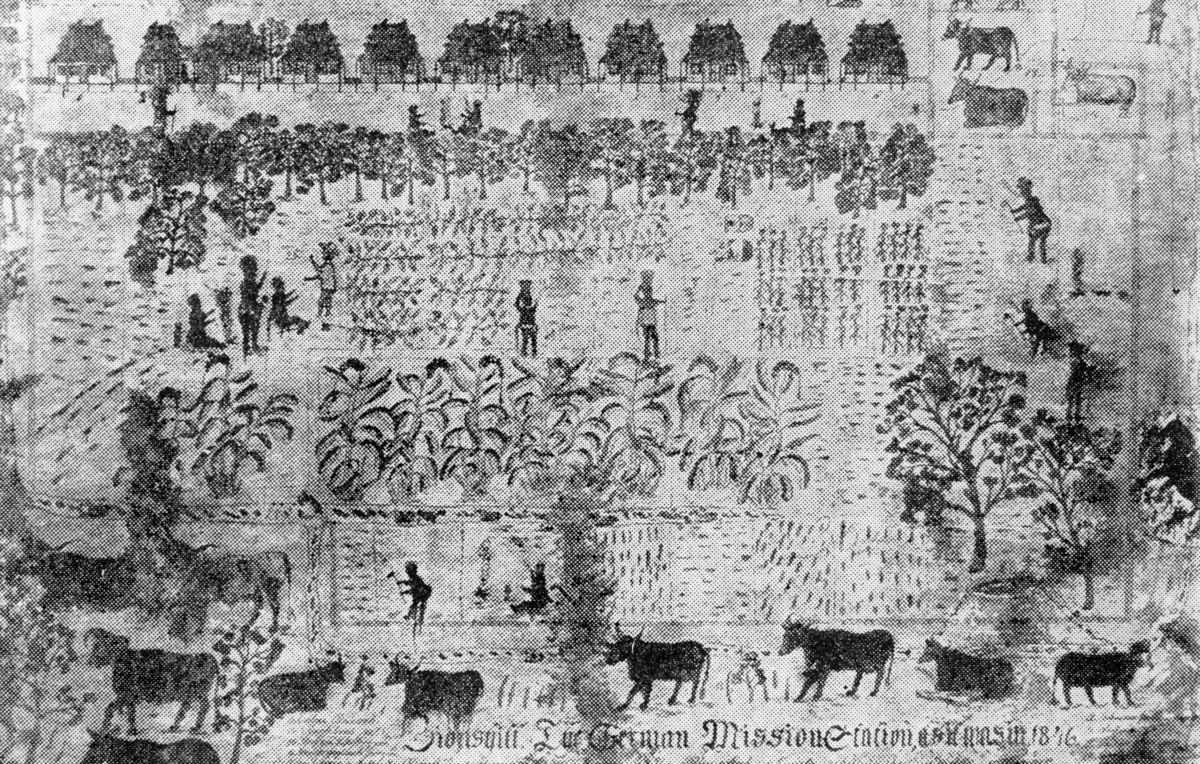
Above: Extract from Carl F. Gerler’s sketch of the German Mission Station at Zion’s Hill, 1846.
(John Oxley Library)

There was a convict settlement at Moreton Bay during 1825-42, centred in what is now the centre of Brisbane, but the first permanent European settlement in the area was established at Nundah in 1838. This was a Moravian mission run by German missionaries with the aim of converting local First Nations people to Lutheran Christianity, and was supervised by Reverend Carl Wilhelm Schmidt and later Reverend Christoph Eipper. The mission was named Zion Hill’s and in later years the local area became known as German Station.

The settlement had limited success, probably because it was too close to Brisbane to engage with surrounding First Nations groups, and it was closed in 1846 and four years later the area was surveyed for land sales. Several of the missionaries and their families were laid to rest in the heritage-listed Nundah cemetery.

Occasional updates on the progress of the mission appeared in the pages of colonial newspapers back in Sydney, including the following extract written in 1841. These pieces give a good idea of everyday life at Zion’s Hill.

Colonial Observer (Sydney), Thursday 18 November 1841.

Extract from the Diary of the German Mission at Moreton Bay from the end of July to the l7th of September. 1841. (Concluded from our last.)

Week From the 28th of August to the 3rd of September. – Thirty-two children at school; twenty-three natives employed for the mission; On Saturday Mr.. E. went to the Commandant at Brisbane Town, to represent to him that we had but a small quantity of potatoes to pay the natives for the work they do at Girkun, for their own benefit, and that as it would be desirable to continue this plan; he would be pleased to furnish us with some corn-meal for the purpose of paying them for their work. In answer to this request the Commandant. immediately ordered twenty bushels of maize to be issued from the stores for this purpose.

Monday 30. The brethren Wigne and Hartenstein returned to-day rather unexpectedly from the Ninge Ninge where they had intended to stay for a month or two. The tribes had so much quarrelling with one another, and shed so much blood, that they thought it no longer advisable to stay amongst them. The hostile tribes had begun to throw womerams early in the morning, and at night, so that it became quite unsafe to reside there, and the friendly natives themselves advised them to return, promising that after the fight they would come to our station. The stockman from Eagle farm has found the oxen, and brought them back to-day ; he had to be rewarded with tea and sugar for his trouble.

Week from the 4th to the 10th of Sept. – Thirteen children at school; thirty-one natives at work. Dommi, Biralli, Debir Kallen. and the brothers Wogan, returned from Ninge Ninges, but not in good health, so much rain having fallen which always makes them look miserable; their fights, moreover, did not permit them to spend much time in procuring food, they were, therefore, half starved. Wet weather is peculiarly dangerous for them, because they are too indolent to take the trouble of making a comfortable shelter. As soon as it threatens to rain they want to go to make their huts, or they will rather carry every day a sheet of bark of ours to their camp than once for all strip bark for a good roof over their heads. We were in hope that they would now take up their abode in their huts at Girkun, but they say that that place is rendered unsafe through the devil on account of the deaths which lately occurred there; but when the flesh of the deceased has gone into corruption, and their bones are put into a dilly, then they consider the devil has no more power over them. Such dillies, with bones, skins, scarfs, and pipes, we have some times found hanging in hollow trees.

Friday, September 17. – Last week no children have been here, and only two or three natives made a short stay in passing our place. They have again changed their place of abode, as a boy named Turpy, whose leg had been ulcerated for a long time, and who at last became also dropsical had died in their camp behind our houses which, in addition to the deaths that happened before induces them to avoid our place for the present altogether. The new bridge was finished to-day, when the news arrived that two vessels from Sydney had come into the bay; As an extract of this diary will be sent to Sydney, it may be proper to observe that many other trivial things have been put down for no other purpose than to show in what way the greater part of our time has been spent at the same time it cannot be expected that a minute account should be given how every one of the brethren has employed his time. This account every one must be left to give before the tribunal of his own conscience as in the sight of God.

We think it also necessity to add the following remarks:- It will appear from this diary that much time has been spent in seeking the bullocks when lost, as well as in keeping them when feeding, that they may not run away. This time might be spent in a more useful way for the furtherance of our great object, if we had a servant to do such work. Such a suggestion does not arise from a want of devotedness to the cause but simply from a desire, on the part of the brethren, to be as nearly as possible employed in their proper sphere, that of living, working, spending, and being spent, for the benefit of the brethren, with which they humbly conceive bullock driving has so distant a relation, that another person, who knows nothing else, might with propriety be employed in it. Yet, as a team of bullocks is indispensably necessity, and the Governor having granted permission to purchase the requisite number from the government stock when it shall be sold by auction we would submit to the committee, to consider the propriety of our engaging a bullock driver who might either be hired here or sent from Sydney; and as labour is continually increasing with us, while it is necessary to direct our efforts more exclusively to the main object of our mission, we should be glad if we had also one farm servant who, with help of the bullock driver, might do the rough work, that the comfort of the brethren might be more attended to. Their rations would soon be felt to be no expense, as they would be able to cultivate so much ground as to provide our whole establishment with flour, maize, and potatoes. Our soil does not appear to be suitable for wheat, at least on the hill, and we cannot calculate that the crop will supply us with flour for one month. The flour we received from Sydney lately will last until October, at the ration of five pounds for one person per week. Under these circumstances, we shall require a supply of flour towards the end of November. If salt pork were cheap, we should prefer a supply of this article to going twice every week to Brisbanetown, and receiving the meat with which they supply us there, and for which we have to pay four pence per pound.

We would also again point out the great encouragement which it would afford our natives if we had it in our power not only to pay them for their work with food, but also to give them blankets for covering themselves. We cannot suppose that the government would refuse to put a quantity at our disposal, as they distribute blankets to the natives in the colony, if application were made in the proper season. We are happy to state that we are making progress in the language of the Aborigines. On the late journeys a great many words have been collected, and it will be Mr. E.’s business to arrange them. Finally we entreat all who may read or hear this to intercede and wrestle with God on behalf of these benighted heathen, than whom there is not a more miserable race on earth, and to pray for a blessing upon our work from the Master at whose command we have gone forth – not counting our lives dear – into his vineyard among these savages. The difficulties are great on every side, and there would not be one ray of hope were it not the work of Him who says: “To me every knee shall bow, and every tongue shall swear by the name of the Lord of Sabaoth.”

Read Part One of this series here.

Colonial Columns: Diary of the German Mission at Moreton Bay, 1841 (Part One)

Above: Extract from Carl F. Gerler’s sketch of the German Mission Station at Zion’s
Hill, 1846. (John Oxley Library)

There was a convict settlement at Moreton Bay during 1825-42, centred in what is now the centre of Brisbane, but the first permanent European settlement in the area was established at Nundah in 1838. This was a Moravian mission run by German missionaries with the aim of converting local First Nations people to Lutheran Christianity, and was supervised by Reverend Carl Wilhelm Schmidt and later Reverend Christoph Eipper. The mission was named Zion Hill’s and in later years the local area became known as German Station.

The settlement had limited success, probably because it was too close to Brisbane to engage with surrounding First Nations groups, and it was closed in 1846 and four years later the area was surveyed for land sales. Several of the missionaries and their families were laid to rest in the heritage-listed Nundah cemetery.

Occasional updates on the progress of the mission appeared in the pages of colonial newspapers back in Sydney, including the following extract written in 1841. These pieces give a good idea of everyday life at Zion’s Hill.

Colonial Observer (Sydney), 11 November 1841

THE ABORIGINES.
Extracts from the Diary of the German Mission at Moreton Bay, from the end of July to the 17th of September, 1841.

July 30 Through the kindness of Mr. Wagner, we have had the loan of a team of bullocks, and of a bullock driver, through that of Mr. Kent, since Friday last, to plough the swamp; which work will soon be completed, when the man will return to the settlement, but the bullocks are at our service ‘for an unlimited period.’ Mr. Tillmann and some of the brethren were engaged in making a long chain, and a harrow; they also set up the dray which had been taken to pieces, when shipped in Sydney. On the piece of ground on the opposite side of the swamp, appropriated for the use of the natives, where many trees are already cleared; away, the ground is broken up, and three huts have been completed, and will be ready to be inhabited as soon as the plastering will have dried. They belong to Parry., Biralli, and Wogan. This .place will henceforth, for brevity’s sake, be called by a native term, “Girkum.”

Since Friday last, there were occupied in building, clearing ground, and working it with the hoe – on Friday 6, Saturday 3, Monday 5, Tuesday 3, Wednesday 2, Thursday 3. and to-day 4 ; altogether 26 natives, who were daily fed with rice, and paid at the close of each day with potatoes. Besides these, other 26 were engaged during this week in shearing our swamp from grass and cornstalks, previous to its being ploughed, who were fed and paid in a similar way; and if to these are added 15, who were employed in jobs about the dwellings of the several members of the Mission, it will appear that 67 natives were occupied and fed in the course of this week. As there were only two or three infants present no school was kept. 

Monday, August 2. – Mr. E.* left the station with Mr. Wagner, in order to visit the Aborigines at Umpie Boonga Ninge Ninge, they were accompanied by three natives, Wunkermany, Boringayo, and Wogan. During their absence, working continued by the rest of the brethren with the natives, partly for their grounds, partly for the use of the mission. Thus; on Saturday 31st of July, four natives were engaged at Girkum, and nine for the mission generally. On Sabbath, the natives, who had been working during the week, received some food for dinner. On Monday, August 2, nine natives were employed for the mission, and Mr. Rode kept school with ten native children. 

Tuesday 3. – Twelve natives were employed for the mission, and eleven children at school. Altogether there were employed during this week 51 natives for the mission, and four ditto at Girkum, and 37 children at school.

Week from.the 7th to the 14th. – Children in attendance 95 – 48 natives employed at Girkum and 6 for the mission. Remarks. – Monday 9. – Two natives and two of the brethren were working at Girkum, to prepare the ground for potatoes; and as necessity shall require, the brethren will continue to do so, although there be no natives at work with them. The oxen had been lost since Tuesday last, and much time has been spent in seeking for them; the ploughing was consequently stopped; this evening the stockman from Eagle farm brought them back; but as the bullock driver has returned to the settlement, our brethren have now to drive them themselves. 

Week from the 14th to the 20th or August. – Children at school, 59; 49 natives were employed for the mission. Remarks. – Messrs. Eipper and Wagner returned this evening from their tour; Four tomahawks were made for the natives who had conducted them back. 

Monday 16. Logs and trees were drawn in for a new bridge, the old one having been almost washed away by the floods. Yesterday the native children were taught to repeat the Lord’s Prayer, and the ten commandments, and to sing psalms. The natives could not be induced to work to-day because one of them (Pretty boy) died this morning, on account of which they made their usual howl, and cut their heads in a dreadful manner with tomahawks or sharp stones. Soon afterwards they buried him near the river. Another man, from Family Island, has also died; but we could not learn how their death was occasioned, the natives say that the Noppes, a tribe to the south, near the Logan River, had bewitched them, and so caused their death. 

Tuesday 17. – Mr. Tillman went with a native to Brisbane Town for meat.. On the road he met the widow of Presytry, who had cut her thigh dreadfully, so that even with the help of a stick she could scarcely walk; and her voice had become so hoarse with crying that she could only whisper. The brethren planted corn in the swamp. 

Thursday, 19. – Another native, Gawanbill, has left this world; he had been suffering from a consumption for a considerable time back, but latterly he appeared to be stronger again. The natives had left their camp at Girkum from fear of the devil; and he had been left behind alone, having no relations, and thus died without any one bewailing him. Messrs. Nigue and Harteristein left with Wunkermany, Jemmy Millboong, and other natives, for the Ninge Ninge. They sent word to-day (Thursday) that they had spent two nights and one day at the Pine river; and desire to have an alphabet sent for keeping school with the native children. 

Week from the 21st to the 27th August. Children at school 2; 15 natives at work for the mission. The bullocks were lost again on the 20th; Mr. Rode went in search of them on the 23rd and the 26th, but without success. The natives have left us entirely; they have partly gone to the Ninge Ninge’s; but it is the fear of the devil chiefly that has induced them to change their place of abode for a season. Mr. Zillmann was lately present when a boy asserted at Girkum that the devil was in one of the newly erected huts, upon which two or three old men were immediately horror struck, none of whom could be induced to approach the hut, which Mr. Z. wished to examine, that they might point out where the devil was; but they said that the white man could not see him. On Saturday last, on his return from Brisbane Town, Mr. Z. observed an old man and some women attentively listening and looking stealthily around as they were pursuing their path; now and then they stood still, and the old man climbed upon some tree or stump and looked about in the same manner. At first they would not return any answer to his questions; but when he persisted, they said they had perceived the devil in the neighbourhood. He then wished to see him; but they told him that he would not stand his sight, but flee from him. Mr. Rode also related that his brother, Dabianioonie, had promised to stay one day with him to finish some work, but that the next morning he came in a great hurry to say that he must immediately set out for his place, for he had seen the devil’s track in the sand, which was a sure sign that his wife had died. They are thus kept in terrible bondage and fear of death by this prince of darkness, who doubtless has a strong sway in a place where his dominion has not been disputed. (To he concluded in our next.)

* Eipper

Read Part Two of this series here.

Did Johnny Cash Really Play a Concert at Boggo Road?

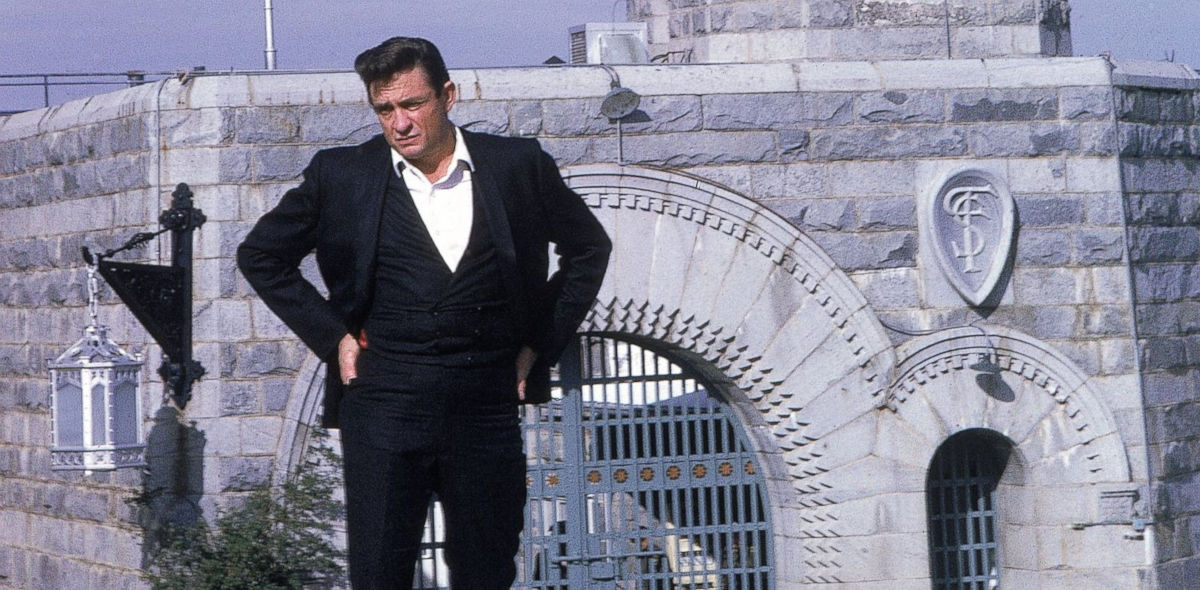
Above: Johnny Cash outside Folsom Prison on the day he recorded the album At Folsom Prison, 1968. (Dan Poush/AP Images)

Did the great Johnny Cash ever play a concert at Boggo Road Gaol? It’s a reasonable question to raise, as I have been contacted a few times by media/marketing types wanting a chat about ‘that time Johnny Cash played at Boggo Road’. He had of course famously played at Folsom and San Quentin prisons in the United States, so it seemed believable that he might have done something similar here in Brisbane.

I was well acquainted with the ‘Cash at Boggo’ story, having heard it from two men who had worked at the prison and went on to help manage the museum there in the late 1990s. These were my fellow Lancastrians Donny Walters and Bill Eddowes. They recounted Cash playing there in the early 1970s and practically sparking a riot, which resulted in Donny having to unceremoniously escort Mr Cash out of the building.

I was hugely impressed with this (very blokey) story, but it wasn’t until a few months later that I started looking for more information on it. Surely there would be some mention of it in online Johnny Cash pages, or newspapers of the time, or prisoner or staff memoirs? I dug around but found nothing. I asked Donny and Bill again, but they seemed quite evasive about providing further information, so I turned to their good friend and colleague John Banks, the museum manager.

‘Hey John, do you remember when Johnny Cash played that concert here?’ ‘What?’ I explained what the other two had told me and a bit of a smile flashed across John’s face. ‘Is that what they told you?’ ‘Yeah’. John did a little ‘humph’ laugh. ‘I think they might’ve been having a pull of your leg’, he said.

I phoned a couple of other former officers, but neither of them had heard anything about any such concert. When I mentioned this to Donny he half-heartedly persisted with the story for a few minutes before realising the gig was up, and he laughed a bit and said ‘did I tell you about that time that Frank Sinatra played at Bogga Road?’ I took that as a confession. His idea of humour included making up absurd little stories about prison life to trick gullible ‘outsiders’ like me. He had told me another one about a secret underground office in the prison, since used as a secret-document dump and then filled over with soil and rubble. That was another story that didn’t hold up to inspection. Once you got to know Donny and Bill a bit better, it was easier to pick up on their tongue-in-cheek tall tales.

Donny and Bill retired soon afterwards, and sadly have since passed away. I never got to raise the subject with them again, and generally forgot about it. That is, until I got those phone calls. The men I spoke to seemed convinced the Cash concert had happened, but didn’t let on who told them about it. I said I was pretty sure it did not happen, but then did some basic research and asked around again anyway. I sent an email out to a couple of hundred former staff and inmates from Boggo Road, asking if anyone knew anything about this alleged concert. Over the next week I received 26 replies from men who had been there during the 1960s and/or 1970s. Every single one of them told me that it never happened. If it had, they would have known about it. These are people who remember just about everything about the place. If the Salvation Army band had played there in 1973, they’d remember it.

So there is nothing in the records about a concert, and people at the prison at the time denied it happened. In the absence of hard evidence – beyond a single story told by known pranksters – it is safe to say that Johnny Cash did not play at Boggo Road. It doesn’t take much historical research to reach that simple conclusion.

Around the time I first started this article, I found an online source of the concert story, a marketing piece in which it is acknowledged there is no evidence outside what was said by Bill Eddowes (the same story told to me by Donny and Bill and then shown to be a ‘joke’):

“The details are scant and hard to verify, as many prison records – such as correspondence from that era – were destroyed long ago… At this time a strict no photography rule applied inside all Queensland prisons; no known pictures exist.”

How convenient. Unfortunately, this looks like another case of cherry-picking unverifiable sources and ignoring better and contradictory evidence to not let facts get in the way of a bit of marketing. 

Any decent researcher with contacts in the field would have worked out that it wasn’t a true story, and anyone who values credibility would not have shared it. And yet here we are with more Boggo Road fakelore.

For the record, Cash performed in Brisbane seven times, including during 1971 and 1973. Venues included: Festival Hall, Milton Tennis Courts, and the Entertainment Centre. Venues not included: Boggo Road prison.

The Boggo Road Burials Mystery

Above: Section 6B, South Brisbane Cemetery, used for the interment of executed prisoners 1883-1913. (C. Dawson)

In the excellent 1980 Robert Redford prison movie Brubaker, the chief warden discovers multiple unmarked graves in the prison grounds and his attempts to unravel the mystery lead to political scandal. In the mid-2000s big questions were being asked about the possibility of bodies having been secretly buried in the grounds of Boggo Road. Was there a Brubaker-style mystery to be unearthed there? All the rumours suggested that indeed there was.

The mystery took shape back in the 1970s, when excavation work for sewerage pipes was taking place in an exercise yard in the new No.1 Division and three officers noticed a line of circular patterns in the walls of the newly-dug trench. One of the officers recalled seeing twelve ‘dark patches’, all of them about 45 cm below the surface, 30-40 cm in diameter, and uniformly spaced about 60 cm apart. Another recalled seeing only four patches, which were light grey in colour as opposed to the more naturally-coloured soil surrounding them. I have in my possession stat decs and hand-drawn maps from these men relating to this incident.

When they reported what they had seen, their bosses informed them that, ‘all bodies were reinterred to Dutton Park’ (meaning South Brisbane Cemetery), indicating that on-site burials actually had taken place at some point. They were also ordered to keep quiet about the incident. One of the officers, however, took some samples from the patches, which he described as being ‘very gooey… like wet clay’. These samples were stored for thirty years before being handed over to the Boggo Road Gaol Historical Society and then forensically tested at the University of Queensland in 2003. The tests discovered microscopic bone fragments of Caucasian origin, and degraded DNA sequences. The report concluded that the DNA was either from the remains of at least two individuals buried at the site, or from more recent contamination of the samples, or from a combination of these two sources. It called for further testing and an excavation of the site.

An archaeological survey of the No.1 Division in 2005 (at which I was present) failed to locate any graves, although it is very possible that the test trenches were dug in the wrong place. It has also been suggested that most of the soil in the area was removed during the 1990s demolition of the No.1 Division, which would have also removed any trace of the graves.

So were there bodies at Boggo Road? The 1970s trench was dug in an area that, according to prison lore, was once a burial ground. This was, in previous years, just outside the north-eastern wall of the original No.1 Division, built in 1883, not far from the original Superintendent’s House. Older officers recalled seeing white crosses painted on the outside of the prison wall there in the 1930s, and when one superintendent’s wife maintained a garden near there, the officers would joke with her about not gardening too close to the graves in case she dug up a skull. When the new No.1 Division was constructed this area was underneath an exercise yard.

Approximate location of the alleged burial sites circa 1952.
Approximate location of the alleged burial sites circa 1952. (John Oxley Library [modified by author])

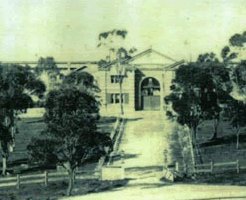
There is also hearsay evidence of graves at the front of the prison. A 19th-century photograph (below) shows some white fencing, similar to a grave border, under a tree to the front left of the driveway from Boggo Road. A retired officer who owned the image claimed to have seen several grave sites here in the 1930s, some being fenced and one bordered with stones. In the photograph, however, this area is partially obscured by trees, making it difficult to observe the alleged graves.

The front of the prison in the late 19th century. The alleged graves referred to above were said to be to the left of the driveway under the trees (BRGHS).

So we know that early officers have a memory of a couple of burial sites, and that in the 1970s grave-like markings in the ground were seen during excavation work. It seems very likely that there were graves in the north-eastern area at some point, but these graves would have been destroyed in subsequent construction and demolition work.

Which leads to a bigger mystery…who were they?

The graves could not pre-date the prison, as they would have been exposed during the original construction works. It has been suggested they were the remains of executed prisoners, but Brisbane City Council records clearly indicate that all the prisoners hanged at Boggo Road were buried in lot 6B at South Brisbane Cemetery so I would think that explanation is unlikely. They could have been the graves were those of other prisoners who died at the gaol from causes such as suicide, disease or murder. I have heard it said that they could be bubonic plague victims, but plague victims were quarantined in a building at Colmslie and there is no way the authorities would have held such a person inside a tightly-packed prison. Over a hundred inmates died at the site in the 117 years that prisons operated there, some from highly infectious diseases, but the records regarding these burials are incomplete. As far as we know, records regarding deaths may also be incomplete.

The truth is that, if there were graves behind Boggo Road, nobody knows who they held. Different people may have different theories, but no solid evidence has been provided to back them up. The bodies have long gone, but the mystery remains for now.

For more on this subject, see my article ‘The Dead Outside the Fence: Burying executed prisoners in Brisbane, 1830-1913’, in the Queensland History Journal vol. 20, no.8, November 2008 (Royal Historical Society of Queensland).

Colonial Columns: The Brisbane River of the 1820s

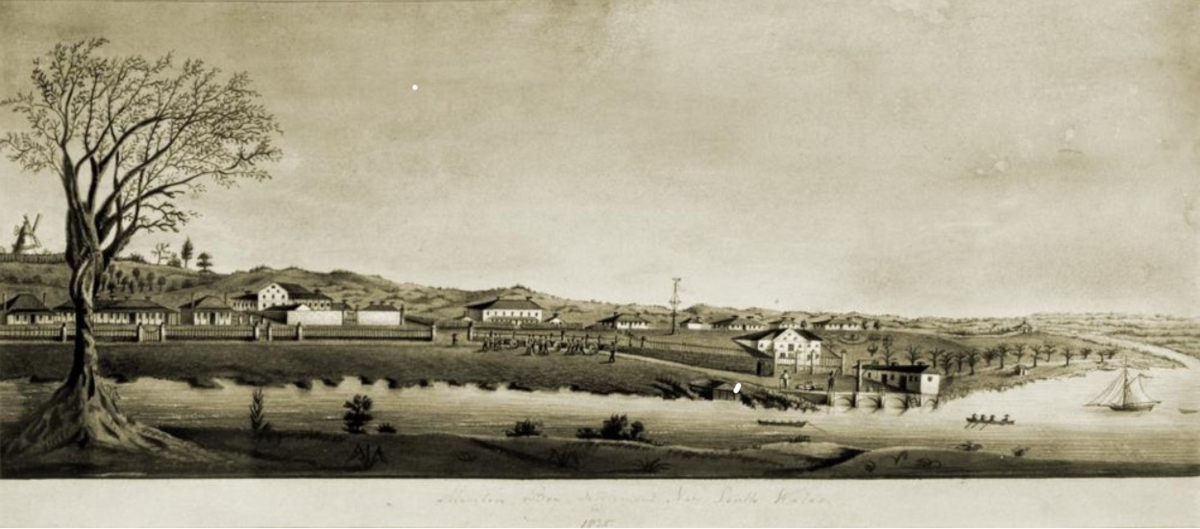
Moreton Bay Penal Settlement, Henry Boucher Bowerman, 1835. (John Oxley Library)

This vivid description of the Brisbane River as it was circa 1830 is taken from the Brisbane Courier, 22 March 1930.

‘THE BRISBANE RIVER, 100 YEARS AGO.
By AN OLD BRISBANITE.

RECENT issues of “The Brisbane Courier” have referred with a certain amount of pride to the fact that the P. and O. Coy. have decided to extend the service of their fine steamers to Brisbane. When one considers that less than a century ago men frequently waded across the Brisbane River at various spots between the present site of the Victoria Bridge and Queensport it can be realised that the work of improving the river has been one of great magnitude. Many years ago I was told by a gentleman then engaged in the pilot service at Brisbane that on one occasion at low tide he waded across the river from Queensport to Pinkenba. I had it from an ex-convict that during the years of the convict settlement in Brisbane, that is, after the year 1825, the soldiers when off duty were in the habit – at low tide – of wading about in the shallow pools of water where the Victoria Bridge now stands, and catching large quantities of fish. They caught the fish with their hands, and put them into bags or baskets slung over their backs.

SCENIC BEAUTIES.
It was my experience, more than half a century ago, to make the acquaintance of an old man – a time-expired convict – who was one of the first contingent of prisoners in 1825 to quit Redcliffe and ascend the Brisbane River in a cutter. This man was well educated, as was evidenced by the fragments of old manuscripts which he had written and placed at my disposal for perusal. He exacted from me a promise that I would not divulge the contents of his notes so far as they related to the convict system, but their perusal conveyed particulars of some dreadful incidents in the administration of the penal affairs of the settlement.

The writer of those notes was an ardent lover of Nature, and the beauties of the scenery along the banks of the river probably appealed to him in a manner that was lost upon his fellow prisoners. He drew vivid pictures of the scenes of enchanting beauty which unfolded themselves as each successive reach of the river came into view. To use his own words: “It looked as though some race of men had been here before us, and planted this veritable garden of Eden.” The convicts were being conveyed to a prison from which possibly the majority would be re-leased only by death, and yet the gate-way to that prison lay between river banks lined with foliage whose beauty it were almost impossible to describe. Skirting the water’s edge for miles on each side of the river was dense vine-clad jungle, festooned with the blue and the purple convolvulus, while on the tidal brink grew the beautiful salt-water lily – its flower white as alabaster, its glorious perfume filling the air with fragrance. Kingfishers – some scarlet breasted, others white, all with backs of azure blue – darted hither and thither, while anon the solitude was disturbed by the raucous laughter of the kookaburra.

MAN VERSUS NATURE.
But the conditions of an earthly paradise were not to continue indefinitely, for in the course of time – particularly after the abolition of the convict system, and with the advent of free colonists in the Brisbane area – there came the inevitable day when

“The sound of the axe
Was heard in the land”-

when the war of devastation – man versus Nature – called by most people the march of progress – began, and the beautiful jungles were swept away. A few giant Moreton Bay fig trees were spared for some years longer. One of these stood in William-street, where now is the residence of Mr. Tom Mulcahy, of the Home Secretary’s Department. Another grew on the present site of the Treasury Buildings. Prior to the erection of these buildings that grand old tree stood sentinel over the Chief Secretary’s office – a small one-storied building, where some of the most important laws in force in Queensland first saw the hand of the Parliamentary draftsman. It was under the shadow of that old tree that Sir Thomas McIlwraith – then Premier – signed the historical telegram to Mr. H. M. Chester, police magistrate of Cooktown, instructing him to proceed post haste to New Guinea to hoist the Union Jack on the shores of Port Moresby, and to proclaim the annexation of New Guinea in the name of Great Britain. Incidentally it may be stated that McIlwraith’s action was repudiated by the Imperial Government, of which Gladstone was the head.

NATURE’S FAIRY BOWER.
One of the most enchanting spots within the Brisbane area was an immense jungle in the western portion of South Brisbane. It began at about the spot where the Victoria Bridge now stands, and it followed the course of the river right away to Hill End, along the whole length of what is now the Montague-road. This jungle was a tangled mass of trees, vines, flowering creepers, staghorns, elkhorns, towering scrub palms, giant ferns, and hundreds of other varieties of the fern family, beautiful and rare orchids, and the wild passion flower. While along the river bank were the waterlily in thousands, and the convolvulus of gorgeous hue. What posterity lost by the destruction of this magnificent jungle in all its pristine glory only those who were privileged to see it can form any conception. Here at our very door we had a wealth, a profusion, of botanical beauty which can never be replaced by the hand of man. Too late have we recognised the desirableness of conserving these glorious works of Nature. The Lamington plateau and Mount Tamborine certainly are beauty spots, and rich from a botanic point of view, but it is not every city dweller who can get to them. A few weeks ago there appeared In the “Courier” a letter from the pen of Mr. Fred. W. Taylor, dated North Tamborine, February 18, in which these words occur:

“On ascending the mountain (Tamborine) from the Tamborine station one travels through avenues of wonderful scrub, with palm trees waving their proud plumes to the whispering breeze, and there are vast reserves of virgin scrub prolific in orchids, staghorns, &c., on stately forest trees.” 

These words would have applied with equal truth to the magnificent stretch of primeval foliage at West End had the early residents of Brisbane exercised sufficient foresight to preserve to posterity that magnificent botanical heritage.

GRIM RELICS.
It was during the destruction of this jungle that evidence of the brutal convict system was brought to light, for, amid this primeval grandeur, there were found the skeletons of several human beings, rusted leg-irons still encircling the bones. Obviously the convicts had escaped from the settlement – either by crossing the river on logs or by wading across at low tide. They preferred to die in this veritable garden of Nature rather than continue to live amid all the horrors of the convict system. But while all lovers of Nature must deplore the destruction of these enchanted spots, there is consolation in realising that after all such destruction was the first step in the direction of a free settlement, which displaced the brutal and degrading convict system.’

The Fakelore Finger of the Old Printing Office

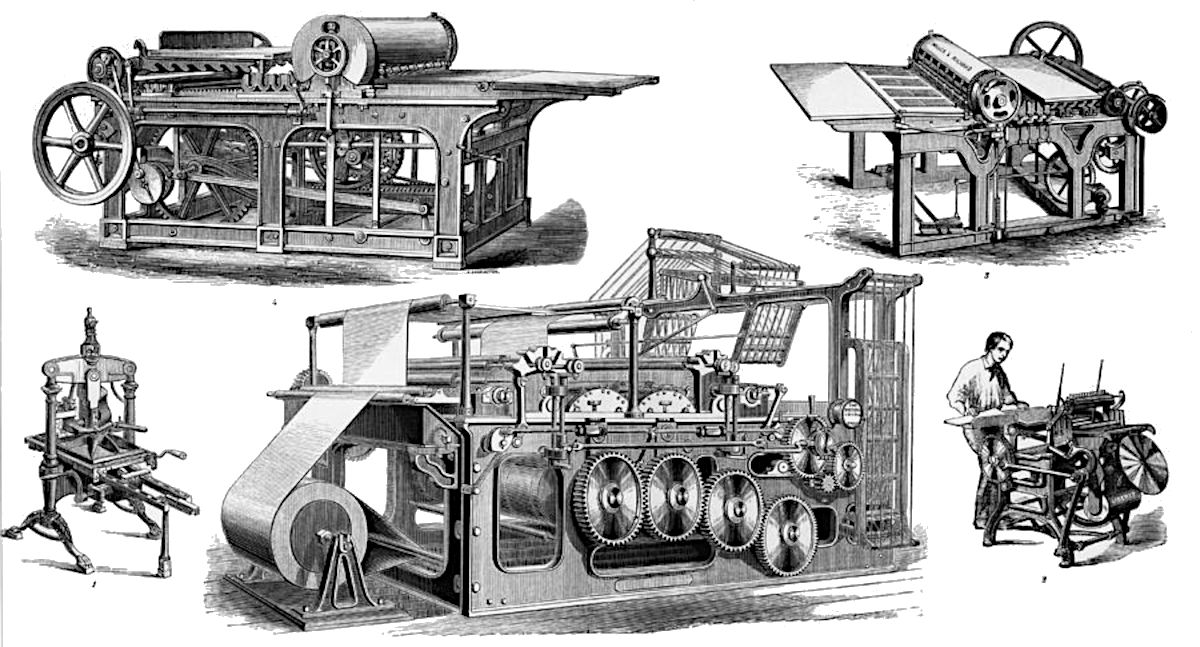
Above: Printing presses, 19th or 20th century. (Artist: S Miller)

During research for an article about the sandstone devils on the walls of the old printing office on Brisbane’s George Street, I came across a couple of online reviews of a ghost tour that stops outside that building. The tour guide – reportedly in a ‘prophetic, Lord of the Rings-esque voice’ – relayed a rather graphic story of blood and horror there, as you might expect to hear on such a tour. However, when I looked for more details about the gruesome events described in the story, there were no actual historical records to support it. Did it really happen, or was this a case of ‘fakelore’?

Printing Office, George Street, Brisbane. (Brismania)

The tour guides are not historians, so these tours are strictly scripted and the story here is quite specific in some details. In the words of one reviewer):

‘And in one particular incident here, an apprentice printer (it’s believed) attempted to fix the gut-wrenching noises of a printer against the wishes of his seniors. He stopped the machine, went inside and after a few minutes it started again, as did his harrowing screams. Legend has it, it took three days to clean out the machine and all that was left was his wedding ring finger, ring still intact. Lily [the guide] tells us the printer still exists in Brisbane’s archives, and unlike other printers – which contain black ink stains – this one is still stained blood red.’

Another reviewer wrote that the customers were told about

‘…a gruesome workplace accident involving a printing apprentice (spoiler – all that was left was a flayed skull and a finger, still wearing its wedding ring).’

This seems like the kind of tragic – even spectacular – event that should have attracted a lot of media coverage when it happened. My research turned up a host of lesser incidents at the Printing Office that were deemed newsworthy, such as when William Martin had the top of four fingers cut off in 1895. There was coverage of Charles Hampson dying of heart disease in the printing office in 1911, as there was when James Lytton had his hand crushed in a machine there in 1926. There was also mention of the nightwatchman who collapsed and died on the William Street side of the office in 1931.

There were numerous accidents at other printing presses around Brisbane and Ipswich reported in newspapers. A 17-year-old named James Robertson died at the ‘Watson and Ferguson’ printery in 1893, after being pulled into the machinery. He was pulled three times around the shaft and lost an arm, and suffered several broken ribs and two broken thighs. He also lived long enough to make it to hospital. This suggests that it is unlikely that a printing machinery could reduce a human body to no more than a single finger, as claimed in the tour story.

The following is another example of a lesser accident being reported:

Sensational Accident. At a Printing Office. Caretaker Falls into Flywheel.
On Friday, William Booth, the caretaker of Messrs. W.H. Wendt and Co., printers and stationers, Elizabeth street, when starting tho gas engine, slipped and fell between the spokes of the flywheel. He was quickly extricated by the other employees, but not before his head was severely cut and crushed. When the ambulance was sent for it was thought that Booth was dead. He was, however, after first aid had been rendered, quickly conveyed to the General Hospital, and after treatment was enabled to proceed to his home. Mr. Booth, who is about 55 years of age, is considered to have had a miraculous escape from being killed.’ (The Telegraph, 20 May 1905)

Even the story of a printing worker whose workplace accident left him with no more a bruised hand made the news in 1926. And yet, there is not a single mention of the apprentice-mincing accident described in the tour story anywhere in the records. The reportage on these other incidents shows that it would not have been ignored, so it would be fair to suggest that the incident never really happened. Which brings us to another big question: Where does this story come from?

Despite the absence of basic information such as names and dates, some quite specific details are provided in the tour story, such as the finger with the wedding ring. Most apprentices were boys and unlikely to be married, but no details of the alleged victim’s age or identity are provided in the story. Then there is the old printing machine being stained an unwashable ‘blood red’, implying that the machine had been soaked in blood that could not be removed. These are minor details of the story, but they must have some origin. How did they make it into a tour script?

Oral History is a possible source, but in the absence of documentary evidence it remains pure hearsay. I have written tour outlines myself and facts are always the starting point for a story, and they are double-checked. The way I see it, if you are selling History to people, as a product, then you have an ethical obligation to make sure your content is based in fact. It is not good enough to simply prefix these claims with ‘legend has it’ or ‘it is believed’, without explaining to paying customers that what you just told them probably did not happen in real life. Failure to do so opens the door to ‘fakelore’.

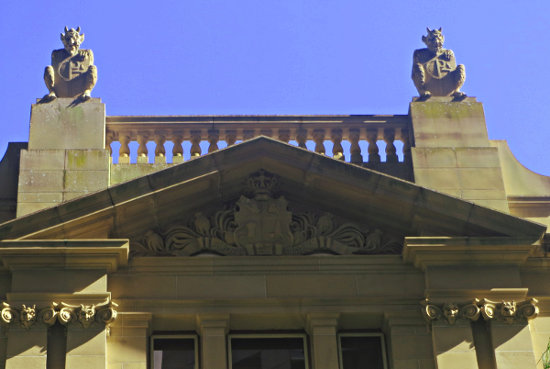
The 'devil' outside the Printing office.
The ‘devil’ outside the Printing office. (C. Dawson)

Fakelore is a recent label for an old practice. In its broadest sense, fakelore has been defined as ‘inauthentic, manufactured folklore presented as if it were genuinely traditional’. It can be applied to local history stories and urban myths that have no basis in reality. They come into being via bad research or outright invention and – if left to ferment for long enough – can end up being believed by a lot of people as fact. Once established, these stories can be hard to kill, as I discovered myself when writing about the widespread belief of people from my hometown that hangings used to take place there, despite solid evidence to the contrary.

When it comes to creating folklore, questions of intent are hard to prove. Is this ‘finger’ story a result of (very) bad research, or invention? Other people have analysed (non-ghost) stories from the same source and also found them to have no supporting evidence or identifiable sources. These include tales about an imaginary morgue in one cemetery and non-existent roads in another. A cemetery tour review in the Courier-Mail in 2015 also questioned the accuracy of information being presented to customers. I have documented a few examples of ‘fakelore’ myself, such as a cemetery ‘Woman in Black’ story. In my articles I have asked for any evidence to back the finger story up, but despite several stories being questioned in the public sphere over a number of years, there have been no defending counter-arguments from the tour business.

And so the questions remain.

This case does point to a problem with History tours, in that their content usually escapes the corrective scrutiny that historians apply to the printed word. This particular Printing Office tale is not the kind of data mistake that even professionals can sometimes make, such as getting a date or a name wrong. This is an entire start-to-finish story about an historical event that that simply never happened, and yet it is still being spread via tour stories.

These stories need to be nipped in the bud before they become accepted historical fact, and they should certainly disappear from these tour routines.

Here’s Why a Boggo Road Heritage and Arts Hub Would Be a Good Thing

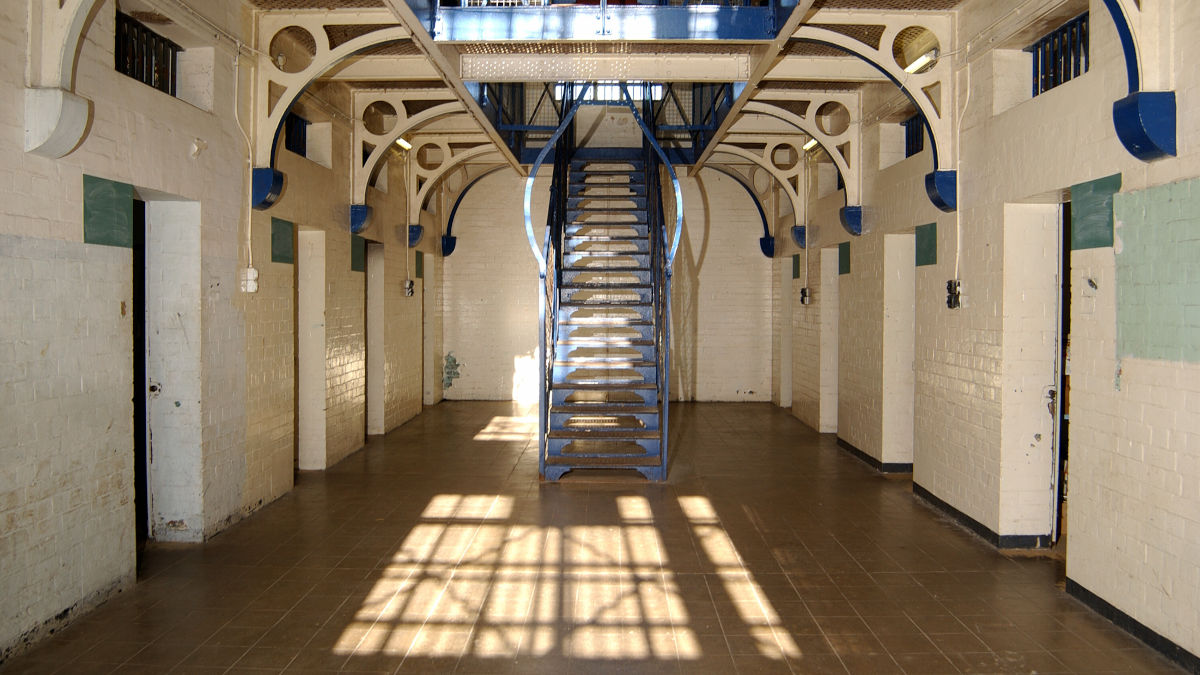
Above: Inside of a Boggo Road cellblock. (Boggo Road Gaol Historical Society)

The idea of transforming the former Boggo Road prison into a thriving arts and heritage hub has been around for a few years now. It would be a brilliant achievement to take an old prison that is ingrained with decades of negativity and pain and transform it into a living place of positive creativity and community life.

The place is currently closed due to nearby construction works, but it will reopen and so now there is an opportunity to do something great there.

But what is actually meant by a ‘Heritage and Arts Hub’? 

  • Well-managed utilisation of the internal prison spaces, opening them up to a range of community history and arts organisations, and also pop-up businesses, meaning that the place is in use for a majority of the time each day.
  • There would be professional-standard and innovative historical interpretation, including a variety of respectful tours, digital experiences, museum displays, and quality educational programmes for children. 
  • A dynamic programme of boutique drama, acoustic music and fine arts events. Nothing big, just very creative use of some of the interesting spaces in there.
  • Stimulating and thought-provoking seminars and debates about the story of Boggo Road.
  • Arts classes, workshops, and studio and workspaces, again using those unique internal spaces.
  • A Prison History Library and Research Centre that underpins the historical interpretation of the site.
  • Affordable access prices for visitors and tenants.

Opening Boggo Road like this means that it would be used from early morning until night time, and by a wide range of people doing different things. The varied menu of quality arts and heritage events would also get people coming back regularly to see something new, so it is not just a place that you go to once.

Live music and drama performances, visual arts, tours, exhibitions and the written word could explore themes of punishment, rehabilitation, reconciliation and redemption. For the first time, there will be an emphasis on the First Nations perspective. Boggo Road would become a centre for creative discourse about its own history, where we think about and explore what happened there, through ‘many stories, told by many voices, in many ways’.

In this way, Boggo Road will become a truly living cultural hub, a place whose own meaning and significance is being positively transformed and challenged through an ongoing process of creative engagement with its own history.

However, it will not be easy to create such a place, and it may well not happen. 

The Queensland Government has displayed little interest in unlocking the potential of the site. It is in the Public Works portfolio, despite their proficiencies elsewhere, are not really attuned to the needs of the heritage and creative industries. As a result of this, the place has been managed for the last decade by an inexperienced small business that was installed there in dubious circumstances by then-premier Campbell Newman, making it the only major heritage prison in Australia under private management.

Compared to the success of not-for-profit, award-winning heritage sites such as Fremantle Prison, Port Arthur. Old Melbourne Gaol and Old Dubbo Gaol, the results at Boggo Road speak for themselves:

  • The site was underused and empty space for most of the week.
  • Site interpretation has had an emphasis on presenting it as a ‘haunted house’.
  • Promises of creating around 60 staff and generating millions in revenue have fallen short.
  • There has been no voice for First Nations or professional historians in site interpretation. The current management had to be told to stop promoting ‘ghost hunting’ in cells where Indigenous people died (some as recently as the 1980s).
  • Community organisations have been locked out in the name of private profit.
  • Access prices to Boggo Road are the most expensive of any heritage prison in Australia.

The previous management had enough time to prove itself but fell short. This fact adds to the solid commercial argument for transforming Boggo Road into an innovative and highly popular community and tourism treasure.

The idea of a thriving, living cultural hub seems like a natural fit for the old prison. Let’s hope the decision-makers have the vision and energy to make this happen. This is a significant heritage site with an important story to tell and the Queensland Government can do so much better with Boggo Road than it has to date. The public own this building and it should be a major community asset, run for public good.

Professional historian Chris Dawson founded the Boggo Road Gaol Historical Society in 2003, and worked as a museum curator at the heritage prison prior to 2005. He established the Queensland Prisons Museum Collection, and has written books, journal articles, and delivered talks and tours about Boggo Road.

Fixing Brisbane Cemeteries

Above, Main entrance gates at Toowong Cemetery, 2009. (Wikimedia Commons)

The Courier-Mail ran an article back in July 2021 about the condition of graves in Toowong Cemetery. The story outlined damage in this heritage-listed site, including intrusive tree roots, weeds, collapsing grave surrounds and fallen headstones. It also promoted demands that the Brisbane City Council should pay to fix up broken graves (there are over 120,000 graves in the cemetery). There aspects of the article I agree with, and others which are problematic.

I help organise Queensland Cemetery History Tours over at Toowong once a month, as well as conducting research over there, so I am aware of the state of the place. These problems are also familiar to me as a member of the Friends of South Brisbane Cemetery (FOSBC) – check out this gallery of headstone damage at South Brisbane – and they are no doubt recognisable in varying degrees to the volunteers over at Balmoral and other historical cemeteries around Brisbane. These issues are not unique to Toowong.

This tree fell after a big storm in early 2013 and smashed several South Brisbane headstone.
This tree fell after a big storm in early 2013 and smashed several South Brisbane headstones, most of which will never be repaired. (FOSBC)
A sapling left to grow between two graves will eventually push aside the stonework – South Brisbane Cemetery. (FOSBC)

Darcy Maddock, the president of the Friends of Toowong Cemetery, is quoted in the article as saying that the BCC does a generally good job with cemeteries but that tree damage needs to assessed. This is absolutely correct. There are issues, however, when the owner of the ‘Ghost Tours’ small business (Cameron ‘Jack’ Sim) demands that ‘the council needs an emergency fund to rapidly repair broken sites.’

The article acknowledges that the extent of damage at Toowong is estimated to be ‘multi-millions of dollars’. Where would this money come from? BCC already allocates $12,000,000 of ratepayers’ money to maintaining the 12 cemeteries under its control. Toowong has received the lion’s share of funding for historical cemeteries over recent decades, with vastly superior facilities and landscaping compared to other old cemeteries such as Balmoral and South Brisbane. If more money were to be spent on Toowong, where would it come from? Increasing rates or cutting council services elsewhere? Less money for other cemeteries?

It is worth noting here that an anonymous person attempted to get our monthly Thursday history night tour at Toowong stopped in 2021 this year, with one part of the argument being that revenue from tours there should not go outside the electorate. My counterargument was that Toowong Cemetery is funded by ALL Brisbane ratepayers, not just the local electorate. This new demand for extra spending at Toowong only proves my point. The cemetery belongs to the whole of the city.

It is also important to remember that the graves legally belong to individual families, and it is their responsibility to fix them if the grave is in disrepair. At the same time, the BCC needs to do more to monitor new and existing tree growth in order to limit future damage.

The members of the FOSBC understand that the cemetery decay can be managed but not stopped. We can, however, extend the life of the heritage fabric, and raise awareness of what needs to be done into the future, and we do get a lot of work done through proactive, award-winning community programmes such as the Guardian Angels cleaning bees. The volunteers remove tree debris and weeds from graves and pathways, wash headstones, clear drains, move loose stone slabs, remove weed-tree saplings, record existing monument damage and notify families where possible, remove broken branches, notify BCC of dead or diseased trees, and are recording the cemetery flora. This is funded by our hard work presenting guided tours there.

One of the two skips filled up with tree debris at South Brisbane recently.
One of the two skips we filled up with tree debris at South Brisbane recently. (FOSBC)

I understand that the Friends of Toowong Cemetery might not be in a position to do this kind of work right now (the article describes them as ‘a volunteer group of four elderly people’, which no doubt underestimates their size) but there is an opportunity for more community activism in building up group numbers.

A second issue with the article, aside from funding demands, is that Mr Sim claims that Toowong Cemetery should be ‘one of the great tourist destinations of our city’. Cemetery tourism is fine within limits, and if done respectfully, but the primary function of Toowong is still as a functioning cemetery – a place of love, rest and remembrance. I’m not sure that the kind of ‘tourism’ Mr Sim has in mind is compatible with that function.

Mr Sim also claims that ‘people have to know about this history or we will lose it’. It is rather hypocritical of him to say this, as he has long record of trying to stop other people and organisations presenting history tours if he feels they will ‘compete’ with his small business. Under the current BCC tour license system, Mr Sim has locked in 100% of Friday and Saturday nights for himself at Toowong and 80% at South Brisbane (without using them all). This has proved to be a roadblock to ‘letting people know about this history’.

It would seem that when Mr Sim says that he wants more tourists in cemeteries, he means just for his own business. While asking that ratepayers pay more to look after the cemeteries.

The FOSBC believes that increasing public engagement with historical cemeteries should be built around community-led, not-for-profit history and arts activities that are respectful, and not marketing them as being full of make-believe ghosts.

So yes, there is a problem with heritage decay in old cemeteries, but this exists right across Brisbane (and any other historical cemetery in the world). Rather than spending ‘multi-millions’ at one cemetery, an approach is needed that treats all our cemeteries equally, with proportionally fair funding for all. It also requires building increased community engagement. The kind of community-led approach we have taken at South Brisbane has its limitations, but we are trying our best to do what we can to resolve some of these issues.

Update
In early 2023, the FOSBC finalised their ‘State of the Cemetery’ Report, which will form the basis of their planning for improved cemetery maintenance in the coming decade.