Fake History and Wolston House

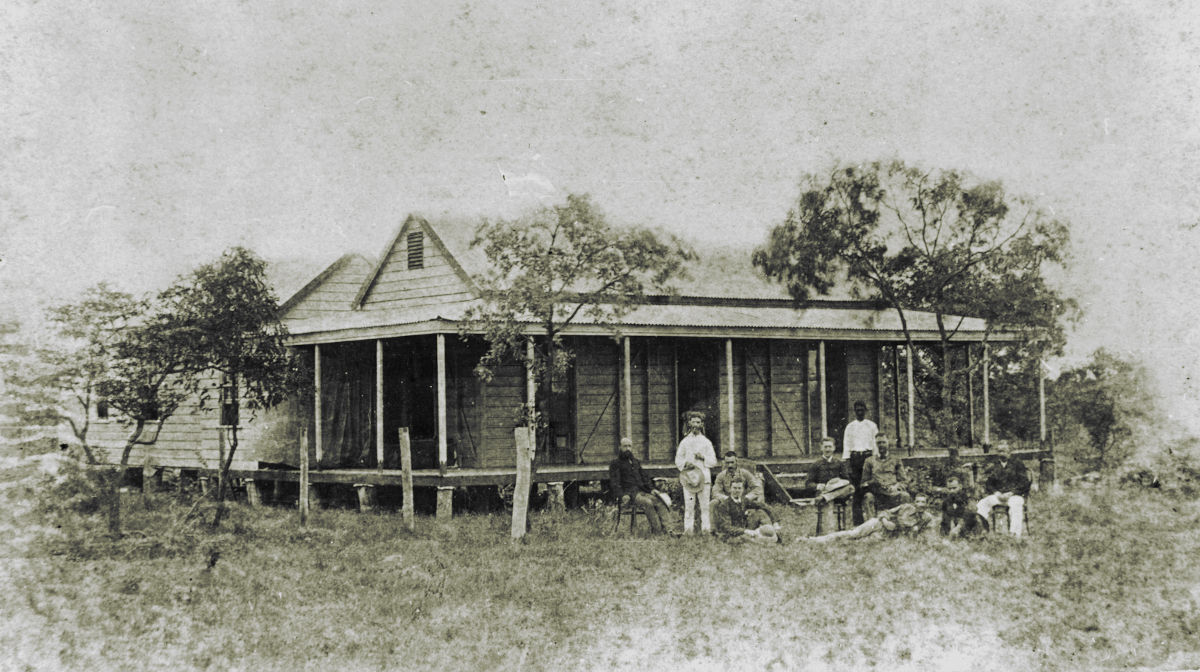
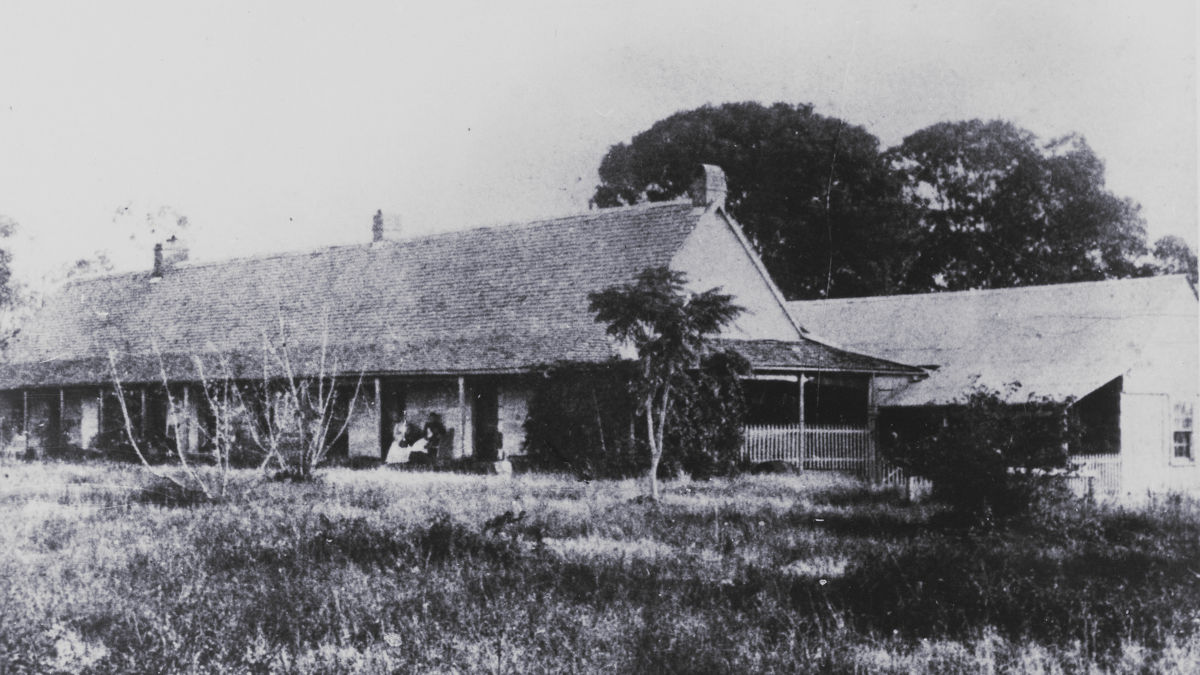
Above: Wolston House, undated image. (State Library of Queensland)

Wolston House, on Grindle Road, Wacol, is a heritage-listed historic home built during the 1850s and then expanded in the 1860s. In the context of non-Indigenous Queensland history, this is very early. The house now operates as a museum and tour site, managed by the National Trust of Queensland. A brief history of the place is provided on the Richlands Inala History Group website, and its listing in the Queensland Heritage Register can be seen here. In short, it is a significant place worthy of being treated with a lot of respect.

So it was with some dismay, then, that I (as a qualified historian) watched a YouTube video of an event held there. This was a ‘paranormal investigation’ run by a group called Pariah Paranormal and promoted on the National Trust website. The video can be seen here, and the section relevant to this article begins around the 7:40 minute mark.

While standing in the basement of the house, the guide claims that the spirit of an Indigenous man named ‘Yemmy’ can be found there. Various ghost-hunting gadgets are placed around the room, while other attendees hold devices such as the ghost-hunting phone app ‘Necrophonic’. This ‘scientifical’ toy is available for $10 on Google Play and advertised for use in ‘spirit communication’ – detecting background sounds and translating them into what a spirit is allegedly saying.*

Misleading History
The guide tells the group about the history behind the alleged spirit of the First Nations man. He claims that Yemmy was hanged for rape in Rockhampton in the 1860s and has returned to Wolston House because he once worked there and ‘was happy here’. He then provides the details of the crime which involved various First Nations men including Yemmy and Toby.

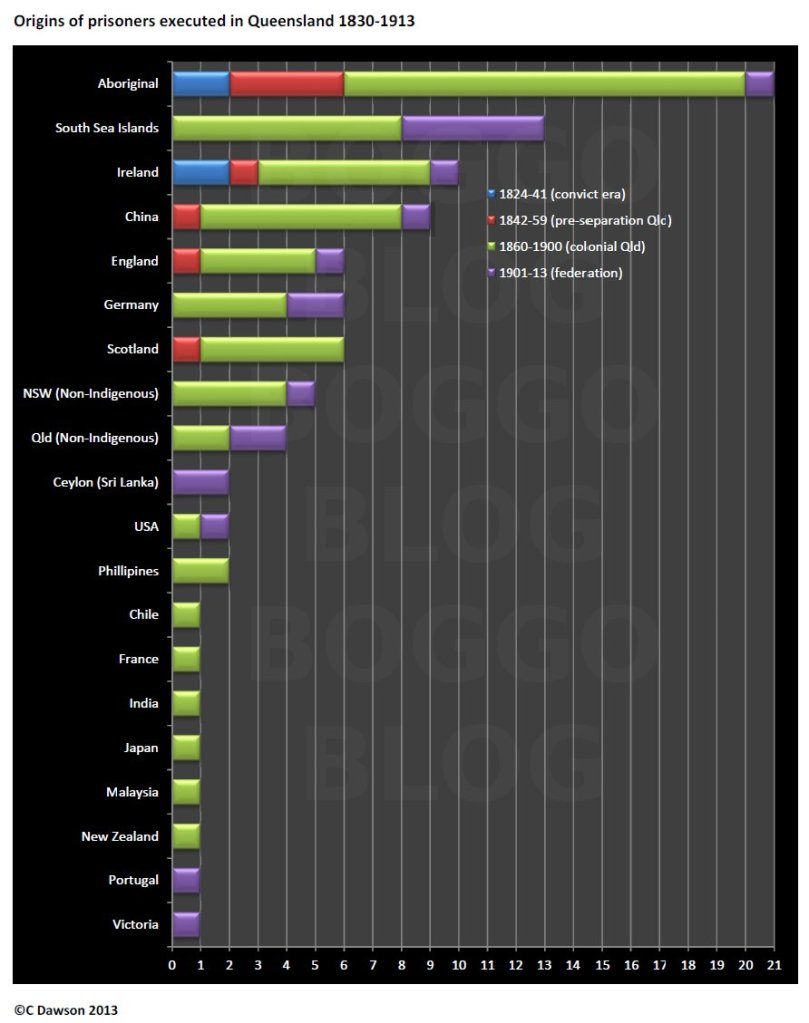
As a historian of capital punishment, this story immediately struck me as false. There were 21 First Nations people executed at Moreton Bay and Queensland during 1830-1913, and none of these were called Yemmy, Jemmy, Jimmy or Toby. The only First Nations person hanged in Rockhampton was George in 1871, and nobody in Queensland was hanged for a crime as described in the guide’s story. (See here for details on hangings in Queensland). This entire story has absolutely no basis in the historical record.

Unfortunately, unless they know better, customers on any such tour tend to believe what they are told by the guides and will have left Wolston House thinking that it is haunted by the ghost of a First Nations man hanged in Rockhampton for murder, and who likes to get drunk.

Which would be absolutely wrong.

It is crucial that the historical interpretation of heritage places is based in fact, as the significance of any such place is in part shaped by community perceptions of the associated history. Presenting Wolston as a ‘haunted house’ will lead to some customers thinking that the most significant (or even the only interesting) attribute of that place is that it is allegedly haunted. This undermines the significance and real history of the site as described in the heritage register.

Cultural Insensitivity
There are also serious cultural sensitivity issues for anyone claiming to be interacting with the spirits of Indigenous people, especially in a commercial setting. This is the main reason that similar paranormal ‘investigations’ were banned by the Queensland Government at Boggo Road Gaol – because customers were playing ghost hunting in cells where First Nations men had died in tragic circumstances, and within living memory.**

The Wolston House video shows how the people in the room appear to treat the encounter with ‘Yemmy’ in a light-hearted manner, often laughing at what they claim the spirit is saying to them via ‘Necrophonic’. At one point the guide encourages Yemmy to ‘drink’ some whisky from a bottle (in order to displace a flashing toy ‘cat ball’ perched on top of the bottle). He makes several references to how Yemmy likes to drink alcohol. There are constant requests for the spirit to do or say things. Almost as though it was a performing seal. ‘Do this, do that’.

Unfortunately, there are other similar videos out there too. They depict what appear to be other ghost hunting teams gaining private access to Wolston House in the company of Pariah Paranormal and entering the basement area. Once again there are constant requests for Yemmy to ‘drink’ from the bottle, make the cat toy flash, turn lights different colours, and say things (see here from 18:15 – 24.30 minute mark [also from 1:18:55]***, and here from the 2:40 mark).

If one was to accept that an Indigenous (or any other) ‘spirit’ does indeed dwell in Wolston House, the documented commodification and treatment of that spirit is clearly unacceptable.

I fully understand the pressing need to raise funds for the maintenance of Wolston House, and I used to be on the National Trust of Queensland Council. However, I believe there are alternative ways to present ‘paranormal-themed’ activities that are respectful, entertaining, ethical, historically factual, and genuinely educational. The National Trust of Queensland should be capable of sourcing alternatives.

The commercial ethics of using pseudo-scientific ‘paranormal investigations’ for heritage fundraisers can be debated, as can the need for site managers to be more innovative and original about how they raise money, but the content of these particular events is demonstrably unprofessional, culturally insensitive, and historically inaccurate. Wolston House and other old heritage sites deserve better than being treated like Scooby Doo funhouses.

Update 3 August 2022
Since I brought these incidents to their attention, the National Trust of Queensland have conducted a review of these incidents and have advised the group involved that any historical information used in their tours in future must be correct and that they no longer ‘conjure or invite any Indigenous spirits or otherwise’ (or at least pretend to). They also need to ‘ensure the integrity of Wolston Farmhouse and the brand of National Trust Queensland be respected and preserved’. The review is ongoing.

Well done to NTQ for taking this action. This obviously means the ghost hunts will need to be radically changed to satisfy these requests. This is a good thing, but it is still concerning that groups that need to be told these things are allowed anywhere near heritage places.

Notes
* Without going into depth on the subject here, there is no scientific evidence that the instruments used for ‘paranormal investigations’ actually work as advertised, and plenty to show that they do not. It could be argued that there are serious ethical concerns in advertising that these gadgets do work, and then charging customers significantly high prices to use them.

** Paranormal investigations have also been prohibited in Brisbane cemeteries by the Brisbane City Council because of obvious issues of disrespect. As it stands, Ipswich City Council and the Goodna Cemetery Trust are the only cemetery authorities in the world to permit such activities in cemeteries under their control.

*** This video is now hidden, after the group involved tried to make me remove the link. I refused to do so.

Ghost Hunting, Ethics, and the National Trust

Above: Wolston House, circa 1890s. (State Library of Qld)

Is it ethical for a heritage organisation to sell an expensive product that does not work as advertised? Especially when that product undermines the public understanding of history, heritage and science?

I ask this because the National Trust of Queensland are allowing their heritage properties to be used for ‘ghost hunts’, in which customers pay to use gadgets that they are told will ‘detect ghosts’. Except, of course, these gadgets will do no such thing. 

Electromagnetic field detector.

The gadgets in question include electromagnetic field meters (shown above), commonly known as EMF meters (also detectors or readers). These are tools for the home or workplace, used to locate potentially harmful EMF radiation from power lines or, more usually, household appliances. Inconsistencies in the electromagnetic field may show signs of electrical issues or improper wiring. 

What is an electromagnetic field? It is one of the four fundamental forces of nature (along with gravitation, weak interaction and strong interaction). As the physicists over at Wikipedia say;

“An electromagnetic field… is a classical field produced by moving electric charges… The electromagnetic field propagates at the speed of light (in fact, this field can be identified as light) and interacts with charges and currents… The field can be viewed as the combination of an electric field and a magnetic field. The electric field is produced by stationary charges, and the magnetic field by moving charges (electric currents) …” (Wikipedia, ‘Electromagnetic field‘)

If you struggle to fully grasp all that, so do I. Physics was never my strong point. And almost everyone using an EMF meter to ‘find ghosts’ doesn’t get it, either.

The problem is, these devices are very popular with some ghost hunters. This is probably because lower-end EMF meters are erratic and can be set off by virtually any kind of electronic device that occasionally gives off electromagnetic waves, such as a mobile phone, a camera battery pack, even a computer mouse. They can give off false positives, be easily manipulated, and so the LED display can usually be relied on to light up during a ‘ghost hunt’. Beeping sounds or flashing lights = ghost.

The use of EMF meters in ‘paranormal investigations’ was initiated by academics who understood that the presence of EMFs can have a range have detrimental effects on the brain, including inducing a sense of ‘panic, disorientation, and deep fear’. This meant that EMFs could be a factor in people reporting what they perceived to be a supernatural experience. Even more tellingly, EMFs were linked to hallucinatory episodes:

“Electromagnetic fields, or electric shocks, have induced specific hallucinations in people. Those who are exposed to them, even in laboratory settings, have caused people to complain about a feeling of people following them, talking to them, or watching them. This is not always an uncomfortable sensation. Some people interpret this presence as a malevolent presence, especially if it’s coupled with a feeling of unease, but others say they felt an inspiring or comforting presence.” (‘10 Things an Electromagnetic Field Can Do to Your Brain‘)

So the meters were originally used to check for a plausible scientific explanation for allegedly supernatural experiences. However, somewhere along the line (probably since they were used a lot on the dodgy ‘Ghost Hunters’ TV show) it became standard for some ghost hunters to twist this logic around and say the recorded presence of EMFs in situations where people think they are having a supernatural experience must mean that the EMF indicates the presence of a ghost.

Science: EMF = Plausible scientific explanation for supernatural experience.
Ghost hunter: EMF = Ghost.

Of course, people who say that ‘EMFs = ghosts’ have absolutely no science to back their theory up. It’s just a throwaway assertion about something they don’t understand. This is not serious ‘paranormal investigating’, this is adults role-playing Ghostbusters. For a broader look at the history of dodgy science and ghost detecting, see the excellent article ‘The Broken Technology of Ghost Hunting‘ in The Atlantic.

This might all seem quite harmless, apart from the damage to scientific discourse, but serious ethical questions arise when they start charging customers a lot of money to use devices such as EMF meters as ‘ghostometers’.

If the people taking the money believe that these devices actually do detect ‘ghosts’, then they are not serious investigators. But if they know the devices don’t work as advertised and they take the money anyway, then they’re frauds.

There is no good way out of this. You either don’t know what you’re doing, or you’re a fraud.

And yet, the National Trust of Queensland are now letting their historical properties be used for ‘ghost hunting’, with customers being slugged $55 to use gadgets like these. And the customers are hunting for the imagined ghosts of the real people who once inhabited these properties. People whose lives were of more meaning and value to history than being reduced to characters in a ghost hunt cash-grab.

(That’s all bad enough without me going into the fact that the people – ‘Pariah Paranormal’ – running these ghost hunts at Wolston House present fake history and actually needed to be told that using alcohol as ‘bait’ to lure out the alleged spirit of a First Nations man was wrong – although the ghost-hunters are still promoting the whole ‘drunk Aboriginal ghost’ thing. For more on that embarrassing episode, see ‘Fake History and Wolston House‘.)


So, my question to the National Trust of Queensland would be – Do you believe that these gadgets ‘detect ghosts’, or do you know that they don’t?

Either way, you are in the wrong.

The only thing these meters can detect when used for ghost hunting is greed and gullibility, and the National Trust of Queensland should put an end to their involvement in these unethical events. 

The science is bad. The history is bad. And ‘heritage managers’ are allowing properties with important historical significance to be seen as little more than haunted houses. There are more intelligent and more ethical ways than ‘ghost hunting’ to blend heritage, history and folklore for a public audience.

The Moon Man, the Headless Murderer, and Me

Above: Russian stamp commemorating Nicholas Miklouho-Maclay, circa 1993.

Back in 2004 I was researching the stories behind the men who were hanged at the old Petrie Terrace prison during the mid-19th century and then buried in Toowong Cemetery. This work was all going down the usual path of visits to the archives and libraries to trawl through microform records and old books, when one case jumped out and took me on an unexpected and rather gruesome tangent. It involved a Russian scientist, a Chinese murderer, a Sydney museum, a wild goose chase, and a head in a jar.

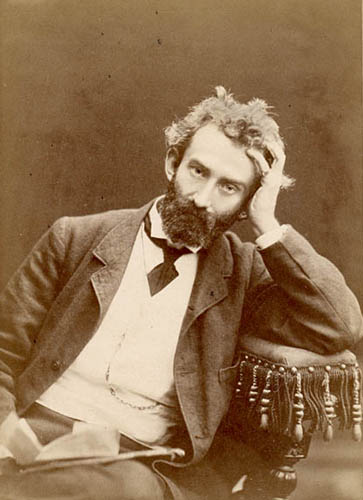
Nikolai Mikhoulo-Maclay, 1870s.
Nikolai Mikhoulo-Maclay, 1870s. (Wikimedia Commons)

Four executions took place in Brisbane during the winter of 1880, and a notable element of these events was the presence of the famed Russian anthropologist Nikolai Mikhoulo-Maclay, nicknamed ‘the Moon Man’. He was studying the comparative anatomy of the brains of various races in order to determine their comparative intellectual capacities. His conclusions were at odds with most contemporary opinions, as he found that the ‘cerebral-neural equipment’ of different races were identical and so there “was nothing to justify the concept of higher and lower races”. Through his own work, Mikhoulo-Maclay became a strong advocate of the rights of Indigenous peoples.

Mikhoulo-Maclay had intended staying in Brisbane for just a few days en route to Sydney, but ended up staying for a few months after being given unexpected access to a laboratory, photographic equipment, and some ‘interesting specimens’ to examine – namely, the bodies of the four men hanged in Brisbane that winter. With colonial Queensland being as multi-racial as it was, these were a Caucasian, a Chinese man, a Filipino, and a First Nations man. And with colonial Queensland being as scientifically curious as it was, Mikhoulo-Maclay was allowed to remove and photograph their brains immediately after death.

This was all fascinating stuff, especially the case of the First Nations man, Kagariu, also known as Johnny Campbell, ‘the black Ned Kelly’. I will probably write more here at a later date about the bizarre journey that Kagariu’s body took after his death, but the story that involved a lot more digging than I expected was that of the Chinese man, thirty-something Jimmy Ah Sue.

Ah Sue had been sentenced to death for the murder of a fellow gardener at Nuggety Creek, near Copperfield. He had beaten the man to death after an argument over stolen rice, and so was hanged one May morning in 1880 in a Petrie Terrace prison yard alongside James Ellesdale, another murderer. After the event their bodies were handed over to Mikhoulo-Maclay, who neatly removed the tops of the skulls and took out the brains for examination.

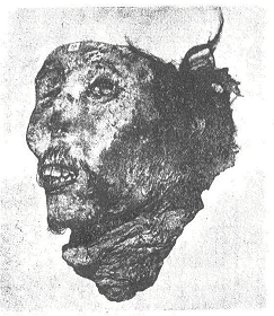
What happened next was revealed when I read Frank Greensop’s 1944 biography of Mikhoulo-Maclay, Who Travels Alone. Greensop wrote of visiting the storage rooms at the Macleay Museum at the University of Sydney and seeing two heads stored in jars on a cupboard shelf. He noted that the flesh, skin and hair were still “firmly attached”. The tops of the skulls had been neatly removed and, although they had been embalmed, the heads were not kept in preservative fluid. Greensop identified one of the heads as belonging to Jimmy Ah Sue, while the other seemed likely to be the Filipino man (Maximus Gomez). Mikhoulo-Maclay had donated the heads to the museum back in 1890.

The head of Jimmy Ah Sue.
The head of Jimmy Ah Sue. (Image from Greensop, 1944)

I wondered if it was possible that these heads were still there, so I wrote to the museum and asked. It turned out that they were indeed still there, in a special store with restricted access. As I had traced the grave sites of the 23 executed prisoners in Toowong Cemetery, it occurred to me that perhaps the heads did not belong in a jar on a shelf but rather in the graves with the other remains. Given that the identification of Gomez was uncertain, I asked if it was possible for the head of Ah Sue to be repatriated, and was informed that I would need to contact Ah Sue’s descendants and then the museum staff would “consider their wishes in regards to the remains”.

Tracking down the descendants of an unhonoured ancestor born somewhere in China, sometime around the 1840s, was, as you might imagine, a daunting task. I tried to get help from the Chinese Embassy but none was forthcoming. The Boggo Road Gaol Historical Society made an enquiry here and there, and we got a story in the Courier-Mail, but quite frankly we could have thrown the entire resources of ‘Who Do You Think You Are?’ at this and still got nowhere. As it was, the descendants remained unfound, the heads still sit on a shelf in Sydney, and whatever is left of the rest of their bodies are in Toowong Cemetery. But who knows, maybe by some billion-to-one shot a descendant of Ah Sue will read this. Or maybe the museum will have a change of policy. Either way, I’m not holding my breath.

The Burleigh and Bilinga Sperm Whales

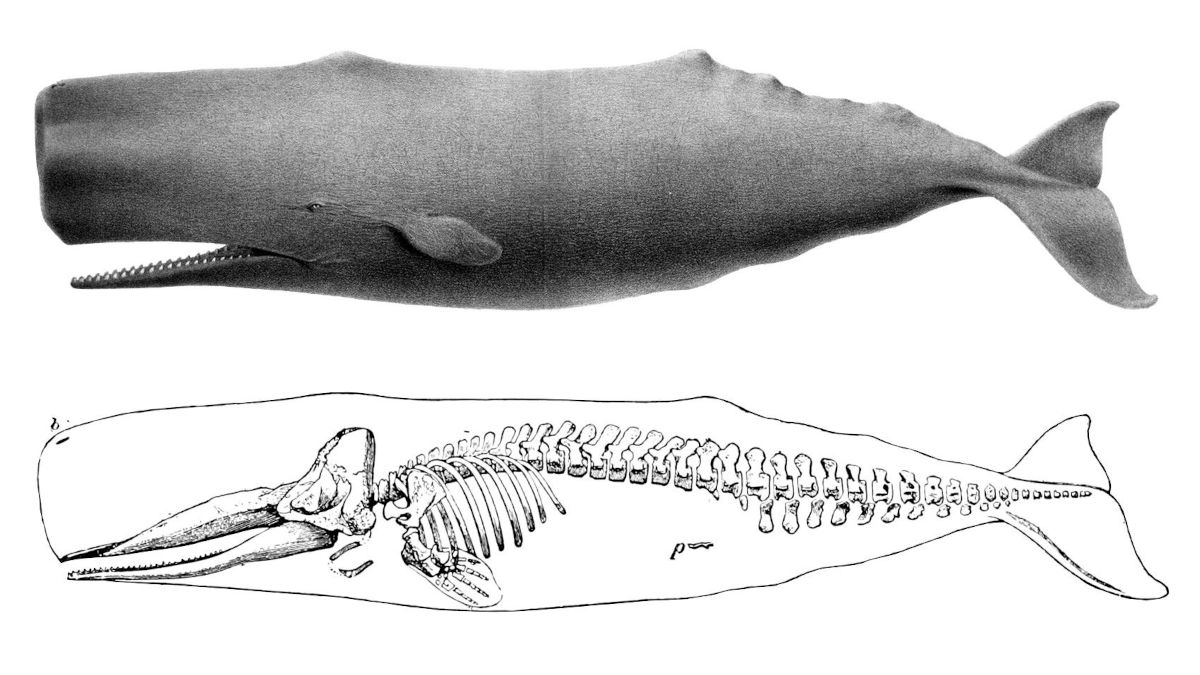
On the hot afternoon of 27 December 1926, hundreds of holiday-makers on the main surfing beach at Burleigh Heads, Gold Coast, were horrified to see a massive white object floating out in the ocean. Most of the onlookers presumed that it was an overturned boat. The Southport police were quickly called to investigate, and they discovered that the object was in fact a dead 24-metre Sperm Whale.

By evening time the whale had drifted in to shore and was stuck hard and fast on the beachside rocks. News of this spectacular sight spread fast, and during the following morning thousands of people from the neighbouring holiday resorts of Southport, Coolangatta and the Tweed arrived to watch as a gang of men employed by the shire council began the process of trying to dispose of the carcass. The whale had also attracted a great number of sharks which were engaged in eating it.

Although the sharks kept the waters free of bathers, a number of surfers refused to be deterred by the danger and even ignored warning blasts.

Progress in chopping the whale into smaller pieces was slow, and the workmen reportedly found that ‘trying to chop blubber is just like trying to chop rubber.’ There were at times as many as 100 men working on the body, and an attempt to burn it was unsuccessful, as was an effort to tow the carcass out to sea.

The ongoing decomposition created an awful stench in the local area that reportedly caused ‘much alarm to residents in the vicinity’ and drove nearby campers from their campsites. On 31 December a large crowd gathered on the shore to watch what promised to be a New Year’s Eve show with a difference when 30 plugs of gelignite were inserted into the carcass in an attempt to speed up the cutting process. The spectators had been expecting something of a spectacular explosion, and were reportedly disappointed when the big moment resulted in no more than a dull thud and a low geyser of oil shooting into the air.

Despite the low-key detonations, it was now easier to butcher the body. In preparation, a large grave was excavated several chains from the beach, to the objection of some local residents but the satisfaction of the council health inspector. The pit measured 10 metres long, 6 metres wide, and 4 metres deep. Steel cables were placed around the carcass and attached to two 2.5-ton trucks. With the help of skids and a double block and tackle, the remains of the whale were rolled up the beach to the point of burial.

The whale at Burleigh Heads.
The whale at Burleigh Heads. (Sunday Mail, 27 December 1931)

There was a bit more drama a few days later when two massive jaw-bones were recovered from the surf near the site of the stranded whale. They were over 5 metres long and about 1.6 metres thick, with 12 giant teeth on each side. It was speculated that they must have belonged to some ‘marine monster’ which had fought with the whale and been killed, but Heber Longman, director of the Queensland Museum, arrived to identify them as the jaw bones of the Sperm Whales, and had obviously become dislodged during the efforts to destroy the carcass. The jaws were donated to the Queensland Museum and within 12 months were on display in their ‘Mammalian Court’.

A week after the burial of the whale, a poem on the subject appeared in the Brisbane Courier:

BURLEIGH! Burleigh!
Sour and surly,
You’re ungrateful,
Which is hateful!
Neptune sent you,
To content you,
From his restive
Fold a festive
Gift, at Christmas!
That grey, triste mass
Reached you early,
Thankless Burleigh!
Worth much MONEY,
But you’re funny,
That great drift-whale,
That rich gift-whale,
You, complaining
And restraining,
YOU would ignite –
Used gelignite!
Tried to blow-up
What a show-up!
Santa Claus will now turn surly –
“No more Christmas gifts for Burleigh!”

13 years later a similar-sized Sperm Whale washed up at Bilinga, just south of Burleigh Heads. This one had apparently been dead for several months and was badly ravaged by sharks. 10,000 sightseers were reported to have visited the scene, which was great for local tourism businesses. The Bilinga Surf Club even organised a ‘community beach concert’ only 50 metres away from the whale. However, the stench soon became overpowering and the whale had to be removed. Council workers cut up the carcass with knives and axes, and the pieces were towed up the beach by tractor for burial. The whole process took five days. Once again the Queensland Museum requested the jaw bones.

The whale remains, Bilinga 1939.
The whale remains, Bilinga 1939. (Courier-Mail, 30 December 1939)
Workers cut up the Bilinga whale.
Workers cut up the Bilinga whale. (Courier-Mail, 30 December 1939)
Decomposing remains of whale, Bilinga.
Decomposing remains of whale, Bilinga. (Courier-Mail, 30 December 1939)

The Hempen Halter: Criticising the Boggo Road Gallows

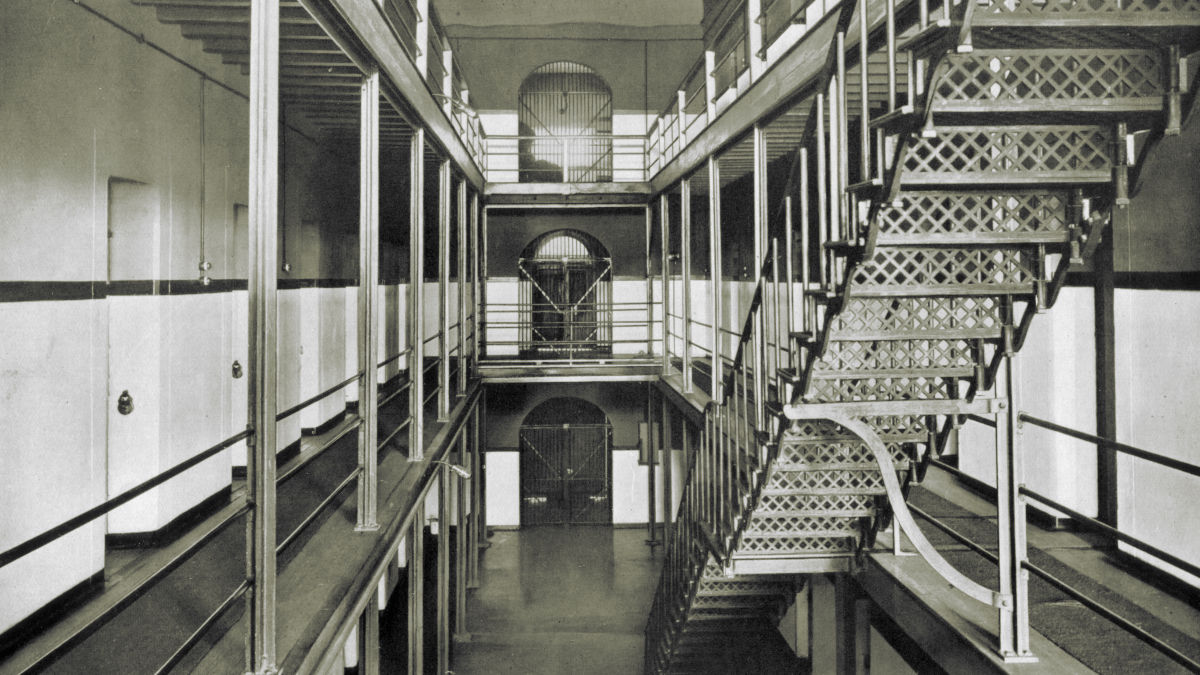
Above: Interior of ‘A Wing’, Boggo Road, circa 1914. The gallows was set into the far end of the cellblock on the middle floor. (‘Comptroller-General’s Report’, 1914)

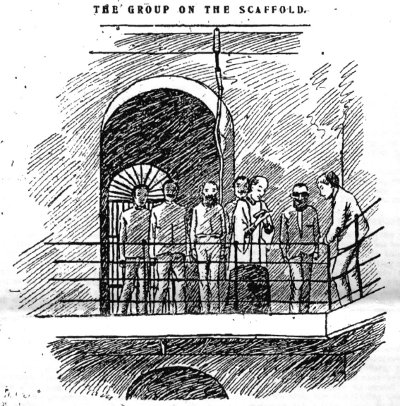
The following article criticising the gallows used at Brisbane’s Boggo Road prison appeared in the tabloid newspaper The Truth on Sunday 12 July 1903. Some very harsh words were also written about prison superintendent Vivian Williams. The Truth had an editorial line that was strongly against hanging, a position that had firmed after the unpopular execution of Patrick Kenniff six months earlier. This article contains the usual strident polemics that the reporters of the Truth specialised in, but it does give some very fascinating details about the execution process that were usually missing from reports of hangings.

A Boggo Road execution, 1903.
A Boggo Road execution. (Truth, January 1903)

‘THE HEMPEN HALTER
Facts Concerning the Boggo-Road Gallows.
An Out-of-Date Death Machine.
A Relic of the System.
Red Tapeism and False Economy.


The illustration of the hanging of Sow Too Low, which appeared in our last issue, was intended to convey to the minds of the good people of this State the scandalously out-of-date machinery used for the execution of condemned criminals. If those who have a copy of our last issue will turn to the picture of the gallows they will better understand the drift of our criticism.

The trap upon which the condemned man stands is a heavy iron-bound and clamped wooden door which is carefully set to drop instantaneously from beneath his feet, the moment the lever is pushed forward by the alert man-butcher. It takes four or five men to set the trap, which is a most dangerous and out-of-date machine. Some of these days it will collapse and kill several of the officers who are compelled in pursuit of their duties to move about on it. We have heard several complaints about its cumbrousness.
It is customary before an execution to set the trap and go through the ceremony of hanging a dummy figure. This is done in order to ascertain that everything is in proper working order before. The condemned criminal is brought forth from his cell and led on to the trap. And, by the way, right here we think it pertinent to remark that the wretched authorities of our gaol institutions instead of learning wisdom with the passage of time, appear to be becoming actually more conservative and retrogressive.

The gallows erected in the now gaol for women at Boggo-road is precisely the same as that in ‘B’ wing in the men’s gaol. Every fault and defect in the old scaffold has been carefully reproduced in the new structure. The cumbrous, painfully, slow method of releasing the dead body from the noose has been repeated with photographic detail; so, too, is the old silly blunder in the placement of the lever for releasing the trap: The lever is not shown in our illustration, but it is placed to the right of the drop, and instead of being pulled it is pushed. The condemned man walks up the short flight of stairs leading to the scaffold. Arrived at the top he turns abruptly to the right in order to stand upon the trap. In doing so he passes so close to the lever that if he made a sudden plunge or stumbled he could not help touching it, which resembles those in use in railway signal boxes, and springing the trap. In the event of such a contingency happening, the condemned man would have to be taken back to his cell, and the execution postponed until a half a dozen able bodied men set it once more.

This defect could be altered at a slight expense, but the pinch book policy of the Philp push* prevents this necessary amendment being made.

But the most serious defect in the arrangements for executing a criminal is the cumbrous system of lowering the body from the gallows into the coffin. After the body has hung 10 or 15 minutes, the doctor feels for the pulse and formally pronounces life extinct. The hangman meantime is standing silent and erect in a little alcove just behind the lever. As soon as the doctor has signified his verdict, the coffin is brought in from the hearse, and placed right beneath the suspended cadaver.

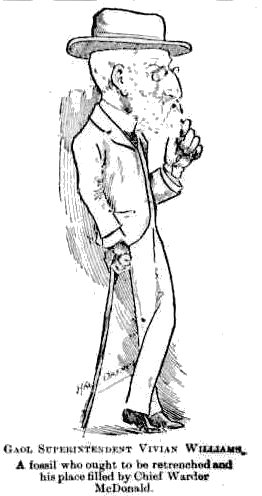
Superintendent Vivian Williams.
Vivian Williams. (Truth, 12 July 1903)

Now it is that the most painful part of a painfully gruesome function, is performed.

Many people are under the impression that the rope is cut, and the body detached. This is a popular error. As soon as the gaping coffin is placed in readiness to receive the broken necked, limp clod of human clay, the hang man issues from the alcove with a light ladder on his shoulder. This he places at the edge of the gallows well-hole, the top resting against the cross beam, from which hangs the pendent rope. Simultaneously a number of warden on the floor of the third tier of cells lower a block and tackle. The man butcher carefully mounts the ladder, and connects the hook in one of the links by which the rope is fastened to the cross-beam. This having been accomplished, the warders haul upon the tackle and the swaying body gradually mounts up in a series of awkward, spasmodic jerks. The hangman then disconnects the links, and the corpse is held suspended by the warders until Hudson** descends the ladder and the flight of stairs and stands ready to receive the body whose soul he has just sent speeding to its Maker. By another series of jerks and jumps the corpse is lowered into the coffin, the undertaker seizing it by the feet and the hangman by the head. When the rope slackens he unloosens the noose and slips it from the limp neck. It is then quickly hoisted out of sight by the warders, the coffin lid is screwed on, and the box taken speedily away and hidden in a hole.

It is the crudest and most cumbrous arrangement that can well be conceived. The writer has seen a better arrangement in a backblock slaughter-house for the disposal of the carcase of a pithed bullock. Of course, it is useless to point out this fact to the powers that be. Superintendent Vivian Williams is armed with the necessary power to have the alterations suggested made, but he is one of the old order, an admirer of ‘the system,’ bound hand and foot with red tape, and absolutely invulnerable to the dictates of common sense or the lessons of experience. No improvement can possibly take place unless this fossil is superannuated and the position filled by a vigorous, practical man who has spent many years on the gaol staff.’

Robert Philp was premier of Queensland 1899-1903.
** Samuel Hudson was the official executioner in Queensland at the time.

You Only Die Twice: Fading Memory in a Cemetery

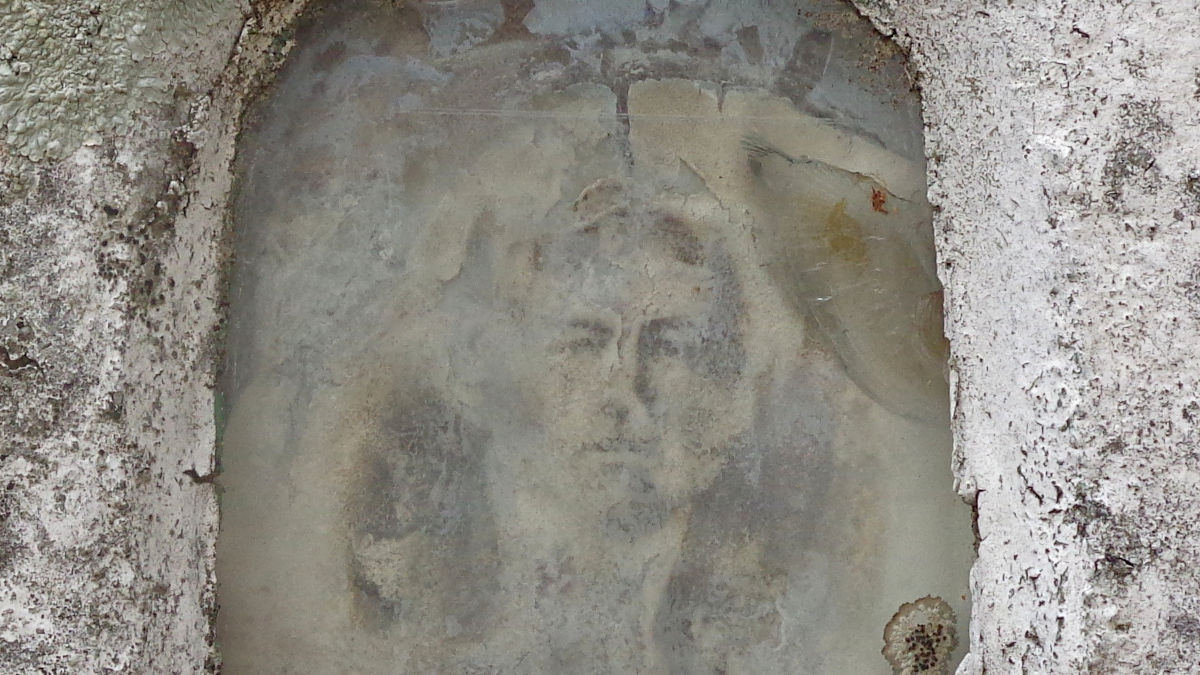
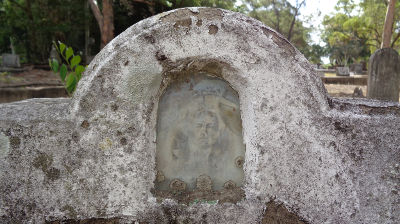
Above: Old photograph in headstone, South Brisbane Cemetery, 2019. (C. Dawson)

“Our dead are never dead to us, until we have forgotten them.” (George Eliot)

In recent months I happened, quite by chance on my way to the staff room in the back half of a crematorium, to see a coffin on a table in the last moments before its contents entered the furnace. Not too long afterwards I sat outside on a lunch break and was pushed into thought about life and death as I watched smoke emerge from the furnace chimney. One minute ago there was a human body, and now it was transformed to fragments, ashes and smoke. Something different, not human any more, after all those years walking the Earth. It felt like a deep moment. I continued eating my sandwich.

A week or so later I was walking through South Brisbane Cemetery when I saw a departing grave excavator, which had just finished filling in a new grave, a rare enough sight in that cemetery. With nobody else around, I walked over and sat by the fresh mound of soil for a short time. There is a strange atmosphere around new graves in quiet cemeteries, like the sadness of the mourners has lingered after their departure. I couldn’t help thinking the same thing as when I had seen the crematorium smoke – ‘is that it?’ Last week this was a breathing person. Now they are in the ground, the dirt has been topped, and we’ll never ever see them again.

The last physical remains of these people had finally left this world, and the job of remembering them had now begun. A stone or a plaque would be erected sometime with their name on it, there would be flowers, there would be visitors, for some time at least. Over the years, on birthdays, fathers or mothers days, Christmases and other special days, visitors might continue to come and remember. The marker would begin to require upkeep in the face of the elements and time. But the deceased would be remembered. This is why we have cemeteries.

And then one day, maybe decades later, nobody would visit any more. The marker, if it was still there, would probably be the last public indication that this person had ever existed. And once untended, it would decay, particle by particle. And maybe the slow death of a memorial stone is like the second death of the person or people it commemorated.

I’d had this feeling before, when researching monuments in the South Brisbane Cemetery. I found a 19th-century sandstone marker that had gradually worn over time so that the original inscription was now completely gone. It was now just a blank stone. For a stranger, it would require a trained knowledge of the graves and access to detailed plans to work out who was in the grave below.

There are a few more markers like this in the cemetery. A slate ledger with only a few scattered inscribed letters still visible, the last remnants of the name of sad mother of fallen soldiers. A concrete headstone with no trace of a single letter of the name of the broken woman who had drowned herself in the river over a century ago. An 1860s sandstone marker brought over from the old Paddington Cemetery, with much of the wording now hidden beneath lichen but the crumbling surface too fragile to be safely cleaned.

Another strange moment was seeing an old photograph chamber built into a South Brisbane headstone. Peering up close, I realised there was a face behind the glass looking back at me, mostly faded but still just there, as if it was staring distantly out from another time and place. Not unlike one of those fake faces in a 19th century ‘ghost’ photograph. It seemed to be slipping away from this world. You knew that in a few years you wouldn’t be able to make out the eyes, the nose, the mouth or the hair any more. The paper would slowly, incrementally, fade and crumble away to nothing.

(C Dawson)

This is the face of 43-year-old Thomas Blatchford Leigh, who was employed as a drayman at Victoria Park in July 1930 under the Brisbane City Council’s unemployment relief scheme, working in return for basic welfare during the Great Depression. He had been employed for about one week, with his wife and family still in Innisfail. His job was to move loads of earth from construction works for a new road. During the morning he complained that he had strained himself and appeared to be seriously ill, but he continued to work on anyway. Later he told the foreman of a pain in the region of his heart. Still he worked on. As he was about to take his last load for the day, at around 4.30 pm, Thomas suffered a heart attack. His workmates noticed his horse and dray wandering slowly off the new road, and on closer inspection they found his dead body inside it, lying on top of a load of earth.

This was the sad, needless death of an impoverished man. And here was his face, the last recognisable feature of a decaying photograph, saying a long, slow goodbye to the world.

This thought gives extra impetus to the work of cemetery volunteers in cleaning and extending the life of a grave, or just photographing it as it is now, creating a new record for the future. One day that stone will not be there any more. For some of those laid to rest in the cemetery, this will be a second death of their memory, and a final forgetting of their existence. Sad thoughts maybe, but sometimes that’s what you get hanging around old cemeteries. That, and an improved appreciation for being alive.

Colonial Columns: An 1860s Look at the Gulf Country

Above: Bachelor quarters in Normanton, ca. 1885. (State Library of Queensland)

This description of life around the far northern settlements of Cloncurry and Normanton is taken from the Queenslander, 2 October 1869:

‘Norman, July 16.

The Gulf, in Southern minds, is still connected with sickness. Every traveller’s yarns, they say, should be taken cum grano salis, and this is more especially the case with regard to Gulf travellers. I have frequently heard men tell the most unblushing lies of the horrors they have seen out here, things that never existed, to my certain knowledge, except in their own fertile minds; imagining, I suppose, that by so doing they render themselves heroes, and no doubt they succeed in gaining the congratulations of their friends for having had such miraculous escapes.

The subjoined statement of the disorders prevalent out here has been furnished me by Dr. Fotheringham, M.R.C.S., London. The disorders most prevalent out here are:- ‘Bilious attacks, always prevalent in tropical climes and aggravated by the too free use of alcohol in every form; bilious fever is but rare; remittent fever, with its concommitants ague, &c.; low fever, sometimes approaching to one of a typhoid character, coming under the term of complicated fever; sickness brought on by the abuse of calomel, ignorant people taking enormous doses for the purpose of treating slight derangement of the liver; the too frequent abuse, also, of quinine, which is frequently taken by the half handfull a day, producing nervousness, headache, stupidity, and general prostration of the nervous system. Since January, 1867, to date, no fatal cases of the tropical fevers alluded to, and dependent upon malaria, &c., have come under my notice. Kanakas are subject to dysentery and general debility, and no heart to bear up against the slightest attacks of any disorder.’

The great stumbling block to the Gulf progress has been the number of ports and towns that have been started, whereas one town was quite sufficient. Originally Burketown was the port, and would now doubtless have been a flourishing town; but just as people had started and had made their improvements, &c, an agitation was started in favor of the Norman, and soon after a stampede set in for that place. The consequence was, of course, depreciation in the value of Burketown property, and ultimately the ruin of most of the Burketown residents. The Norman, I thought, would prove a failure, as, with the exception of two or three stations, nobody benefitted by the ‘flit.’ However, now that the Gilbert has broken out, of course the Norman will become a great place, unless a port is discovered nearer to the field, which I think is probable, as so little is known of the country. At present the Great Australian Mining Company and the Cloncurry diggings make the Norman their shipping port, but I believe ultimately Bourketown will take this trade, as it is said a road will be opened when the mine commences operations, which will run the Leichhardt River down, and thence to Bourketown. However, it will be some time before this is done.

There is another Town on Sweers Island, and this place is the bete noir of the north. It was originally opened by W. Landsborough, P.M., as a sanatorium at the time when sickness was rampant, and as such should have been retained. As a site for a lying-in hospital or an agapemone, I suppose it is unrivalled, but farther than this it must prove a failure. When our Collector of Customs arrived here, being naturally of a retiring nature, he settled and built the bond on the island. Now, mark the consequences. Communication between this place and the main land is maintained by an old steamer, about which bets are freely made whether she will blow up that trip. Ships coming to the Gulf have to clear for this island, and it is often a fortnight or more before we know that the vessel has arrived. We then proceed to the island by the first opportunity to clear the goods and have them lightered to town. This of course entails great additional expense, and adds so much to the original invoice that it becomes almost impossible for small capitalists to import. All this expense might be avoided, the revenue increased greatly, and an impetus given to the whole country, were a Custom-house officer established at the mouth of the Norman. For three miles within the heads a splendid harbor exists, and were the river bar properly buoyed, vessels of a large tonnage could enter. A good bridle track exists from the town to the heads, and there is no doubt a good road could soon be found. A magnificent site for a town exists there, with abundance of fresh water. Besides, boats and punts could easily bring the goods to town, and no doubt should the town progress a tramway will ultimately be erected. I cannot understand the policy of the Government in dosing their eyes to the advantages of such a plan as small capitalists would then be able to commence business, and the imports would be increased in proportion. Every facility is at present given for smuggling, and be sure, should the Gilbert go a-head, it will open up a market that will not be neglected, if it is not already being worked. At present a vessel could leisurely come into any of the rivers discharge and leave before any intimation could reach the island.

The only semblance of law out here, and the only intimation that our Government give us of their knowledge of our existence, is paying rent for a lock-up without doors, and maintaining a customs on Sweers Island. There is no public magistrate here, and the whole ‘majesty of the law’ is left in the hands of the sergeant and four constables and a few newly-pledged J.P.’s. The sergeant endeavors to assert his dignity with a bullock chain, but is generally deterred from taking a prisoner, as he is then supposed to keep him in durance till the arrival of one of our J.P.s, whose visits are indeed ‘few and far between.’ By-the-way, we should like to enquire why our J.P.s are only selected from our ‘wool kings.’ Why are the merits of our townsmen – men who are constantly at hand to take their seats when required – and many of whom have had great experience, why are their names entirely overlooked? Surely the Government cannot be aware that not a single one of our businessmen appears on the roll.

There is no doubt this will prove a wonderfully rich mineral country when time has elapsed to allow it to be properly prospected. Prospectors are out in every direction, and we frequently hear of fresh finds of gold. Copper, I believe, is also very plentiful. What are the Manton’s and other Sydney promoters doing that they do not push out on the Cloncurry and prospect. The two known gold-fields are the Gilbert and the Cloncurry. The latter is situate exactly 300 miles from town, on the Cloncurry River. There is a good road the whole of the way. At present the road is well watered, but towards the end of the dry season there is a dry stage of forty miles and another of thirty-five miles. Up to the present time there has been little better than gully raking carried on. The gold is found in large rough nuggets; in fact, the finds of half an-ounce nuggets are of daily occurrence. In here are about thirty men on the ground, and most of them seem satisfied. Most of the gold found is not at all water-worn, and appears to have dropped from reefs in the immediate vicinity. A great portion has been got by ‘dry panning.’ The most pleasing feature I have heard is that an old experienced digger lately sunk a hole on a flat, and bottomed at ten feet; he took 8 ozs. out. The other diggers immediately took up the ground and commenced sinking; I have not yet heard with what success. It is impossible to estimate what quantity of gold is in the diggers’ hands, as they keep dark, and of course will not part with gold for cheques.

The great drawback to the Cloncurry is the scarcity of water; there is but one permanent water hole in the immediate vicinity, and even this has to be sunk towards the end of the season. This would not suffice any population. I do not know how this difficulty can be overcome, as I know of no place near from whence water can be brought. A store has been opened by Mr. Marsh, but at present he has little or no supplies. I start for there to morrow, and will write you full particulars. Parties coming to this town en route for the diggings would do well not to arrive later than the beginning of November, as from the 1st of December to the 1st of March the roads are impassable, owing to the wet – in fact the town becomes almost an island. Carriage to the Cloncurry £25 a ton. Of the Gilbert I can only speak from hearsay, and had therefore better leave it alone. The Cleveland Bay people know more about it than we do. A few travellers have been back and forwards, but their statements vary very much. I have reliable information that a good road, well watered, can be made from this place under 200 miles.

The only drawback on the road is a few sand ridges, each a few hundred yards long. The present road round by Bauhinia Downs is 240 miles. A bonus has been granted by the townspeople for opening the new road, and two loaded teams start to-morrow for that purpose. The advantage of diggers coming to the Norman is, that they can then judge for themselves which is the best site for their future operations. John Youlle, of Wentworth renown, better known as ‘Johnny the Reefer,’ with his two mates arrived by the Margaret and Jane. They selected the Cloncurry, as there were fewer people there. They were on their way up when I last saw them.

In conclusion, I would advise intending immigrants to book through to the Norman, as they will thus save the additional expense of being landed at the island, and the passage money from the island to town.

Weather fine, but hot. No church bells here. We weary to hear the old hundredth chimed.’

Clink Ink: The Craft of Tattoo Guns

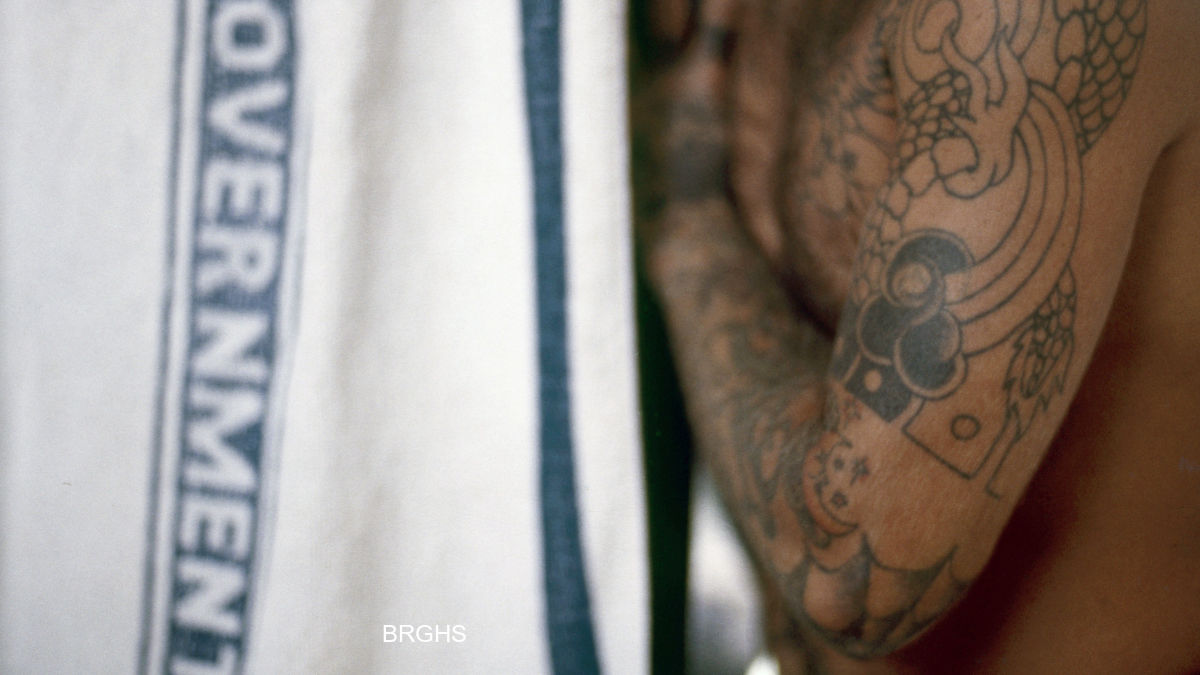
Above: Prisoner with tattoo in Boggo Road Gaol, circa 1989. (BRGHS)

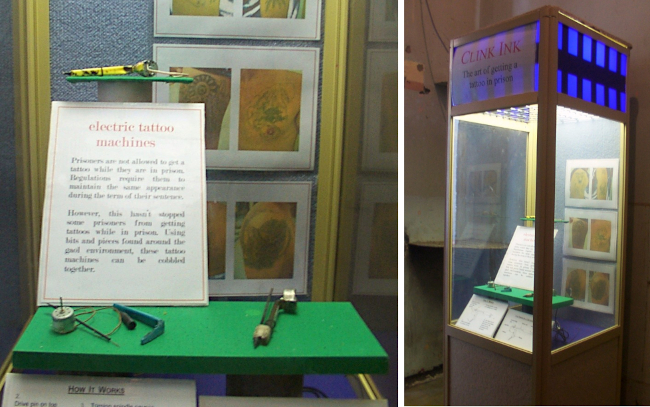
Prison tats. We’ve all seen them. That dodgy tattoo with a prison vibe, obviously ‘home-made’ with improvised tattoo machines, or as they were also known by a few people, tattoo guns or ‘boob’ guns (‘boob’ being an old slang term for prison). My personal favourite was one I saw in Wynnum about ten years ago, a man walking down the street with one word tattooed down the back of each of his calves, in amateurish gothic font. The left side had ‘Fuck’, and the right had ‘Jail’. Short and to the point.

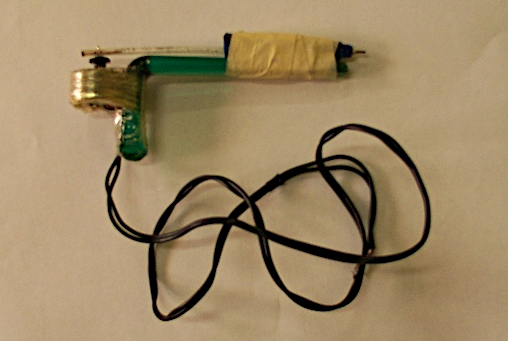
I became familiar with these contraptions when I was curating the Boggo Road Gaol Museum Collection, which contained a handful of complete tattoo machines and up to 100 loose components. These had been confiscated from inmates in the Queensland prison system during the 1970s-80s, and were eventually passed on to the museum.

Prisoner-made tattoo machine
Prisoner-made tattoo machine, Boggo Road Gaol Collection. (C Dawson)

During the museums component of my undergraduate Anthropology degree at the University of Queensland we were required to design a single display for an item from the UQ Anthropology Museum collection. These displays would come together in an exhibition exploring the link between material culture and identity. At the time I was sorting and cataloguing the prison collection and decided to use an item from that collection instead. What I selected was an improvised tattoo machine.

The presence, provenance and number of these confiscated artefacts in the collection told me three things straight away. Firstly, they were illegal. There were a few reasons for this. Not only could they be used as weapons, but prisoners were required to maintain the same appearance during their sentence. It also became more important in later years to minimise the spread of communicable diseases such as hepatitis C through sharing the kind of needles used in these machines.

The second thing was that they were still made despite being banned, which made them objects of resistance to authority in a prison system that was in turmoil. This was an example of an object (material culture) expressing social identity.

Thirdly, the construction and sheer number of the machines were testament to the ingenuity and resourcefulness of some inmates in scrounging the various components that could be found around the environs of a late 20th-century prison.

I found this last aspect particularly interesting. How did these things work, how were they made, and where did the various components come from?

The first job was to work out exactly what each component was.

The components of a 1980s prison tattoo gun.
The components of a 1980s prison tattoo gun. (C Dawson)

I then talked to a few former prison officers and an ex-inmate who were familiar with these items, and established the following:

The drive rods and the barrels were made from the ink chamber and barrel of a ball-point pen, which were issued for hobby work and writing in cells.

The needles and connecting pins were made from:

  • sewing needles, pins, or sharpened wire from industry workshops, or
  • paper clips issued as stationery, or
  • diabetic needles from the prison hospital surgery, or
  • mathematical compasses, issued for hobby work, or
  • guitar string. 

The spindles were made from buttons on prison clothing.

The frames were made from prison-issue toothbrushes, which were bent into a L shape using heat.

The motors and electrical wiring were extracted from audio-cassette players or transistor radios, which were allowed in cells.

The ink was either:

  • India ink, issued for hobby work in cells, or
  • charcoal which had been ground from spent matches and mixed with oil, or
  • pen ink obtained from split tube of pen and mixed with margarine.

The binding for the frame and components was either cotton thread from prison clothing or workshops, or adhesive tape, glue or sticky tape from industry workshops.

As can be seen, these machines were cobbled together using bits and pieces surreptitiously found around a 1980s prison environment, a task that was quite an exercise in ‘scrounging’.

How the tattoo guns worked.
How the tattoo guns worked. (C Dawson)


As for how they were used, the ink (or charcoal mixture) was applied to the skin prior to puncturing with the needle. Professional tattoo shops use special inks that do not irritate the skin and are unlikely to cause allergic reactions, but makeshift inks used in prison tattoos may be unsafe and damage the skin, causing permanent scarring. They can also contain dangerous chemicals.

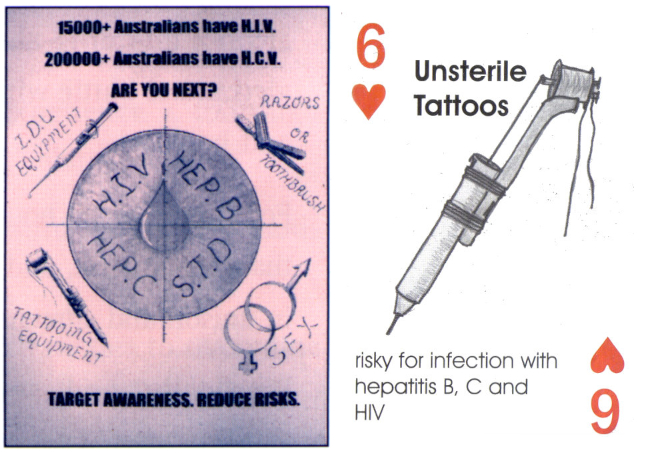
Another danger – aside from the obvious risk that a person could leave prison with awful tattoos – was the serious health risks from unsterilised equipment. Apart from basic skin infections, deadly diseases like hepatitis and HIV/AIDS can be passed from one prisoner to another when needles are re-used.

The playing card shown below (right) is from a deck issued to prisoners, raising awareness of health and safety. This is one of a number of cards I found strewn on the pavement outside my local primary school (yikes). The poster (below left) featuring a tattoo machine was also used in Queensland prisons. 

(BRGHS)

I called my individual display for the Anthropology Museum exhibition ‘Clink Ink’ (‘clink’ being an old nickname for prison).* A couple of years later I recreated it as part of an exhibition I curated in Boggo Road called ‘Life in Prison’. They were also featured, of course, in my small book Shivs, Bongs and Boob Guns, all about the material culture of inmates in the old Queensland prisons system. The tattoo machines always drew a lot of attention, as they are a rare peep into a world that was not only locked off from public view at the time, but is now close to being a half-century in the past.

Tattoo machine display in a Boggo Road cell, 2005.
Tattoo machine display in a Boggo Road cell, 2005. (C Dawson)

I also came up with the overall ‘exploring identity through material culture’ exhibition title, which was ‘ID in 3D’.  

Colonial Columns: Mount Coot-tha in 1929

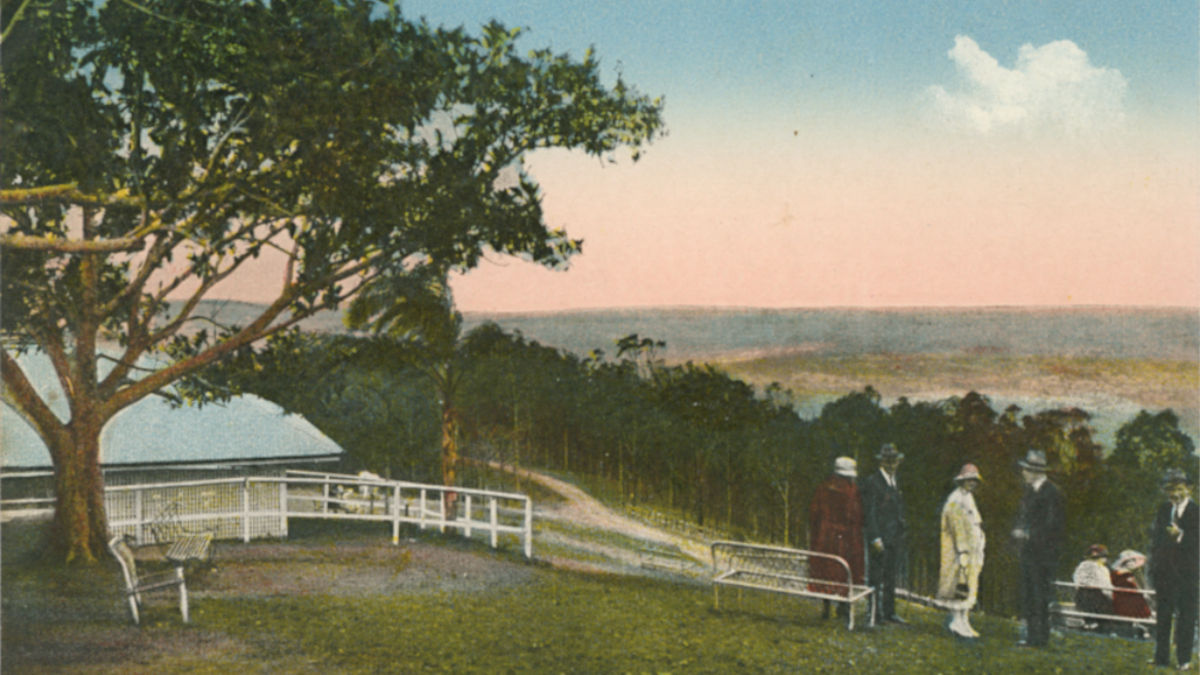
Above: Mt Coot-tha, 1910. (Queensland Historical Atlas)

This description and history of Mt Coot-tha, the tallest backdrop to the Brisbane skyline, is taken from the Brisbane Courier, 1 July 1929: 

‘MOUNT COOT-THA: ITS HISTORY REVIEWED.
ASSET TO BRISBANE.

Mount Coot-tha has been appropriately termed the “Mount of Beauty.” All who have stood on its crest have been impressed with the grandeur of the panorama that it gives of city, river, bay, and mountain ranges. Contrasting with the natural scenery. Mount Coot-tha itself Is beautiful. Even in the long-gone days, When the place that was to be Brisbane was an unbroken vista of trees; when nothing but virgin bush was to be seen from the eminence where thousands have since looked on to and beyond the city; when smoke from aboriginal fires was the only intrusion in the picture of nature. Mount Coot-tha must have presented a wildly beautiful scene.

ORIGIN OF NAME.
Mount Coot-tha was once a favourite ground of the blacks, who hunted marsupials and birds, and very often found hives of native honey there. From such discoveries the mountain owes the origin of its present name. “Coot-tha,” in the native dialect, meant “dark native honey.” This meaning is applied to the word in “Tom Petrie’s Reminiscences,” where the author gives its pronunciation as “Ku-ta”; other translations interpret it merely as “honey.” The name by which the mount was known to early settlers, and by which it Is popularly called to-day, was “One Tree Hill.” This was derived from the fact that an arboreal monarch once stood on the summit in solitary splendour. In the early ’40’s a dense forest of large trees grew on the top of the hill, and with their thinning-out, the giant tree became more conspicuous year by year because of its isolation and great size. So the ridge became “One Tree Hill.” The big tree was killed by careless picnickers lighting fires at its base. Frequent blazes scorched its trunk, and sapped its life, and one day the stark old tree had to be felled.

HISTORY OF THE RESERVE.
The attractions of “One Tree Hill” as a recreation and picnic ground were recognised from the days when civilisation began to penetrate the country around Moreton Bay. Many of the first residents found it a delightful retreat. But the mountain’s timbers were exploited for some years before Mount Coot-tha was definitely made a park reserve. According to the Assistant Under Secretary for Public Lands (Mr. C.W. Holland), the land was originally set apart under the Crown Lands Alienation Act of 1868 as a reserve for timber for railway purposes. A survey was made in 1874, and the reserve was found to contain an area of 1476 acres. In 1880 the reservation for timber for railway purposes was cancelled, and an area of 1500 acres was permanently reserved for a public park. A deed of grant upon trust, “for the appropriation thereof as a public park for the recreation, convenience, health, and amusement of the inhabitants of the city of Brisbane in our said colony, and for no other use and purpose whatsoever,” was issued to Sir Charles Lilley, Sir A.H. Palmer, Sir Samuel Griffith, and the Hon. H. E. King.

APPOINTMENT OF TRUSTEES.
Subsequent changes’ placed the following gentlemen on the trust, in succession: – Sir Thos. Mcilwraith, Mr. John Stevenson, Sir Hugh Nelson, Sir Alfred Cowley, Hon. Albert Norton, Mr. E.H. Macartney (Queensland’s Agent General-elect), Dr. E.S. Jackson, and Sir Robert Philp. Mr. H. W. Radford, Clerk of the Legislative Council, acted as hon. secretary to the board of trustees, and took a keen interest in the reserve. Afterwards Messrs. C. W. Costin and C. R. Gregory, each in turn Clerk of the Legislative Council, acted as hon. secretary. Grants were made by the Government to the trustees for roads, erection of shelter shed, fencing, salary of caretaker, &c. The name was changed from “One Tree Hill” to “Mount Coot-tha.” by notice published in the “Government Gazette” of August 10, 1883. In 1919 the trustees surrendered their trust in favour of the Brisbane City Council, which was then appointed as trustee.

AREA OF THE RESERVE.
With the growth of the city Mount Coot-tha reserve also has expanded. The area has grown, by additions from time to time, to a little over 2567 acres. The Brisbane City Council is about to apply to the Land Administration Board for the grant of an additional area of 35 acres of Crown land, formerly held as a quarantine reserve, in the direction of Indooroopilly, and, if it is obtained, the acquisition of another 10 acres of privately-owned land that lies between will make the total area of the Mount Coot-tha reserve 2612 acres. But the reserve has grown in other respects. Roads have been improved, a fine new kiosk at the peak of the hill has replaced the rustic structure that formerly stood there, and a pretty look-out tower has been built. Indicative of the number of vehicles that now run to the city’s favourite observation point is the fact that one-way traffic is about to be introduced between the Summit and Simpson’s road, Paddington.

HISTORIC FIG TREES.
One of the Moreton Bay fig trees that stand at the top of Mount Coot-tha was planted by King George V. (then Prince George), and his brother, the late Duke of Clarence (then Prince Albert), during their visit to Brisbane in 1882. On that occasion the late Sir Thomas Mcllwraith and Earl Clanwilliam also planted trees. To-day the historic fig trees spread a kindly shade for visitors, and add to the quiet beauty of the surroundings. Mount Coot-tha’s altitude of 746ft., and its proximity to the city – it is about four miles from the General Post Office – makes it a very valuable asset to “Brisbane. But other features – the Summit and the Devil’s Slide, the broken dams, and the stony gullies, where water used to run, the cool shady slopes, and the bubbling streams, the stately trees, and pretty shrubs, have endeared the whole reserve to those who love to commune with Nature. In all parts of Australia, and, Indeed, abroad, there are people who are glad’ that, owing to the prevision of public-minded men. “Brisbane has Its Mount Coat-tha.”

The Number’s Up for Malaita Men on the Boggo Road Gallows

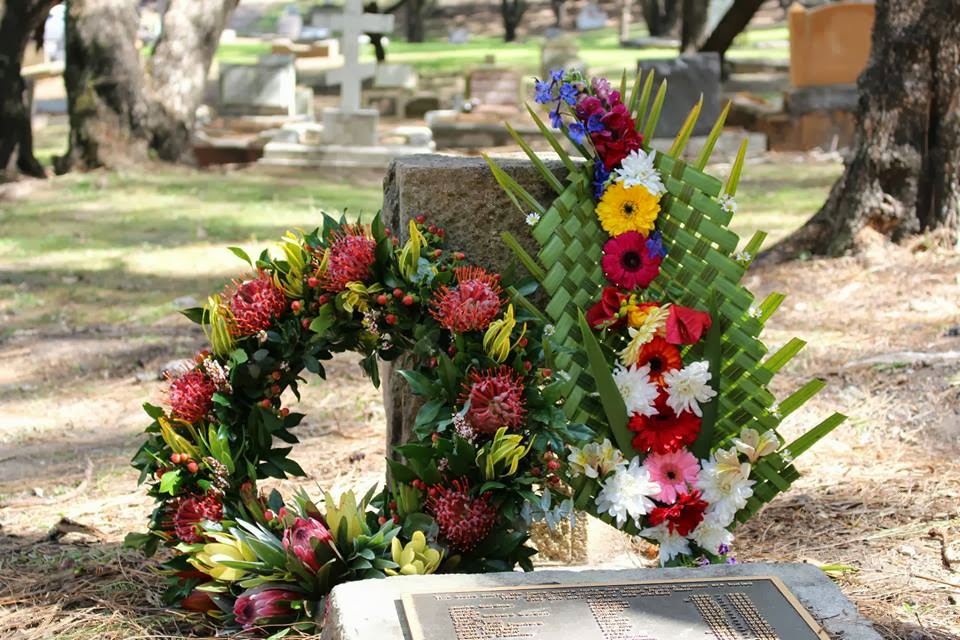
Above: Wreaths on the South Brisbane Cemetery plaque. (ASSIS)

“And the mercy seat is waiting
And I think my head is burning
And in a way I’m yearning
To be done with all this measuring of truth.”
(Mercy Seat, Nick Cave)

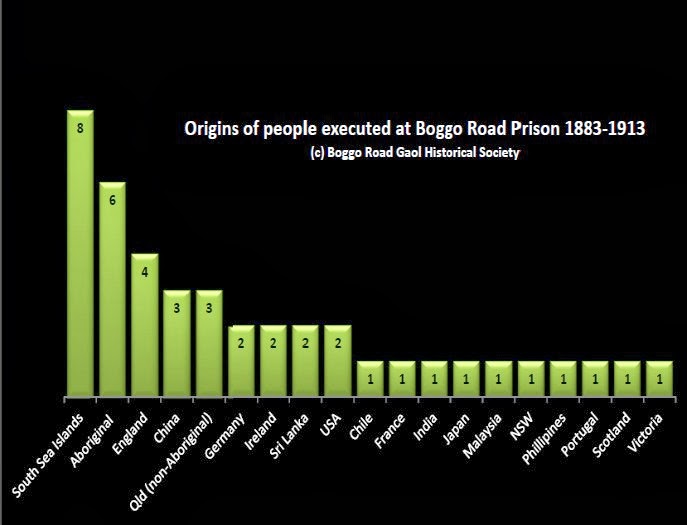
I once conducted a quiz on the Boggo Road Gaol Facebook page asking which demographic made up the greatest proportion of the 42 people hanged at Boggo Road, giving a choice of Irish, First Nations, Chinese or South Sea Islander as the answer. The answers were quite divided, and the whole exercise provided a bit of an insight into perceptions about hanging in colonial Queensland. Most people thought it would be First Nations people who suffered the most at the end of the noose, but the correct answer (as given by about 25% of respondents) was actually South Sea Islanders, which clearly surprised most other people. The full range actually looked like this:

Chart of origins of people executed at Boggo Road.
Chart of origins of people executed at Boggo Road. (C Dawson)

The overall make-up of convicted prisoners has always reflected historical circumstance. This is why Irish or British men formed a clear majority in early capital punishment statistics when they comprised the vast majority of convicts. The conflict between Indigenous peoples and the new arrivals also resulted in a steady flow of First Nations people into the prisons and onto the gallows throughout the 19th century. It comes as little surprise that First Nations people formed the largest number of executions (21) in the overall totals, shown below:

Chart of the origins of people executed in Queensland 1830-1913.
Chart of the origins of people executed in Queensland 1830-1913. (C Dawson)

The end of the convict era and the subsequent arrival of waves of immigrants from around the world is also reflected in the execution data. The influx of Chinese labourers to work in regional Queensland during the early 1850s saw a spike of Chinese men held in Brisbane prison during that time, accounting for as much as 40% of prison expenditure in 1851. This was largely a result of workplace relations conflict between the immigrants and their new bosses, not to mention an ever-present backdrop of racist hostility towards non-white immigrants. As the chart below shows, a total of nine Chinese men were hanged in the colony, comprising about 10% of the overall total.

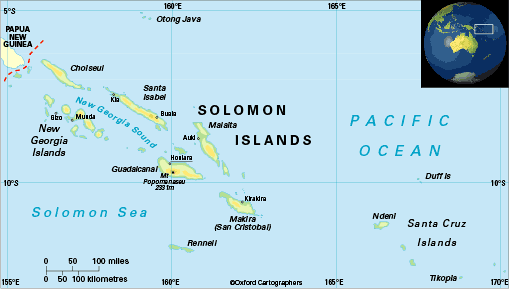
Germans were another prominent immigrant group in 19th-century Queensland, and six German men were hanged here. As far as Boggo Road goes, it was the arrival of South Sea Islanders (or more specifically, Solomon Islanders) from the 1860s onwards that was most reflected in the execution numbers. A total of 13 of these men were hanged in Queensland over the next half-century, eight of them in Boggo Road. The Islanders were brought to work in the sugar plantations in often-controversial circumstances, especially in the earlier years, and there was a lot of racial tension on the central coast. Many of the murder cases involving these men had an element of racial conflict in them, and it is clear that some Islanders did react to provocation in a swift and brutal manner. Most of the executed South Sea Islanders came from Malaita Island (see below) and were no strangers to a violent culture. The novelist Jack London was familiar with the region and described Malaita as “the most savage island in the Solomons”. It is notable that even if the Malaita men were counted as their own demographic group, they would still comprise the largest proportion of Boggo Road’s executed prisoners. Here is the full list of the hanged prisoners:

  • Miorie, from Malaita Island, hanged May 1895 
  • Narasemai, Malaita Island, May 1895 
  • Sayer, Malaita Island, July 1895 
  • Wandee, Malaita Island, May 1901 
  • Arafau, Malaita Island, December 1901 
  • Sotulo, Malaita Island, June 1903 
  • Gosano, Malaita Island, April 1905 
  • Twadiga, Gawa Island, May 1906
Map of Solomon Islands.
Solomon Islands map.

There was a great deal of unfounded paranoia in white communities regarding South Sea Islander crime, and prison authorities took to bussing in labourers from various plantations in the vicinity of Mackay, Bundaberg and Rockhampton to act as reluctant witnesses at the Brisbane executions of their countrymen. The intent was to make sure that word got back to the plantations and so help reduce capital crime rates. It is interesting that during the 1850s, the authorities had all-but abandoned notions that public hangings had a deterrent effect on witnesses, and introduced private executions instead. It seems that the rule was only applicable to white people (enforced viewing also occurred at a number of hangings of First Nations men).

The introduction of the White Australia policy in 1901 saw most South Sea Islanders returned home during the following decade, although some remained and more hangings did take place in Brisbane, the last being in 1906. And that is how South Sea Islanders gained the unwanted distinction of making up the largest numbers of those executed in Boggo Road Gaol.

A small but touching moment provides an epilogue to this article. In 2005 I worked with the Boggo Road Gaol Historical Society and Brisbane City Council to install a plaque near the graves of the hanged prisoners in South Brisbane Cemetery. It lists the names of all those who were hanged, and where they came from. Among other dignitaries, an elder from the South Sea Islander community spoke very movingly at the unveiling ceremony. A few years later I was taking a tour through the cemetery one night when I noticed a wreath and a bit of paper with writing on it by the plaque (see top of this page). It had been left there by “A.S.S.I.S.”, which on further investigation turned out to be the Australia South Sea Islander Secretariat. It seems the eight men who died on the Boggo Road gallows were not to be forgotten.