
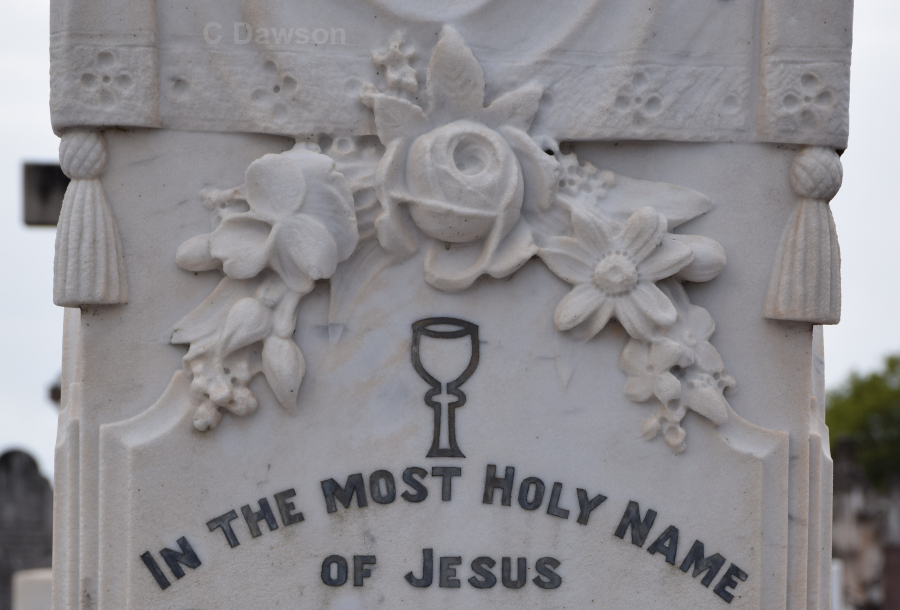
The chalice is a relatively rare sight for cemetery symbol spotters. It does, however, appear on numerous grave markers in a very small section within the northwest corner of Brisbane’s historic Nudgee Cemetery, which opened in 1867 as a Catholic burial ground. This area is labelled on some maps as ‘Religious’ (see a map here) and it contains a varied and aesthetically striking array of the graves of priests, nuns and monks from various religious orders.
One section contains older graves of priests, and almost every other marker within there has a chalice symbol on it. It really does stand out, as the chalice is so rarely seen in most cemetery contexts.
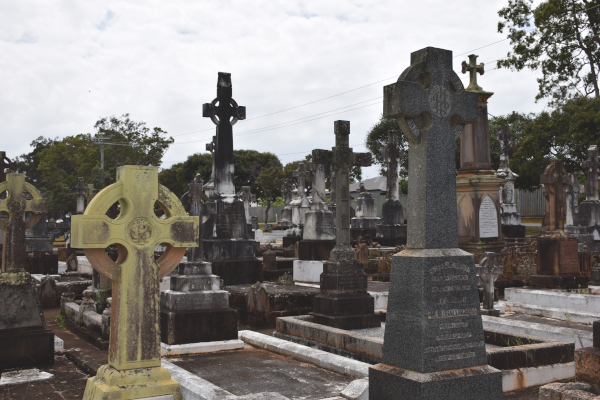
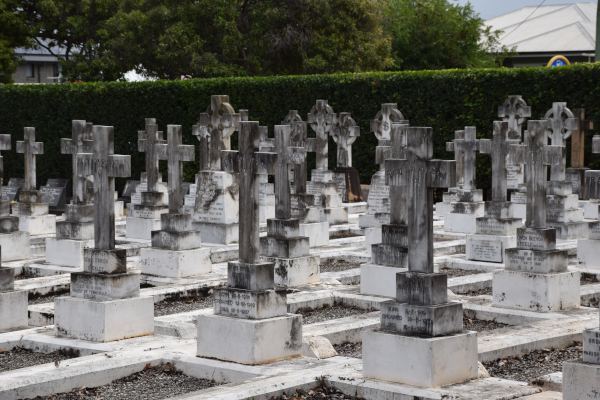
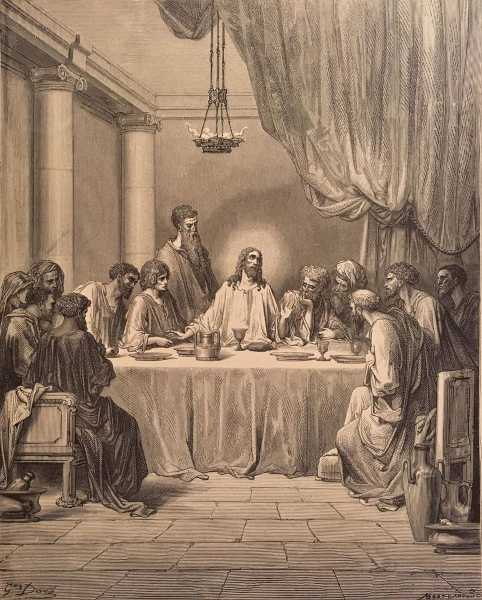
So why is the chalice used in this way on the graves of priests? In Christian theology, the chalice is associated with the Eucharist because Jesus shared bread and wine (in a chalice) with His disciples at the Last Supper, which symbolised His body and blood.
Priests receive a chalice when they are ordained, and use this in their role of celebrating Mass and consecrating the Eucharist. So the chalice is a symbol of their occupation and their commitment to God and the Church.
One thing I liked about the Nudgee chalices was the variety, and no two seemed to be the same.
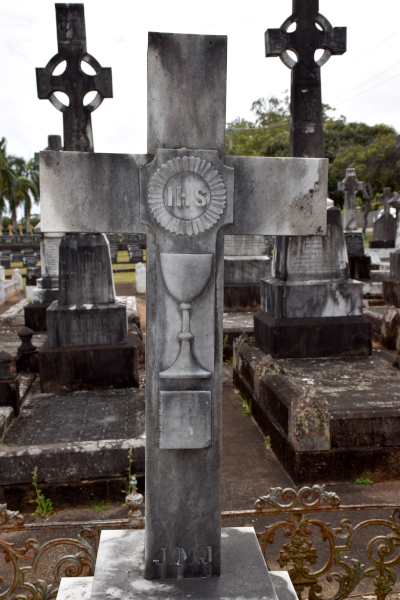
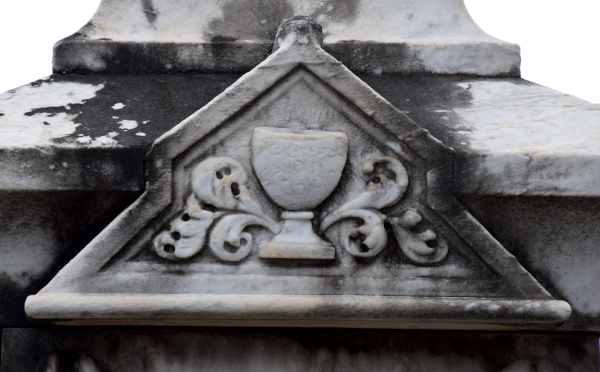
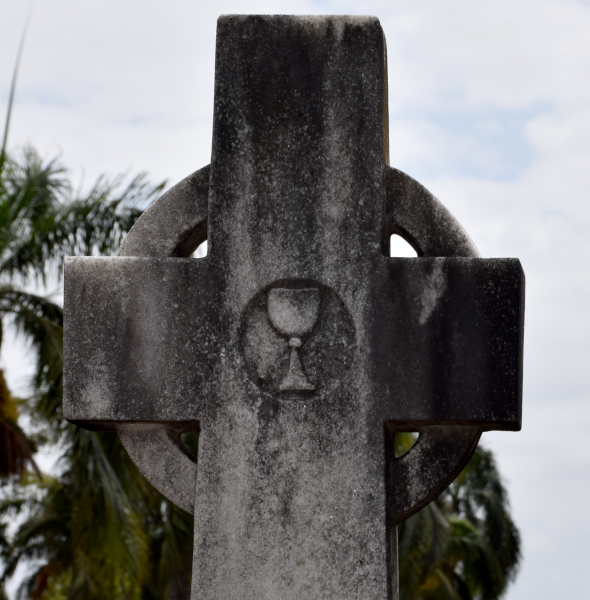
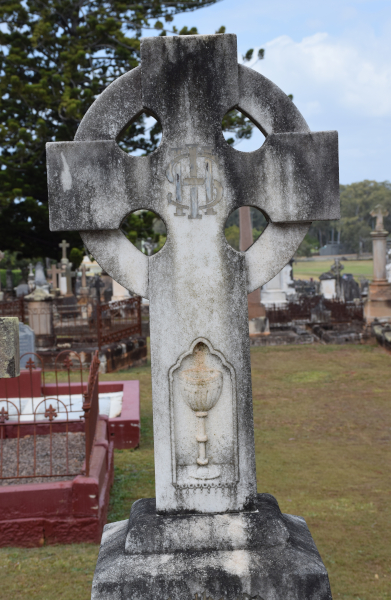
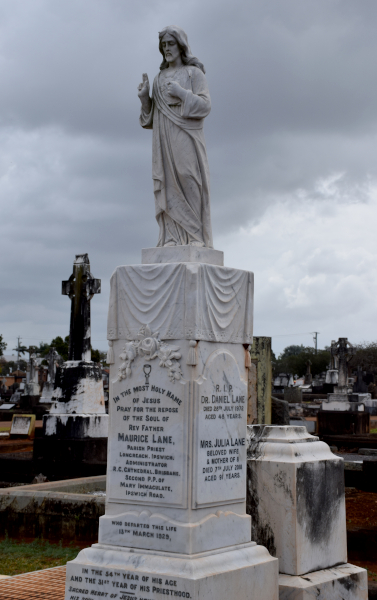
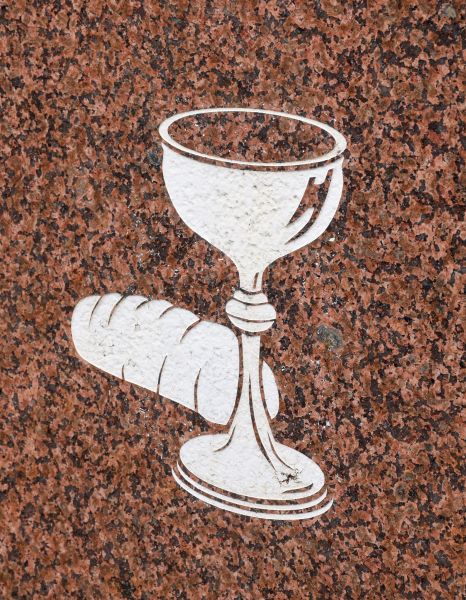
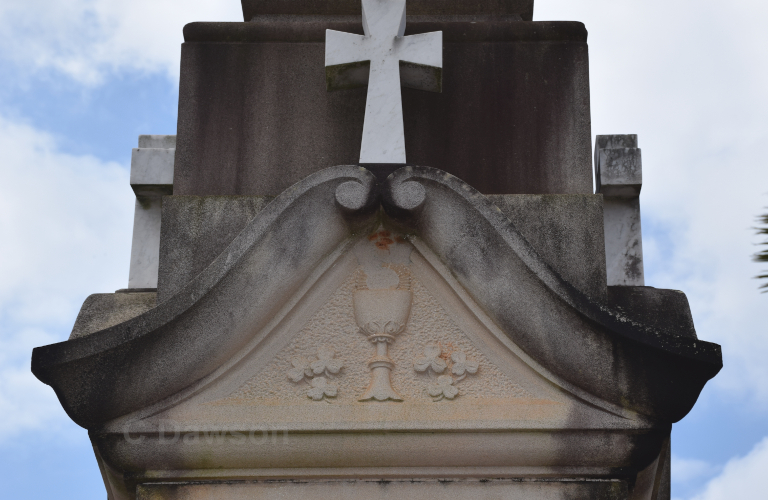
Shown above are some of the photos I took during my visit to Nudgee Cemetery in September 2026.

